

Building Future-Ready Universities with Military Precision
Dr. Gurdaman L Sharma
Vice Chancellor
SRM University Sikkim
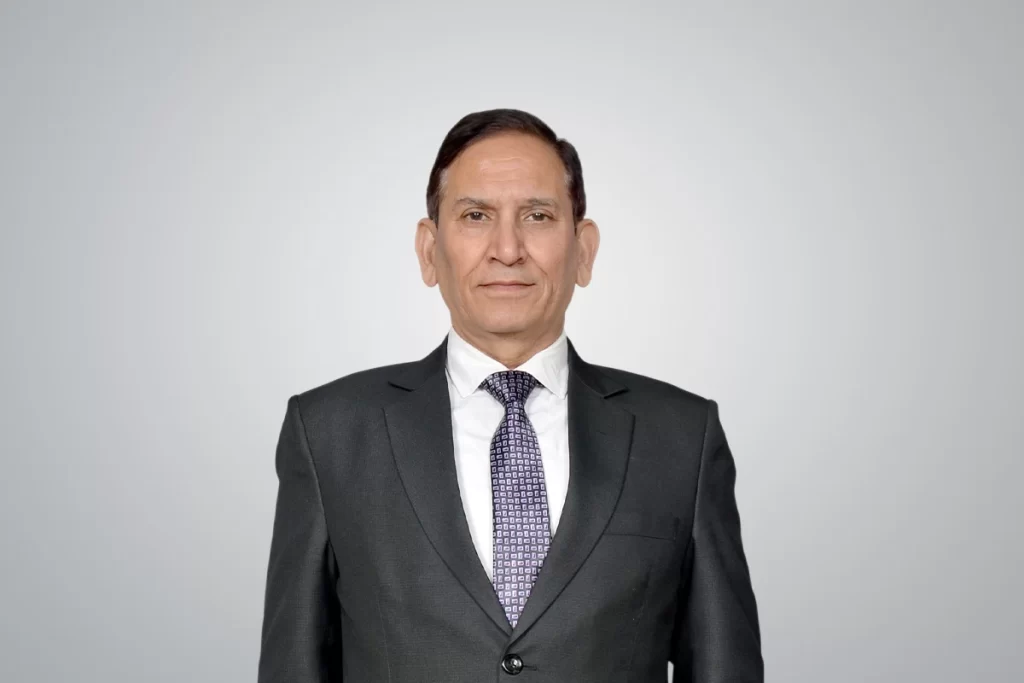
Building Future-Ready Universities with Military Precision
Dr. Gurdaman L Sharma
Vice Chancellor
SRM University Sikkim
The journey from commanding naval engineering operations to leading a university may appear unconventional. But for Professor Gurdaman Lal Sharma, both spheres are anchored in the same leadership essentials of discipline under pressure, operational precision, institutional accountability, and clarity of mission in managing complex systems.
Across a distinguished professional journey spanning more than 40 years, including 26 years in the Indian Navy and the last 14 years in academia, he has consistently led institutions through periods of growth, transformation, and heightened expectations. During his naval career, he oversaw mission-critical engineering operations and managed budgets exceeding INR 5,000 million, where every decision demanded accuracy, foresight, and complete ownership of outcomes. These experiences shaped a leadership philosophy grounded in systems thinking, structured execution, and uncompromising integrity.
Today, at SRM University, Sikkim, he applies this command-driven approach to academic governance, aligning strategy, academic quality, research, and operational resilience into a unified framework for sustainable growth. In an exclusive interview with TradeFlock, he reflects on how naval discipline continues to shape his leadership in higher education, strengthening institutional credibility and enabling NAAC and NBA accreditations.
How have military leadership principles shaped your approach to higher education governance and transformation?
My years in the Indian Navy shaped a leadership approach rooted in responsibility, clarity of purpose, and decisive action in complex environments without compromising integrity or outcomes. These principles guide my academic leadership today. Universities function as interconnected ecosystems where academics, research, administration, infrastructure, and student development must align. My naval experience strengthened a systems-orientated mindset for managing this complexity with long-term vision.
Structured decision-making under pressure, with limited information and full accountability, remains central to my approach to reforms, technology adoption, and NEP 2020 implementation. I also value participative leadership, trust, collaboration, and ethical governance, alongside financial prudence and risk awareness, enabling resilient, quality-driven institutions focused on sustained excellence and continuous improvement.
How are you bridging industry readiness with global competence and local responsibility in students?
Across my leadership journey as vice chancellor, campus director, dean, founding director, professor, and HoD across institutions such as SRM University, Sikkim; SMIT; Manipal University Jaipur; Amity University; and JECRC University, I have consistently believed education must go beyond qualifications. The real differentiator is mindset—how students think, respond, and solve real-world problems.
Bridging academics and industry begins with structure. Experiential learning is embedded from the first year, with students working on live industry and societal challenges through projects, applied labs, and design thinking.
Deep industry integration strengthens this link through co-designed curricula, outcome-based internships, and Centres of Excellence with industry partners, ensuring readiness from day one. Innovation ecosystems like tinkering labs, incubation centres, and entrepreneurship platforms, build a culture of experimentation and execution.
Shaped by my years at the Naval College of Engineering, Pune, discipline, ethics, and resilience are reinforced through mentoring. A glocal approach ensures global standards with strong local relevance.
What core belief drives your pursuit of excellence across warship service, nuclear research, and academic leadership?
Across warship appointments, commissioning roles, nuclear research, and academic leadership, one belief remains constant: excellence is a disciplined way of life anchored in purpose. Shaped over 26+ years in the Indian Navy, where precision, accountability, and ownership defined every outcome, discipline became instinctive and central to my performance under pressure.
This mindset naturally extended into academic leadership at the Naval College of Engineering, Pune, and later across Manipal University Jaipur, JECRC University, Amity University, SMIT, and SRM University, Sikkim. Here, the focus shifted from managing systems to shaping institutions without changing the core approach of clarity, resilience, and continuous learning, ultimately evolving excellence from systems to human ecosystems driven by service before self.
What are the key challenges in building a strong academic ecosystem from the ground up?
Building an institution from the ground up is not only about infrastructure or academic programmes; it is about shaping a culture that sustains quality, innovation, and credibility. One of the earliest challenges is aligning diverse stakeholders around a shared vision. Faculty, administrators, and students bring varied expectations, making cultural integration essential. In my experience, alignment is achieved through participation, transparency, and ownership rather than directives.
A second challenge is attracting and retaining quality faculty in formative years. Beyond compensation, academicians seek academic freedom, growth, and meaningful contribution.
Structurally, the challenge lies in designing systems that are contemporary and adaptable. Curriculum, governance, research culture, and student engagement must evolve together. Equally important is balancing rapid expansion with academic quality. Sustainable credibility is built through phased growth, strong governance, industry collaboration, and early research integration. Institutions succeed when strategic clarity aligns with values-driven leadership and long-term commitment to excellence.
What are your key priorities for the next five years, and how are you preparing the institution to achieve them?
My five-year roadmap focuses on building a future-ready ecosystem where academic excellence, research relevance, and societal impact move in alignment. A key priority is academic transformation through interdisciplinary learning, moving beyond silos to convergence-based schools where engineering, management, social sciences, AI, sustainability, and public policy intersect, aligned with NEP 2020 and global benchmarks.
Equally important is strengthening research and innovation through regionally relevant clusters in sustainability, biodiversity, disaster resilience, and border-area technologies, supported by industry collaboration for applied outcomes. Digital transformation is another pillar, with AI-enabled learning systems, blended pedagogy, and data-driven governance enhancing delivery and decision-making.
We are also investing in faculty development, leadership grooming, and student-centric systems focused on mentorship, experiential learning, and entrepreneurship, while ensuring strong regional integration with global academic standards.
Featured Magazine -

All Magazines-





Other Interviews-
- Manal Hassoun-Most Impactful Women Leaders from Asia 2026
- Shilpi Yadav-Most Impactful Women Leaders from Asia 2026
- Tasnuva Shelley-Most Impactful Women Leaders from Asia 2026
- Dr. Gurdaman L Sharma-Best Education Leaders in India 2026
- Tarun Ramesh Agarwal-Best Education Leaders in India 2026
- Naseer Ali-Best Education Leaders in India 2026
- Eliud Jimenez-Most Inspiring Global HR Leaders 2026
- Tiffany Dorsey-Most Inspiring Global HR Leaders 2026
- Darya Chadha-Most Inspiring Global HR Leaders 2026
- Ângela Silva-Most Inspiring Global HR Leaders 2026
