

The Architect of Legal Change
Tasnuva Shelley
Founder
Legalized Education Bangladesh Ltd
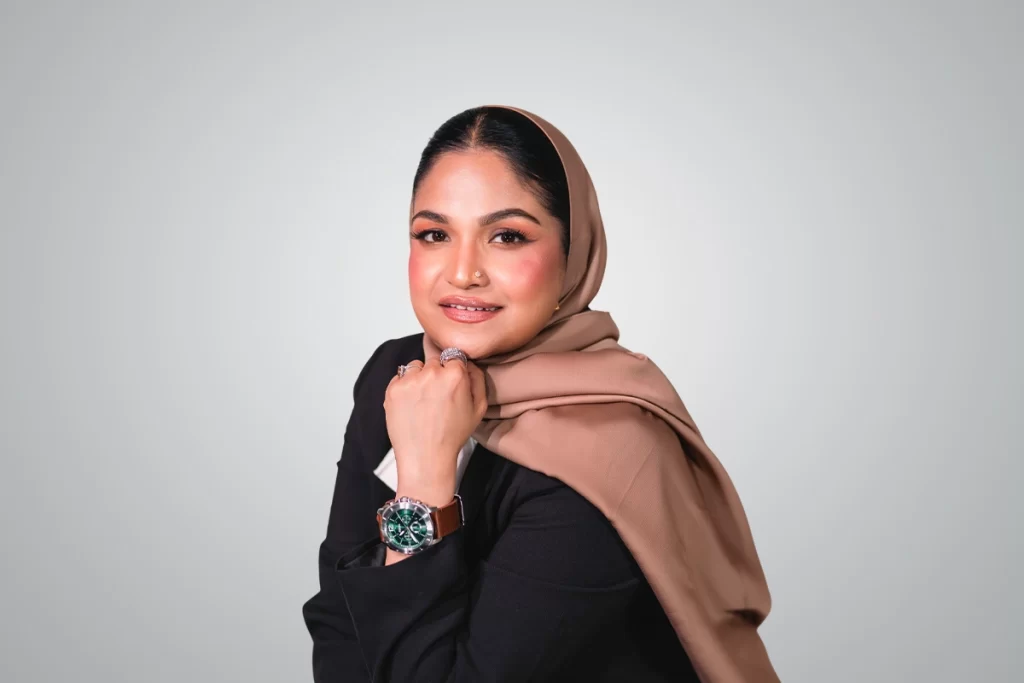
The Architect of Legal Change
Tasnuva Shelley
Founder
Legalized Education Bangladesh Ltd
“The law is not a fixed monument. It is argued into existence by the people in the room.”
Tasnuva Shelley has built her journey around making sure she is always in that room, shaping what the law becomes.
It began at Lincoln’s Inn in London, where being called to the Bar as the youngest daughter of a conservative Muslim family carried meaning far beyond personal achievement. It redefined what was possible for the women in her family and gave her a lasting sense of belonging in spaces where law is written and enforced.
That sense of belonging deepened in Silicon Valley. At Google’s legal compliance ecosystem, while building an independent life that included motherhood and an MBA, Tasnuva witnessed the convergence of law, technology, and the pandemic years, which added grounding and clarity. During this time, she, along with her son, conceived Legalized EdTech from her MBA thesis, driven by the belief that legal education should not be limited by privilege or geography but made accessible and future-ready.
In 2024, she stepped into Bangladesh’s constitutional legal system as deputy attorney general, engaging with questions of accountability, cyber law, AI governance, and institutional reform as she strongly believes that digital progress cannot come at the cost of women’s safety. Speaking with TradeFlock, Tasnuva reflects on the experiences and strategies that continue to shape her work and her belief that institutions must evolve with the people they serve.
What inspired you to start Legalized, and how has the journey been so far?
Legalized was born from both frustration and hope. I did not set out to become an entrepreneur; I started it because the gap I kept seeing in legal practice was real and specific, and no one was building the infrastructure to address it.
In Bangladesh, legal knowledge has long been gated by geography, language, and class. I wanted to change that by making law more accessible and usable. Through Legalized, we are driving this shift. Digital BLD, built with the Bangladesh Bar Council, is the country’s first AI-powered legal research database. The Legalized Learning App delivers bilingual legal education beyond law schools, while AI for Breakfast Dhaka builds a community of women in law and technology.
Why do neutral legal systems still produce unequal outcomes, and how can that be fixed at scale?
Gender neutrality in law is not truly neutral, and neutrality does not ensure equity in outcome. When systems are built around a “reasonable man”—propertied, legible, and digitally fluent—neutral rules privilege those who fit that profile and exclude others. This reflects who designs the system, not always intentional bias.
In Bangladesh, this appears in environmental law, where women’s low land ownership limits access to justice, and in AI governance, where policy and data reflect male-dominated inputs. Design mirrors the composition of the design table. The remedy is inclusion at the point of design. This is the basis of correctional jurisprudence, correcting inherited inequality rather than reproducing it.
Justice is exercising rights with dignity.
As Bangladesh digitises, what opportunities should leaders prioritise and what risks need urgent focus?
The future belongs to countries that balance technological growth with fairness and human values. Bangladesh has a strong opportunity to become a regional leader in digital governance, provided it invests meaningfully in its youth and women as drivers of change.
Technology can improve access to justice, public services, and governance, making systems faster and more transparent. At the same time, it brings risks such as cybercrime, misinformation, scams, and data misuse, which can deepen inequality if not addressed early.
The real challenge is inclusion. Digital progress must be designed so it does not exclude women or marginalised groups. These are not only technical risks but political choices about who is present when systems are built and who benefits from them.
“Inclusion without structure is rhetoric, not reform.”
Where do legal systems fall short on AI, digital evidence, and cybersecurity, and what practical fixes are needed?
Existing legal systems were built for harms that are visible, sequential, and tied to identifiable individuals who can safely approach courts for redress. AI and digital harms disrupt these assumptions.
They are structural and distributed, affecting groups across time and borders rather than isolated victims. Digital evidence is fragile and technically complex, often altered or misread without expertise. The most serious harms, deepfakes, non-consensual intimate imagery, and online harassment, disproportionately affect women, who often cannot assert their rights publicly without worsening stigma. In Bangladesh, I describe this as “social death”, irreversible social damage from explicit or fabricated content. What is treated as defamation is, in reality, an existential injury.
Bridging this gap requires stronger digital literacy, ethical AI governance, and improved forensic capacity.
How do you decide if a challenge needs regulation or a systems solution?
The first question I ask is, ‘Where is the accountability gap?’ Regulatory intervention is needed when conduct must be prohibited and actors must be held to legal standards they would not voluntarily adopt. Systems-driven solutions are needed when the problem is architectural, where default system behaviour produces harm regardless of intent.
Most challenges require both. If harm exists due to lack of clear boundaries, such as cybercrime or privacy breaches, regulation is essential. But when the gap is capability, laws alone are insufficient. Without digital literacy or institutional capacity, even strong regulation fails.
Lasting change comes when legal frameworks and systems evolve together, combining accountability with capability. Addressing online violence is not optional, it is a human rights obligation.
Featured Magazine -

All Magazines-









Other Interviews-
- Manal Hassoun-Most Impactful Women Leaders from Asia 2026
- Shilpi Yadav-Most Impactful Women Leaders from Asia 2026
- Tasnuva Shelley-Most Impactful Women Leaders from Asia 2026
- Dr. Gurdaman L Sharma-Best Education Leaders in India 2026
- Tarun Ramesh Agarwal-Best Education Leaders in India 2026
- Naseer Ali-Best Education Leaders in India 2026
- Eliud Jimenez-Most Inspiring Global HR Leaders 2026
- Tiffany Dorsey-Most Inspiring Global HR Leaders 2026
- Darya Chadha-Most Inspiring Global HR Leaders 2026
- Ângela Silva-Most Inspiring Global HR Leaders 2026
