Redefining Success Through People-First Vision
Tiffany Dorsey
Regional HR Director
Pulcra Chemicals, LLC

Redefining Success Through People-First Vision
Tiffany Dorsey
Regional HR Director
Pulcra Chemicals, LLC
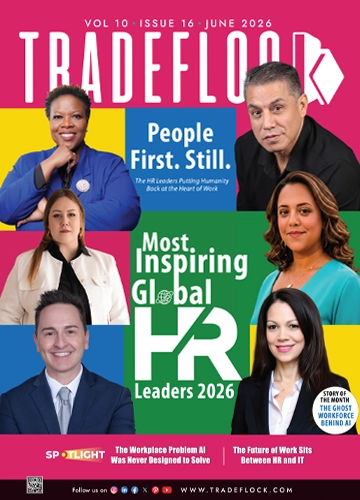
Workplaces don’t succeed on strategies and numbers alone. They thrive when people feel heard, supported, and inspired to grow and develop. Yet creating that balance between business goals and human needs is rarely simple. It takes leaders who can see both sides of the equation: the metrics that drive performance and the culture that sustains it. That rare balance is what defines Tiffany Dorsey, Regional Human Resources Director of Pulcra Chemicals, LLC. With over two decades of experience in human resources and business management, she has led teams through union negotiations, developed policies and training programs, and conducted sensitive investigations that helped rebuild trust. Today, as Regional Human Resources Director – Americas and Global Organizational Development Manager at Pulcra Chemicals, she oversees HR operations across multiple countries and drives global initiatives in job harmonization, compensation, and HR technology. In this conversation, Tiffany reflects on her journey and the lessons that continue to shape her people-first approach to leadership.
"That dual perspective shaped me into a leader who balances business alignment with a true commitment to people, ensuring HR fuels both growth and culture."
What inspired your shift from operations to HR, and how has that mix shaped your leadership?
My move from operations to HR wasn’t sudden; it grew out of realizing that my real impact came through people more than processes. In operations, I mastered efficiency and outcomes, but what always struck me was how culture and employee well-being drove those results. I naturally leaned into mentoring, problem-solving with teams, and building systems that boosted both productivity and morale. So when HR leadership opened up, it felt like a natural step. My operations lens helps me grasp the “why” of business needs while seeing the “how” from the employees’ side.
That dual perspective shaped me into a leader who balances business alignment with a true commitment to people, ensuring HR fuels both growth and culture.
What’s been your toughest challenge in employee relations, and how did it become a growth opportunity?
Sustaining strong employee relations across industries has been both challenging and rewarding. Each sector has its own rhythm—some value innovation and agility, while others rely on structure and stability. Early in my career, I tried a “one-size-fits-all” model and quickly learned it left employees unheard and leaders frustrated. I shifted by creating adaptable frameworks rooted in core values but flexible to each context. For instance, feedback loops looked different in manufacturing than in sales, yet employees in both felt their voices counted. The lesson: Employee relations thrive not through rigid policies, but through adaptability, listening, and strong relationships. This approach built trust, raised engagement, and improved retention, transforming a challenge into long-term organizational growth.
Can you share a personal story of a challenging case where your combination of analysis and empathy led to a successful resolution?
One of the toughest cases I managed involved multiple claims of harassment and discrimination 8 That dual perspective shaped me into a leader who balances business alignment with a true commitment to people, ensuring HR fuels both growth and culture. 10 Best HR Leaders To Watch in USA 2025 11 within a team. Employees were fearful, anxious about retaliation, and uncertain whether leadership would truly protect them. I knew this required more than process—it called for empathy, patience, and transparent communication alongside thorough analysis. Each interview was approached with compassion, allowing people to share openly while I carefully pieced together facts and patterns. Emotions ran high, but striking a balance between rigor and humanity uncovered the truth and ensured accountability. The organization strengthened its reporting systems, leaders became more proactive in fostering inclusion, and the team that had once been silenced began to feel empowered. For me, it reinforced that HR’s role goes beyond compliance; it’s about transforming painful situations into defining moments of integrity and cultural growth.
What creative training method have you used that transformed supervisor coaching?
Training often feels like compliance, but I’ve seen it become transformative when it’s creative and engaging. One of the most impactful methods I introduced combined storytelling with gamification for supervisor coaching. Instead of static slides, supervisors entered interactive scenarios modeled on real workplace challenges. Through role-play, they “leveled up” by navigating tough conversations—from addressing performance gaps to coaching for growth or resolving conflict. The storytelling made situations relatable, while gamification kept them motivated. The results spoke volumes: supervisors retained their skills, felt more confident, and employee surveys showed that coaching quality, morale, and support had improved. It proved that reimagining training doesn’t just build skills—it sparks growth and cultural transformation.
How do you recharge and maintain balance outside your HR role?
Balancing a demanding HR role across the Americas has taught me something vital: balance is not a luxury; it is fuel for leadership. I recharge by spending time with family and friends, as well as immersing myself in creative outlets like painting and writing. Those experiences ground me and remind me that our real mission is helping people thrive in every part of life. After time away, I return to work with clarity, perspective, and renewed energy. I make it a priority to model that harmony for my teams, because when leaders live it, employees feel permission to do the same. A workforce that feels balanced is not only more resilient but also more inspired to innovate and grow.
"Employee expectations are not challenges to overcome—they are opportunities to create workplaces where people feel seen, valued, and excited to belong."
What leadership lesson shaped how you guide others?
Early in my career, I believed that being accountable meant doing everything myself. I wanted to ensure every detail was perfect, but in trying to oversee everything, I stretched myself too thin. Worse, I unintentionally signaled to my team that I didn’t trust them with bigger responsibilities. The lesson hit me hard during a major project when I realized I simply could not do it all alone. Hearing my team’s perspective was humbling—they felt underutilized and doubted I had confidence in their abilities. That feedback reshaped how I lead. Today, I see delegation not as giving up control, but as empowering others. Trusting people with meaningful responsibilities creates space for leaders to focus on strategy while developing the next generation of talent. It’s a lesson I share often with mentees: delegation isn’t about lightening your load. It’s about multiplying impact.
What overlooked qualities do you focus on when developing future leaders?
When it comes to succession planning, I see too much focus on technical skills and not enough on the qualities that sustain leadership over time. The next generationof leaders needs more than a strong résumé—they need adaptability, empathy, and resilience. I’ve watched high-potential employees grow when given opportunities to coach or mentor others, even if it pushed them outside their comfort zones. Those experiences sharpen their ability to listen, inspire trust, and lead through uncertainty. My goal is not to replicate current executives, but to prepare leaders who can adapt, build relationships, and navigate change with confidence. Those are the leaders others genuinely want to follow.
How has technology made HR more human?
Technology has transformed HR, but what excites me most is its human impact. When we introduced digital onboarding and automated administrative workflows, our goal was not just speed—it was creating space for connection. One new hire told me their first week felt seamless because they weren’t overwhelmed by paperwork. Instead, they spent time shadowing leaders, building relationships, and immersing themselves in the culture. Technology, when used thoughtfully, does not replace HR’s human touch but amplifies it. The real value lies in the time it frees: time for managers to coach, for HR to listen, and for employees to feel seen. Technology is just a tool; the impact comes from how it lets us be more human in the moments that matter.
What shifts in employee expectations have surprised you, and how have you responded?
The biggest shift I’ve noticed is that flexibility is no longer a perk—it is an expectation. Employees want flexibility in where they work, how they learn, and how they define success. What surprised me is how this spans every industry, from manufacturing to professional services, reshaping the employee experience. Adapting meant designing HR strategies that strike a balance between consistency and local nuance. In some regions, flexibility meant hybrid schedules. In others, it meant investing in professional development or mental health resources. By listening and tailoring programs, we met evolving expectations while staying aligned with business goals. The result is not just higher retention. It is a workforce that feels valued and seen. Employee expectations are not challenges to overcome—they are opportunities to create workplaces people genuinely want to be part of.
Featured Magazine -