
A Systems-First Technology Leader
Sandeep Naruka
Head of IT (Africa)
Indorama Eleme Fertilizer & Chemicals Limited
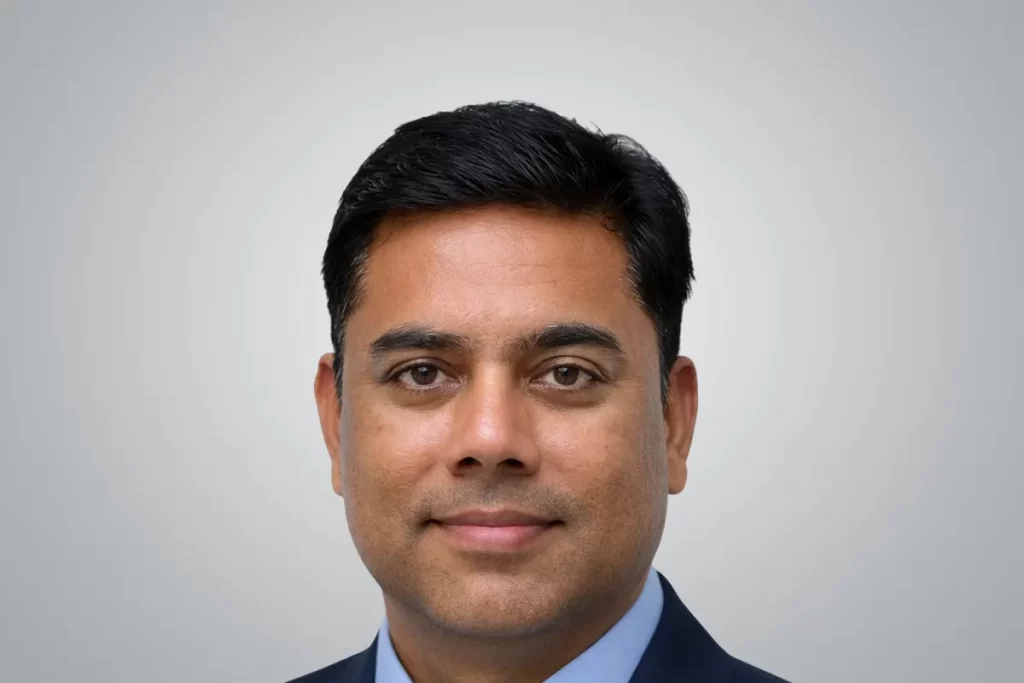
A Systems-First Technology Leader
Sandeep Naruka
Head of IT (Africa)
Indorama Eleme Fertilizer & Chemicals Limited
Technology leadership today is shaped less by tools and more by the ability to make steady decisions in constantly shifting environments. Organisations operate at a pace where scale, risk, and accountability intersect daily, and experience becomes the true differentiator. Sandeep Naruka’s journey reflects this evolution, shaped by consulting, aviation, manufacturing, and large-scale transformation programmes that demanded both precision and resilience. From managing mission-critical systems to leading complex ERP and digital initiatives, each role strengthened his understanding of how technology serves business under real pressure. Those lessons now inform his work as Head of IT, where he approaches transformation with clarity, discipline, and long-term intent. In an exclusive conversation with TradeFlock, he shares his journey, the challenges that shaped him, and the way forward.
Your career spans consulting, aviation, manufacturing, and large transformations. Which experiences most shaped how you lead today?
Moving across consulting, aviation, manufacturing, and large transformation programmes gave me a rare opportunity to see how technology decisions actually land on the ground. Each phase of my career added a different layer of perspective, especially while leading large-scale initiatives in the evolving AI and enterprise technology landscape. I worked extensively on ERP implementations across platforms such as Oracle, SAP, and INFOR, often within highly complex environments that required deep integration with third-party systems and middleware solutions.
What truly shaped my decision-making was not just the scale of these programmes, but also the responsibility of delivering them within tight budgets and aggressive timelines for organisations operating at multi-billion-dollar revenue levels. We introduced robotics and AI-driven automations to improve reconciliation, strengthen preventive maintenance, and enhance operational resilience. Navigating these challenges consistently sharpened my ability to balance ambition with practicality, ensuring that every decision aligned with long-term business value rather than short-term experimentation.
AI and automation are everywhere in enterprise conversations. Where do you see real value being created today, and where is adoption still premature?
The real impact of AI and robotic process automation today is most visible in areas where efficiency, accuracy, and scale intersect. Day-to-day operations benefit significantly when AI is applied to improve data quality, especially through controlled and preventive models that reduce errors before they compound. In environments where work is labour-intensive and cost-sensitive, automation delivers measurable returns by freeing teams to focus on higher-value tasks.Practical use cases such as AI-driven chatbots have matured beyond basic support, now helping employees access policies and standard operating procedures while also strengthening cybersecurity monitoring. AI is also proving valuable in sales enablement by guiding customers toward the right products within complex SKU portfolios. At the same time, widespread adoption still faces hurdles, particularly around implementation cost and security readiness. Over the coming decade, as these barriers ease, organisations will increasingly need to decide whether to build tailored solutions or adopt proven platforms, depending on their scale and risk appetite.
If you were starting out today, what career choices would you change, and why?
I would prioritise building early, failing faster, and learning in shorter cycles. Becoming a full-stack product manager and developing strong AI or machine learning foundations would be central choices. Titles would matter less than outcomes. Leadership, for me, would still mean earning trust through execution and delivering value consistentl
Having worked across industries, how does the relationship between business leadership and IT differ, and how do you navigate those differences?
Working across multiple industries made one thing very clear to me early on: the relationship between business leadership and IT is never uniform. Each organisation brings its own priorities, constraints, and maturity levels, even when the surface challenges appear similar. In most cases, leaders are deeply focused on improving data quality and accelerating reconciliation processes, because those gaps directly affect confidence in decision-making.There is also genuine excitement around emerging AI capabilities, which often creates both opportunity and pressure. My role as an IT leader has been to channel that enthusiasm into solutions that genuinely fit the organisation’s roadmap and operational reality. Rather than reacting to trends, I focus on grounding technology choices in clear business outcomes, helping leaders move from curiosity to clarity while ensuring IT remains a strategic enabler rather than a reactive function.
Agile often sounds simple, but it proves complex at scale. What does agile realistically look like in large enterprise IT environments?
In enterprise IT environments, agile succeeds only when it is grounded in clarity rather than ceremony. When problems and goals are well defined, agile frameworks help teams break complex work into manageable sprints and deliver incremental value. However, large organisations often operate under constraints that make pure agile difficult to sustain at scale.Most enterprises, therefore, adopt a hybrid approach that blends elements of the Waterfall and Agile methodologies, shaped by factors such as skill availability, decision latency, and varying levels of business engagement. My focus has been on adapting agile principles to fit the organisational context rather than forcing rigid models. This means aligning delivery rhythms with leadership involvement, ensuring accountability across layers, and creating momentum without sacrificing governance or strategic oversight.
If you were beginning your career in today’s technology landscape, which skills or technologies would you prioritise building first, and why?
If I were starting my career today, I would still anchor myself in strong technical fundamentals while actively exploring AI and robotics as core capability areas. These technologies are becoming essential for improving efficiency and shaping how modern enterprises operate. Beyond tools and platforms, I would continue learning coding, because it builds the ability to evaluate solutions critically rather than relying solely on vendor narratives.Understanding how to select the right models, platforms, and architectures is only part of the responsibility. The larger challenge lies in connecting business intent with technical execution. Future IT leaders will need to consistently bridge this gap, designing ecosystems in which technology integrates seamlessly into business processes and delivers scalable, sustainable outcomes.
Featured Magazine -

All Magazines-



Other Interviews-
- Inaas Arabi-Best Corporate Leaders in USA 2026
- Mark Newsome-Best Corporate Leaders in USA 2026
- Manar Elsakka-Best Corporate Leaders in USA 2026
- Dawn Stastny-Best Corporate Leaders in USA 2026
- Troy Negley-Most Inspiring Global HR Leaders 2026
- S. Indrani Shanmugam-Most Impactful Women Leaders from Asia 2026
- Gutti Malleswara Reddy-10 Best Tech Leaders in India 2026
- Rajesh Pasari-Best Education Leaders in India 2026
- Sinan Safaa Aboeless-Asia’s Best Business Leaders 2026
- Dr. Sandeep Chatterjee-Best Education Leaders in India 2026
