

Where Learning Strategy Meets Business Performance
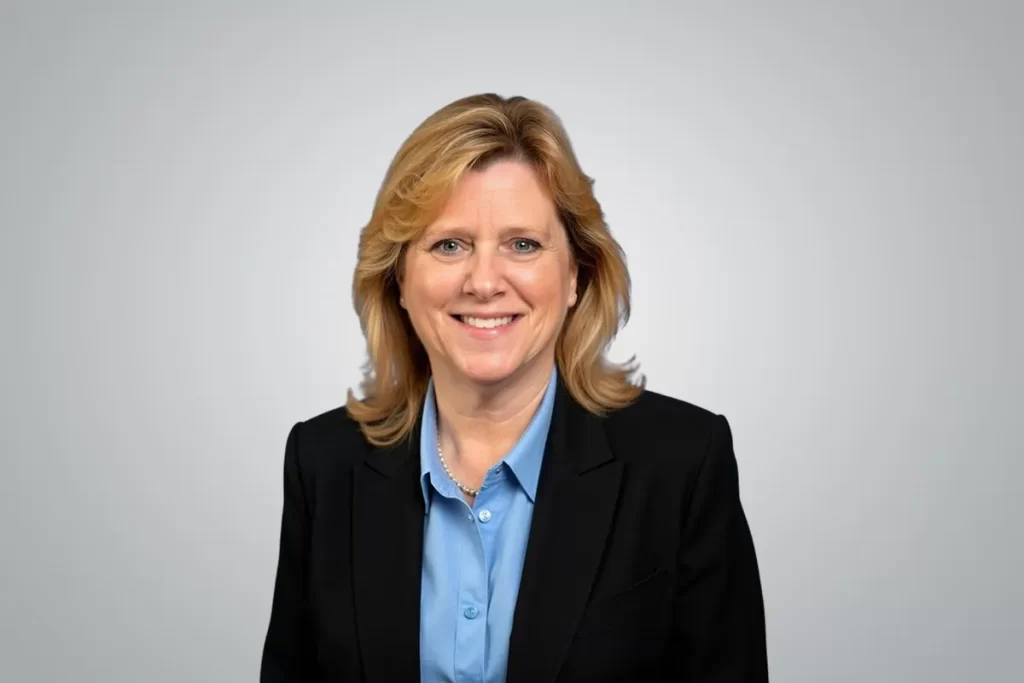
Kelly F. Lake
President
Katama Learning
Where Learning Strategy Meets Business Performance
Kelly F. Lake
President
Katama Learning
Uncertainty has become the new constant in business. As technology advances faster than many organizations can adapt, the pressure to modernize learning, elevate performance, and empower people has never been greater. While many organizations scramble to catch up, a few leaders have long been building toward this moment. Kelly F. Lake is one of them. With over 30 years of experience at the forefront of learning, performance, and AI-driven transformation, Kelly has consistently championed people-first innovation.
From building Olympic-scale training systems to leading strategic transformation for Aptara, KnowledgeWorks Global, MPS-EI, and SweetRush, she has redefined effective workforce development for global organizations. Her career reflects a rare ability to align business needs with human growth.
In an exclusive interview with TradeFlock, Kelly Lake opens up about her journey, the pivotal challenges she has faced, and the future she is actively building.
"When learning becomes personal and purposeful, transformation becomes possible.” – Kelly F. Lake, President, Katama LearningAI ."
You’ve spent nearly three decades architecting learning ecosystems. How has the definition of “workforce readiness” fundamentally shifted in the AI era?
For nearly thirty years, I’ve been architecting learning ecosystems, and what I’ve witnessed is a fundamental shift in what “workforce readiness” really means. Earlier in my career, readiness meant building skills and pathways aligned with defined roles and relatively stable business environments. Organisations could plan in multi‑year cycles, and people could build expertise that held its value for long stretches of time.
But over the decades, I watched the landscape change—first with digital transformation, then globalization, then new business models, and now AI. Each wave made it clear that readiness couldn’t be treated as a one‑time achievement. It had to become an ongoing capability. AI didn’t initiate that shift, but it accelerated it to a pace we’ve never experienced.
From my vantage point, the biggest change is that workforce readiness is no longer about preparing people for the work they will do. It’s about preparing them for the work they will continually need to re‑imagine. I’ve seen people struggle because the environment around them evolves faster than their mental models. Readiness now means being able to adapt inside complexity, to work confidently with intelligent systems, and to approach change as something you can shape rather than something that happens to you.
AI hasn’t replaced the need for human capability—it has amplified it. And in many ways, everything I’ve built over the last three decades has been preparing organizations for this moment: a world where learning ecosystems must be dynamic, integrated, and designed for continuous reinvention. So, when I think about workforce readiness in the AI era, I see it as equipping people not just to perform, but to transform—alongside the systems, tools, and intelligence that are transforming with them.
You are known for blending executive oversight with hands-on innovation. How do you personally ensure strategy and execution stay perfectly aligned
For me, strategy and execution only stay aligned when I stay close to the work and close to the people doing it. I’ve led global transformations long enough to know that a strategy created in isolation, even a brilliant one, will fall apart the moment it meets reality. So I build alignment by designing strategy with the same level of rigor, curiosity, and iteration that I bring to execution.
I stay deeply engaged in the early architecture of a vision, but I also stay present in the moments where that vision becomes real—inside workflows, inside teams, inside the learning ecosystem. That hands‑on involvement isn’t about control; it’s about sensing. It allows me to see friction early, spot patterns, and adjust direction before misalignment becomes costly.
I also insist on creating what I call “closed‑loop clarity.” Every strategic decision must have a visible line to outcomes, behaviors, and experiences. And every execution decision must ladder back to the strategic intent. When those loops stay tight, teams move faster, leaders make better decisions, and the organization builds confidence in its own ability to transform.
At the end of the day, alignment isn’t a governance exercise, it’s a leadership discipline. I ensure strategy and execution stay connected by staying connected myself: to the work, to the data, to the people, and to the purpose behind the transformation. That’s where real coherence comes from.
You’ve led global teams across numerous industries. What cultural or behavioral insight has most shaped your approach to enterprise reinvention?
Across every industry and geography I’ve worked in, the insight that has shaped me most is this: people don’t resist change, people resist change that happens to them rather than with them.
Leading global teams has shown me that culture and behavior shift not because a strategy is announced, but because people feel connected to the purpose behind it and empowered to shape how it comes to life. Whether I’m working in financial services, tech, healthcare, or manufacturing, the pattern is the same: when people understand the “why,” see themselves in the “how,” and feel trusted in the “what next,” reinvention accelerates.
I’ve also learned that every culture—no matter how different—shares a universal truth: performance is emotional before it is operational. If people feel uncertain, excluded, or overwhelmed, even the best-designed transformation will stall. But when they feel seen, equipped, and part of the journey, they unlock levels of creativity and adaptability that no playbook can manufacture.
This insight has fundamentally shaped my approach. I design reinvention as a participatory process, not a top‑down mandate. I stay close to the lived experience of teams, because that’s where the real signals of readiness, friction, and opportunity emerge. And I build systems that honor both the global consistency organizations need and the local nuance people rely on to feel grounded.
At its core, enterprise reinvention is a human endeavor. The more deeply I understand the cultural and behavioral dynamics at play, the more effectively I can architect transformation. That’s what enables me to design reinvention that becomes part of how the organization thinks, works, and evolves.
What is one leadership lesson you learned early, perhaps the hard way, that still guides your decision-making today?
One leadership lesson I learned early and definitely the hard way, is that silence from a team is never a sign of alignment. Early in my career, I mistook quiet rooms for agreement and fast nods for commitment. What I eventually realized is that people stay silent when they don’t feel safe, don’t feel heard, or don’t see a path to influence the outcome. And when that happens, the strategy may look aligned on paper, but it will unravel in execution.
That insight changed everything about how I lead. Today, I pay close attention to what isn’t being said. I create space for dissent, questions, and healthy friction because that’s where the real intelligence of a team emerges. It’s also where blind spots surface before they become risks.
That early lesson taught me that leadership isn’t about getting quick agreement, it’s about creating the conditions where people can speak honestly, think boldly, and contribute meaningfully. It continues to guide my decision‑making every day.
If the next generation of women leaders could inherit one leadership trait from you, what do you hope it would be?
If the next generation of women leaders could inherit one trait from me, I hope it would be the courage to lead with clarity and conviction—even when the path isn’t fully defined. Throughout my career, I’ve stepped into roles, industries, and transformations where there was no playbook, no precedent, and often no safety net. What carried me wasn’t certainty—it was the willingness to move forward with purpose, to trust my instincts, and to create the conditions for others to do the same.
I want future women leaders to feel empowered to take up space, to articulate a vision that others can rally around, and to navigate complexity without losing their center. When women lead with that kind of grounded confidence, they don’t just change outcomes—they change cultures.
Katama Learning AI positions itself as a full-spectrum workforce transformation partner. What gap in the market did you feel others weren’t addressing?
When Katama Learning AI was founded, it was because I kept seeing the same gap across every transformation effort I led: organizations were investing in pieces of the workforce equation, but no one was addressing the full system. You had vendors focused on content, or platforms, or coaching, or AI tools, or change management—but they were all operating in silos. And in a world being reshaped by AI, those silos were becoming the very thing holding organizations back.
What I wasn’t seeing was a partner who could connect strategy, capability, technology, and culture into a single, integrated ecosystem. Over three decades, I’ve learned that workforce transformation doesn’t fail because people can’t learn. It fails because the environment around them isn’t designed to help them evolve. Companies needed more than training. They needed orchestration.
Katama was built to fill that gap. We bring together human capability development, AI‑powered learning, workflow redesign, leadership enablement, and change acceleration—end to end. Not as separate initiatives, but as a unified system that helps organizations reinvent how work gets done and how people grow inside that work.
The market had plenty of point solutions. What it didn’t have was a true transformation partner—one that could architect the whole experience, not just one component of it. That’s the space Katama occupies, and it’s why the model resonates so strongly right now.
With organizations rushing toward AI adoption, what is the biggest misconception leaders still have about AI-enabled workforce performance?
The biggest misconception I still see is the belief that AI will automatically elevate workforce performance simply by being deployed. Leaders often assume that introducing AI tools will create instant productivity gains, when in reality, performance only improves when humans, systems, and workflows are intentionally redesigned around those tools.
What I’ve witnessed across industries is that organizations rush to implement AI at the surface level—new platforms, copilots, dashboards—without addressing the deeper shifts required for people to actually use AI well. They underestimate the mindset, capability, and workflow transformation needed. AI doesn’t create high performance on its own; it amplifies whatever system it enters. If the system is fragmented, unclear, or overloaded, AI will accelerate that dysfunction just as quickly as it accelerates value.
Another misconception is treating AI as a replacement for human capability rather than a multiplier of it. The organizations that succeed are the ones that invest just as heavily in human readiness—judgment, sense‑making, experimentation, and the confidence to work with intelligent systems—as they do in the technology itself.
So, the misconception isn’t about what AI can do. It’s about what it takes for AI to actually deliver. AI-enabled performance is not a technology outcome; it’s a transformation outcome. And that requires leaders to rethink not just the tools, but the ecosystem around them.
Throughout your career, you’ve been a disruptor in immersive learning. What emerging technologies excite you most for the next wave of human-centered design?
What excites me most right now isn’t any single technology, it’s the convergence of technologies that finally allow us to design learning around how humans actually think, work, and grow.
Throughout my career, I’ve pushed the boundaries of immersive learning because I’ve always believed that people learn best when the experience feels real, relevant, and connected to their purpose. What’s emerging now makes that more possible than ever.
I’m energized by the rise of multi‑agent AI systems that can simulate complex environments, roles, and decision paths—giving people a safe space to practice judgment, collaboration, and problem solving at a level we’ve never been able to replicate. I’m equally inspired by adaptive experience engines that personalize learning in real time, not just based on skills, but on behaviors, context, and the way someone actually shows up in the work.
And then there’s the next generation of spatial computing and mixed‑reality interfaces. When you combine those with AI, you move beyond “immersive learning” into something far more powerful: environments that respond to you, challenge you, and evolve with you.
But the throughline for me is this: The future of human‑centered design isn’t about more technology—it’s about more humanity supported by smarter technology.
The tools are finally catching up to the vision many of us have been building toward for years: learning ecosystems that are intuitive, responsive, emotionally intelligent, and deeply aligned to how people grow. That’s the wave I’m most excited to help shape.
Looking at the 2030 workforce, what competencies do you believe will matter more than degrees, titles, or even experience?
By 2030, the competencies that matter most won’t be the ones printed on a resume, they’ll be the ones that determine how quickly someone can adapt, collaborate, and create value in an environment that’s constantly shifting. Degrees, titles, and even past experience will matter far less than a person’s capacity to learn, to think critically, and to work confidently alongside intelligent systems.
What I see rising to the top are three core capabilities. First is adaptive intelligence—the ability to navigate ambiguity, reframe problems, and evolve your thinking as the context changes. Second is human differentiation: judgment, empathy, ethical reasoning, and the ability to build trust across teams and cultures. These are the capabilities that become more valuable as AI becomes more capable. And third is AI fluency, not in the technical sense, but in the ability to orchestrate, question, and collaborate with AI as a partner in the work.
By 2030, the people who thrive will be the ones who can learn fast, think deeply, and move fluidly between human insight and machine intelligence. Those are the competencies that will define the next era of workforce performance.
Featured Magazine -

All Magazines-





Other Interviews-
- Swapan Kumar-Best Corporate Leaders in USA 2026
- Aashik Khakoo-Best Corporate Leaders in USA 2026
- Inaas Arabi-Best Corporate Leaders in USA 2026
- Mark Newsome-Best Corporate Leaders in USA 2026
- Manar Elsakka-Best Corporate Leaders in USA 2026
- Dawn Stastny-Best Corporate Leaders in USA 2026
- Troy Negley-Most Inspiring Global HR Leaders 2026
- S. Indrani Shanmugam-Most Impactful Women Leaders from Asia 2026
- Gutti Malleswara Reddy-10 Best Tech Leaders in India 2026
- Rajesh Pasari-Best Education Leaders in India 2026
