

Orchestrating a Digital First Future with AI Acceleration
Prasun Tyagi
Head of IT
Hyundai India Insurance Broking Pvt. Ltd.
Orchestrating a Digital First Future with AI Acceleration
Prasun Tyagi
Head of IT
Hyundai India Insurance Broking Pvt. Ltd.
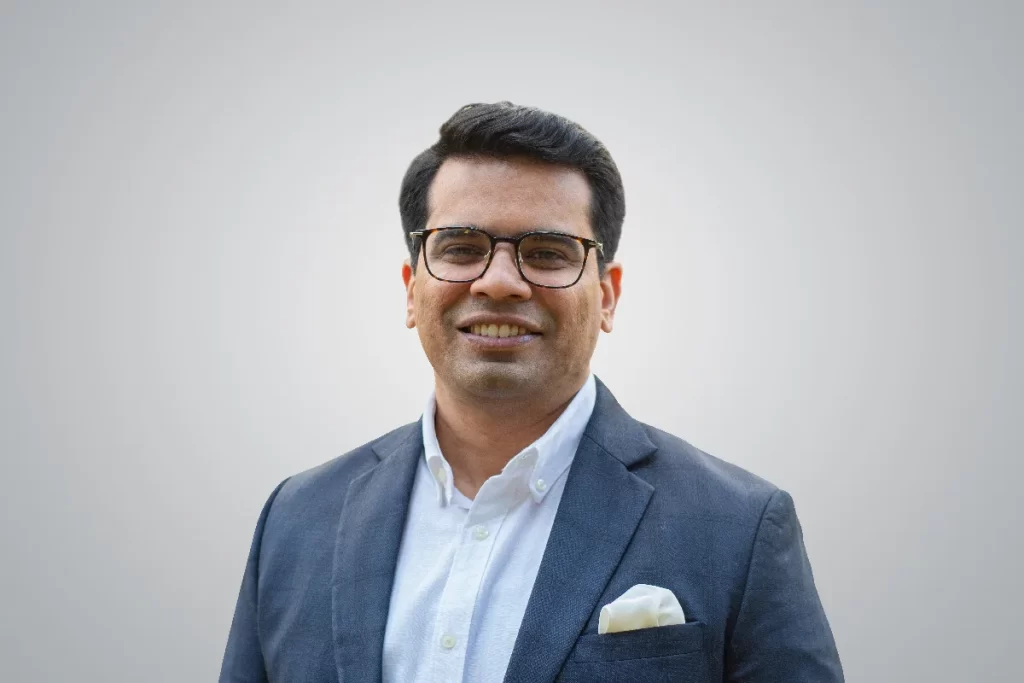
Complexity rarely arrives all at once. It accumulates steadily through growth, regulation, and rising expectations, until technology leadership becomes not just about disruption but also about maintaining stability while everything around it evolves. As organisations accelerate digital transformation, the real test of leadership lies not in how quickly systems are built, but in how reliably they withstand regulatory demands, scale, security requirements, and sustained operational pressure.
Leading within this complexity is Prasun Tyagi, Head of Information Technology at Hyundai India Insurance Broking (HIIB), with close to two decades of rich experience, he has built ground-up systems that generate about ₹3,500 Cr in GWP Year on Year and serve over 5 million smiles, while delivering a consistently strong customer experience. His work includes zero-downtime platforms with a “Zero-trust architecture” aligned with ISO 27001:2022 standards, creating a resilient foundation for innovation, including AI-powered WhatsApp chatbots and Vehicle Pre-inspections modules. These contributions have earned him multiple recognitions, including the Innovation of the Year Award 2025. Today, his focus spans technology architecture, cloud platforms, delivery governance, AI adoption and building teams that adapt to change without destabilising the core. As part of HIIB’s four-year evolution into a digital innovation powerhouse, his emphasis remains on systems that scale responsibly and perform reliably under pressure.
In a conversation with TradeFlock, he shared insights on his journey, leadership philosophy, and the evolving role of the modern CTO.
When you look back at the beginning of your career, what truly set the foundation for how you manage leadership roles today?
Looking back, what stands out most is the ability to navigate uncertainty and a relentless zeal for adapting to emerging technologies. I started my journey during the 2008 global recession, a period that demanded resilience and adaptability from the outset. There were no predictable paths or guarantees, only the need to keep moving forward, learn continuously, and take responsibility earlier than expected. That phase shaped how I approach leadership today: grounded, pragmatic, and focused on outcomes.
As my career progressed across organisations and roles, each phase added a layer to my leadership approach. Early roles helped develop first-principles thinking, breaking complex problems down before attempting solutions. Increased responsibility brought exposure to large-scale delivery and transformation, where ambiguity, legacy modernisation, and cross-functional collaboration became part of my everyday work.
More recent roles have been defined by continuous change, including regulatory complexity, rapid technology shifts, AI adoption, and organisational scale. Leading in such environments reinforced the importance of adaptability, multidimensional problem solving, and staying connected to both business priorities and frontline realities. These experiences collectively shape how I lead today, with clarity, accountability, agility, and integrity.
What emerging technologies are having the biggest impact, and how has AI already transformed the sector?
AI sits at the centre of the current transformation across the insurance sector, strengthening decision-making and enabling more efficient, customer-focused operations.
For instance, we reduced the turnaround time for vehicle pre-inspection from 24 hours to 15 minutes using AI-driven tools, and predictive models now flag potential fraud in real time. Customer engagement has improved with AI-powered chatbots that support policy renewals and service requests. Finance operations benefit from AI-based OCR and automation that enable end-to-end digital invoicing.
These implementations represent production-scale capabilities delivering measurable outcomes. Traditional AI improves risk assessment, fraud detection, and pricing; generative AI enhances customer conversations, document processing, and service automation, while agentic AI enables end-to-end automation across underwriting, claims, and renewals.
"Building technology as a tool, Creating experience as impact."
How do you balance the need for speed to market in today’s VUCA environment with evolving laws, IRDAI regulations, and competition?
Balancing speed to market with risk in India’s insurance sector starts with recognising volatility as a constant. Regulatory and competitive changes are constant, making it essential to design agile and adaptive tech architectures.
This reality became strikingly clear during a major product launch when a digital KYC regulation changed less than a month before go-live. Customer journeys, technology components, and operational processes had to be rapidly re-engineered without delaying the launch. That experience reinforced a core belief. Agility is a mindset before it becomes a framework. Capability usually exists within organisations, while readiness to adapt varies.
"Change is often welcomed when comfortable and resisted when inconvenient."
Effective balance comes from building configurable, modular products that quickly absorb regulatory shifts, supported by clear risk ownership, governance structures, and compliance guardrails. In a VUCA environment, progress depends on moving forward with confidence even when conditions evolve during execution.
As a technology leader, how do you choose the appropriate AI model and scale it responsibly?
Choosing the right AI model begins with business understanding rather than technology enthusiasm. Not every use case requires generative or agentic AI, and over-engineering often increases complexity without proportional value.
Strong enterprise with data foundations, reliable API ecosystems, and the ability to extend existing applications to form the base for scalable AI adoption. Cybersecurity, data privacy, and cost considerations remain integral to design decisions. Industry-focused models (SLMs) often deliver better outcomes while keeping investments disciplined, along with generating ROI in terms of business value and customer experience.
What advice would you give to young aspiring Technology Leaders?
One of the most important principles is trust. Strong technology is built in environments where people feel safe enough to speak honestly. Without that trust, feedback disappears, and systems may function but rarely improve in meaningful ways. Technology conversations are often dominated by what is new, but what lasts is built quietly with a long-term view and refined continuously through real use.
Above all, mindset determines pace. Tools will continue to evolve rapidly, but progress is always shaped by how open people remain to learning and change.
Featured Magazine -

All Magazines-






Other Interviews-
- Swapan Kumar-Best Corporate Leaders in USA 2026
- Aashik Khakoo-Best Corporate Leaders in USA 2026
- Inaas Arabi-Best Corporate Leaders in USA 2026
- Mark Newsome-Best Corporate Leaders in USA 2026
- Manar Elsakka-Best Corporate Leaders in USA 2026
- Dawn Stastny-Best Corporate Leaders in USA 2026
- Troy Negley-Most Inspiring Global HR Leaders 2026
- S. Indrani Shanmugam-Most Impactful Women Leaders from Asia 2026
- Gutti Malleswara Reddy-10 Best Tech Leaders in India 2026
- Rajesh Pasari-Best Education Leaders in India 2026
