

Revamping the CFO Role into a Strategic Growth Partner
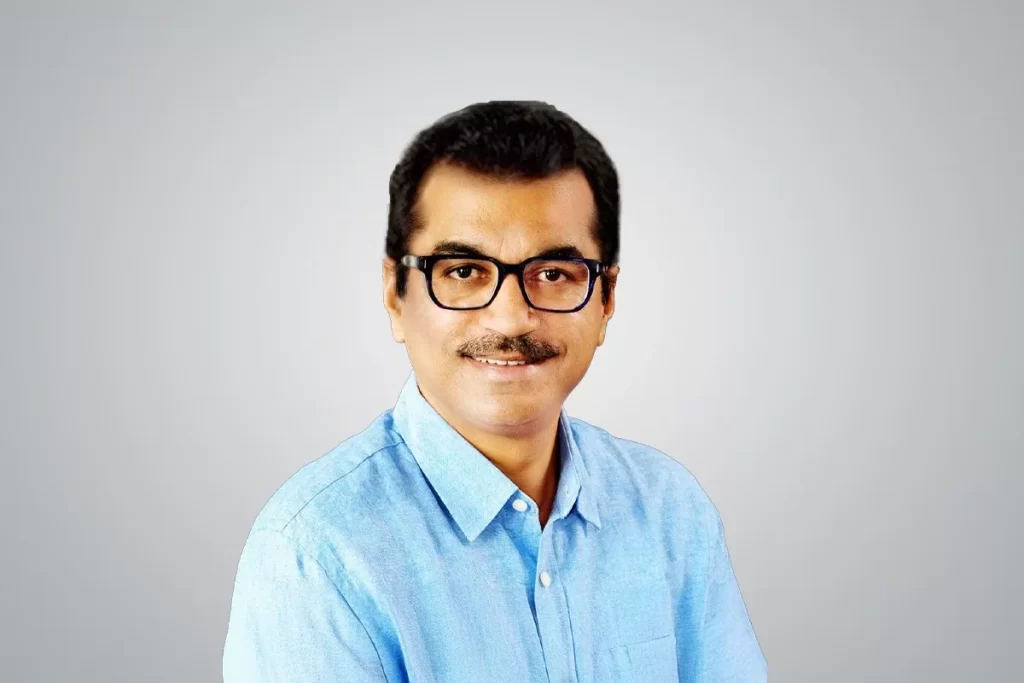
Sridhar Ranganathan
Vice president- Global Finance
Pando
Revamping the CFO Role into a Strategic Growth Partner
Sridhar Ranganathan
Vice president- Global Finance
Pando
Sridhar Ranganathan’s career exemplifies the evolution of the modern AI CFO—from financial steward to strategic growth partner. Over the course of his leadership journey, he has consistently guided organisations through complex inflection points, including large-scale restructurings, business separations, exits, and multi-stage fundraising, while strengthening governance and long-term enterprise value.
As Global Head of Finance, Legal, Rev Ops, and Ops at Freehand (formerly Pando), Sridhar has been instrumental in shaping both strategic direction and execution discipline. He has led global finance operations, investor engagement, M&A execution, and organisational restructuring, while building scalable finance architectures suited for high-growth, AI-enabled businesses. A defining element of his impact has been the creation and execution of an AI-driven finance roadmap—embedding automation, predictive analytics, and data intelligence into FP&A, forecasting, working capital optimisation, and executive decision-making.
Beyond numbers, Sridhar is recognised as a trusted co-pilot to CEOs and Boards. His ability to translate financial insight into actionable business decisions has enabled sustained year-on-year growth of 30–50% across organisations, even in volatile market conditions. Calm under pressure and clear in ambiguity, he is known for balancing growth ambition with capital discipline, helping organisations scale responsibly while preserving strategic focus.
This combination of strategic foresight, execution rigour, and people leadership defines Sridhar’s contribution as a finance leader—and underpins his recognition as one of today’s most impactful CFOs.
TradeFlock interviewed Sridhar to understand his approach to finance leadership, business partnership, and value creation in an increasingly AI-driven world.
What are your strengths and weaknesses in finance leadership?
My core strength lies in my ability to operate at the intersection of finance, strategy, and execution. I approach the CFO role not as a control function, but as a strategic business partner to CEOs and founders — providing forward-looking insights, decision frameworks, and capital allocation guidance rather than retrospective reporting.
I bring a balanced perspective shaped by experience across high-growth startups and complex global enterprises. This has enabled me to lead organisations through downturns, restructurings, and scale phases with resilience and discipline. A key differentiator in my leadership has been my focus on building AI-enabled finance capabilities — using automation, analytics, and predictive intelligence to improve forecast accuracy, working capital outcomes, and executive decision-making.
If I were to call out a weakness, it would be my tendency to hold myself — and sometimes my teams — to very high standards. My attention to detail and bias toward precision can occasionally slow decision-making in environments that demand rapid iteration. Over time, I have consciously learned to balance rigor with speed, ensuring that finance enables momentum rather than constrains it.
In your experience, what traits define a successful global finance leader?
The role of a global finance leader has evolved significantly. Today’s CFO must move beyond transactional finance and operate as a strategic navigator for the organisation. This requires deep business understanding, the ability to ask the right questions at the right time, and the judgment to distinguish signal from noise especially in data- and AI-rich environments.
Analytical rigor, forward-thinking insight, and mastery of KPIs are essential. Equally important are resilience and composure. Finance leaders are often at the center of the most difficult conversations, and the ability to remain steady, principled, and solutions-oriented during challenging periods defines true leadership.
Describe your leadership style and share advice for aspiring finance leaders.
My leadership style is grounded in strategic problem-solving, partnership, and trust. I believe finance leaders must understand decisions through the lens of customers, markets, and long-term value creation not just numbers. I prioritise clear communication, collaboration, intelligent risk-taking, and adaptability.
For aspiring finance leaders, my advice is simple but demanding: learn to think like a business leader, not just a finance professional. Develop the ability to move seamlessly between strategy, execution, and financial discipline. The journey requires continuous learning and self-awareness, but those who master this balance will remain relevant and impactful for decades to come.
What drives you to handle complex financial functions in a competitive industry?
Complexity has always been a source of motivation for me. Competitive, fast-moving environments demand constant learning, sharper judgment, and the ability to connect financial signals with business reality. That challenge energises me.
What truly drives me is the opportunity to influence outcomes beyond finance — collaborating deeply with sales, product, engineering, customer success, and leadership teams to solve real business problems. By embedding finance into the core of decision-making, I am able to translate complexity into clarity, helping organisations make better choices around growth, pricing, investments, and risk.
Seeing finance act as a force multiplier — improving productivity, capital efficiency, and strategic execution — reinforces my passion for building finance functions that actively shape business success rather than merely support it.
What major challenges did you face steering multi-million-dollar finance functions and global teams, and how did you overcome them?
One of the most significant challenges in leading global, multi-million-dollar finance functions has been aligning financial discipline with rapid business growth. Instead of scaling teams linearly, I focused on building systems, processes, and AI-enabled tools that improved productivity, visibility, and decision quality.
During periods of rapid expansion and organisational change, I led initiatives spanning restructuring, business separation, investor alignment, pricing strategy redesign, and capital efficiency improvements. Every major decision was grounded in rigorous ROI analysis, ensuring that growth ambitions were balanced with sustainable economics.
Loss of visibility is a common risk in fast-growing organisations. I addressed this early by implementing strong governance frameworks, real-time reporting, and forward-looking analytics from the outset. These measures enabled leadership teams to move quickly without losing control, preserving both agility and accountability.
Featured Magazine -

All Magazines-




Other Interviews-
- Inaas Arabi-Best Corporate Leaders in USA 2026
- Mark Newsome-Best Corporate Leaders in USA 2026
- Manar Elsakka-Best Corporate Leaders in USA 2026
- Dawn Stastny-Best Corporate Leaders in USA 2026
- Troy Negley-Most Inspiring Global HR Leaders 2026
- S. Indrani Shanmugam-Most Impactful Women Leaders from Asia 2026
- Gutti Malleswara Reddy-10 Best Tech Leaders in India 2026
- Rajesh Pasari-Best Education Leaders in India 2026
- Sinan Safaa Aboeless-Asia’s Best Business Leaders 2026
- Dr. Sandeep Chatterjee-Best Education Leaders in India 2026
