Building Marketing Engines with a Storyteller's Heart and a Strategist's Mind
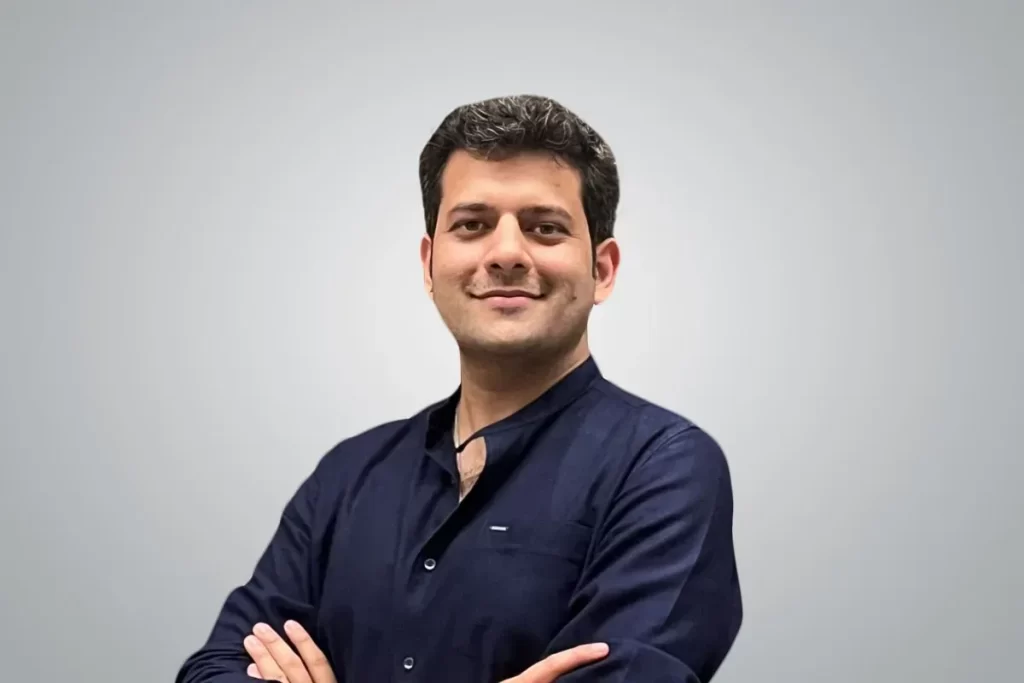
Karanvir Gupta
Director Marketing
DPDzero
Most marketing looks complete on the surface. Campaigns run, content flows, metrics move. What remains less visible is whether any of it continues to work once the person behind it steps away. That distinction tends to separate execution from ownership.
Karanvir Gupta has spent over a decade working in that space, building marketing functions in environments where very little existed to begin with. From shaping product narratives at Razorpay to leading product marketing across companies like Unbxd, Verloop.io, and Hatica, his work has consistently centred on connecting products to the right users with clarity and intent. Now at DPDzero, his focus extends beyond campaigns into building systems that hold.
In an exclusive interaction with TradeFlock, he shares what continues to matter in marketing and what does not.
Your journey has spanned multiple roles and industries. What has really shaped you as a marketer?
A non-linear career tends to build perspective earlier than a structured one. Moving across product marketing, sales enablement, customer marketing, and GTM strategy did more than expand responsibilities. It gradually reshaped how I understood the role of marketing within a business.
In the early years, I saw marketing primarily as storytelling. That belief still holds, but experience adds a necessary layer of discipline. Without clarity on the problem, the audience, and the context, even the strongest narrative loses relevance. That understanding deepened while working in early-stage environments where very little existed by default. Systems had to be built, decisions had to be made with limited data, and the margin for error was narrow.
Working in that context sharpens judgment. It changes how you prioritise, how you evaluate trade-offs, and how closely you stay connected to outcomes. What has stayed with me most are the systems and approaches that continued to work even after I stepped away from them.
What approach has consistently worked for you in a go-to-market strategy, especially with evolving customer behaviour?
Customer behaviour today requires a higher level of precision. Buyers arrive with context, prior research, and a defined expectation of value. Traditional approaches that begin with product messaging tend to fall short in such situations.
The approach that has worked consistently is narrative-led GTM, grounded in the customer’s reality. It begins with the problem, articulated in the customer’s language, with clarity about the gap they are experiencing. That requires a level of understanding that goes beyond surface-level insights.
I often tell my teams that if you have not understood the buyer in a complete sense, including what drives their decisions and what concerns them, the GTM effort will remain incomplete. When this alignment is achieved, the nature of the conversation changes. It moves away from persuasion and becomes a shared understanding of the problem and its resolution.
If your career were one campaign, how would you define it, and what moment continues to stay with you?
The tagline would be: “Built from scratch. Every single time.“
That reflects the nature of the environments I have worked in. Walking into situations where very little existed and building structure, direction, and capability from the ground up has been a constant theme.
The moments that stay with me are not tied to campaign metrics or short-term wins. They are tied to shifts in perception. One instance that stands out is when a sales leader who had been sceptical of marketing acknowledged its impact on deal velocity and customer readiness. That shift in how marketing was viewed carried more meaning than any single result.
Another moment was being recognised as the longest-standing marketer within an organisation. It reflected consistency, adaptability, and the ability to create sustained value. What it taught me is this:
“The bravest marketing decision is often not to do more, but to stop, listen, and start again with greater intention.
”
You have worked extensively in environments without a defined playbook. What does that demand from a marketer?
Working without a playbook quickly removes the safety net. There is no reference point to validate decisions and very little room to rely on precedent. What initially feels like freedom turns into responsibility at a much deeper level.
In those environments, clarity becomes the most valuable skill. It is not about generating more ideas, but about choosing the few that matter and committing fully to them. Decisions often have to be made with partial information, which forces a balance between instinct and accountability.
It also changes how teams are built. Execution alone is not sufficient. You need individuals who can think independently, question direction when required, and remain effective even when clarity is still evolving. Over time, the absence of structure stops feeling like a limitation. It becomes the fastest way to understand what holds and what does not.
Marketing is being reshaped by AI and increasing complexity. How do you see this evolution influencing the role of product marketing?
The current shift is less about technology and more about how it is perceived within teams. There is a noticeable tension around relevance, particularly when AI can handle large parts of the execution. That concern is valid, but it often shifts focus away from the core of marketing.
Clarity of thought becomes more critical in this environment. When execution becomes easier, the quality of thinking becomes the differentiator. Questions around positioning, audience understanding, and timing become sharper and more visible. Product marketing, in this context, moves closer to the centre of decision-making. It begins to influence how products are shaped, how markets are understood, and how value is communicated.
The role will demand stronger commercial awareness and deeper customer insight. Tools will continue to evolve, but the ability to define relevance and direction will remain a human responsibility.