
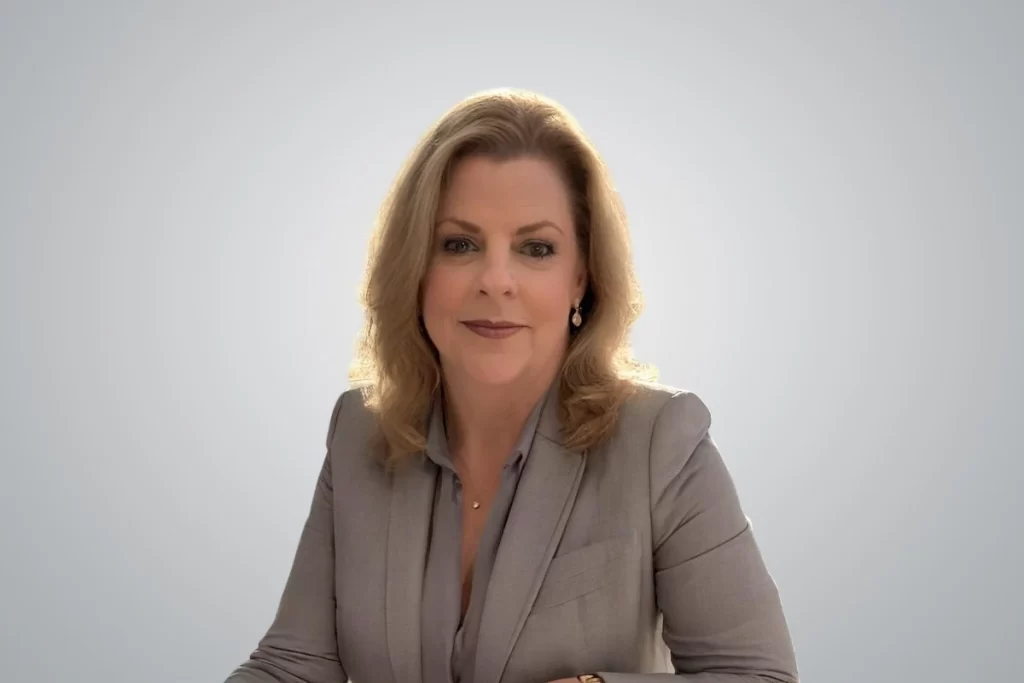
Building Cohesion Across Growth And Governance
Dawn Stastny
Chief Human Resources & Compliance Officer
BelPak
Building Cohesion Across Growth And Governance
Dawn Stastny
Chief Human Resources & Compliance Officer
BelPak
Organizations rarely begin breaking during public crises. The warning signs usually appear much earlier in quieter places, such as inconsistent leadership behavior, exhausted managers, unresolved accountability gaps, rising employee distrust, or operational growth outpacing the systems meant to support it. Much of Dawn Stastny’s career has unfolded in exactly those moments when companies are trying to scale, integrate, restructure, or stabilize while keeping people, governance, and execution aligned.
Over the course of her career, she has helped organizations navigate growth, acquisitions, workforce transformation, compliance complexity, and leadership transitions while building HR and governance functions capable of scaling alongside the business. In an exclusive conversation with TradeFlock, Stastny reflects on leadership accountability, organizational trust, and why culture ultimately reveals itself through operational behavior rather than corporate messaging alone.
Looking back, what was the most difficult phase of your career building HR and compliance functions from scratch?
Some of the hardest environments were not failing businesses. They were organizations growing faster than their internal structure could realistically support, where leadership expected enterprise-level execution while governance models, reporting clarity, operational discipline, and decision-making alignment were still evolving in real time. Developing HR and compliance frameworks inside that kind of pressure involved far more than implementing systems or drafting policies because teams were already stretched, accountability lines were unclear, and transformation initiatives kept accelerating at the same time.
Earlier in my career, I probably relied too heavily on endurance, both personally and organizationally, and over time, I became much more focused on sequencing and infrastructure. Governance alignment must happen early; authority and accountability must sit together; and team capacity cannot be an afterthought during transformation. Organizations can absorb temporary operational strain, but eventually, employees start compensating for structural gaps that leadership has not fully addressed, and that pressure slowly weakens both execution and trust across the organization.
During acquisitions, where do integrations typically break down?
Technology systems usually integrate faster than people do, while post-acquisition instability often begins much earlier, around communication gaps, leadership inconsistency, reporting uncertainty, and the quiet anxiety employees carry long before executives fully recognize it. Integration plans may look highly structured on paper, yet human behavior rarely follows timelines or project charts once uncertainty starts to spread across an organization.
One of the more complex integrations I worked through involved bringing together multiple organizations with different operating models, leadership structures, systems, and workforce expectations while maintaining business continuity throughout the transition. Benefits programs, compliance frameworks, HR processes, and management practices all needed to be aligned without disrupting day-to-day operations. Employees can usually adapt to change when communication remains transparent and leadership behavior stays consistent. Difficulties tend to emerge when uncertainty lingers too long or when employees begin receiving conflicting signals about priorities, expectations, and the direction of the organization.
Why do so many companies still struggle with compliance and workplace accountability?
Most organizations already know where their operational and cultural vulnerabilities exist. Weak management behavior, inconsistent accountability, burnout, communication gaps, and governance failures are rarely invisible problems internally. The difficulty begins when leadership teams attempt to solve deeply behavioral issues primarily through policies, training modules, or messaging campaigns without first addressing the operational habits underlying those problems.
Compliance itself has also become far more layered than it was fifteen years ago because multi-state labor exposure, AI governance, ESG expectations, data privacy, wage regulations, and workforce transparency now intersect operationally rather than exist as separate legal categories. I have seen situations where known management risks went unaddressed because short-term business performance appeared strong enough to justify delaying corrective action. Eventually, those same issues expanded into much larger employee-relations and compliance exposures, which reinforced something I have seen repeatedly over the years: policies rarely fail organizations on their own. Leadership behavior, inconsistency, and delayed accountability usually create the bigger operational risk underneath.
How has employee relations changed since you first entered HR leadership?
Twenty years ago, many employee relations situations were comparatively contained. A policy issue, a performance discussion, or a procedural disagreement usually stayed operational. Today, workplace tension escalates differently because employee concerns now intersect with culture, mental health, legal exposure, leadership credibility, technology, and public scrutiny all at once, which changes both the speed and complexity of decision-making.
One organizational transformation I led through made that shift very clear. Leadership teams were trying to stabilize operations while employees were navigating uncertainty about role changes, reporting structures, and long-term trust in the organization. Communication gaps quickly created anxiety because decisions were still evolving, while managers were already under pressure to maintain continuity. Employees wanted clarity that leadership could not always provide immediately, and such situations force HR leaders to rely less on policy interpretation and far more on judgment, timing, communication, and consistency as the organization works through real-time instability.
“Growth becomes sustainable only when accountability, trust, and execution evolve at the same pace.”
Have you ever strongly disagreed with leadership decisions during organizational change?
Absolutely, especially during periods when execution pressure began to overshadow longer-term organizational consequences. There were situations where I believed leadership teams underestimated the cultural fallout, employee impact, or operational risk associated with certain decisions, and my responsibility was never to be a passive participant in executive discussions. Leadership teams need honest risk analysis, difficult conversations, and perspectives grounded in workforce realities, particularly during high-pressure transitions where short-term urgency can easily dominate decision-making.
At the same time, disagreement within executive leadership is only productive when it remains disciplined and constructive. Once final decisions were made, my focus shifted immediately toward execution, stabilizing communication, supporting managers, reducing disruption, and helping teams move forward professionally, even in situations where I originally had reservations. Organizations lose stability quickly when leadership disagreements continue publicly long after strategic decisions have been finalized, because employees begin to interpret uncertainty in leadership behavior itself.
Featured Magazine -

All Magazines-






Other Interviews-
- Inaas Arabi-Best Corporate Leaders in USA 2026
- Mark Newsome-Best Corporate Leaders in USA 2026
- Manar Elsakka-Best Corporate Leaders in USA 2026
- Dawn Stastny-Best Corporate Leaders in USA 2026
- Troy Negley-Most Inspiring Global HR Leaders 2026
- S. Indrani Shanmugam-Most Impactful Women Leaders from Asia 2026
- Gutti Malleswara Reddy-10 Best Tech Leaders in India 2026
- Rajesh Pasari-Best Education Leaders in India 2026
- Sinan Safaa Aboeless-Asia’s Best Business Leaders 2026
- Dr. Sandeep Chatterjee-Best Education Leaders in India 2026
