
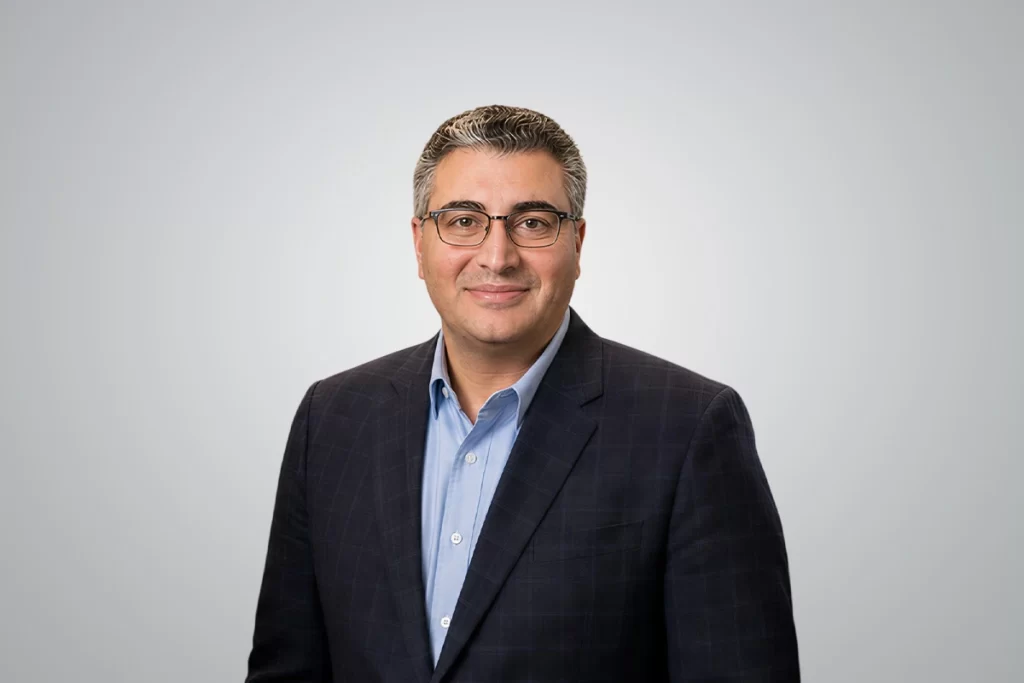
The Man Prioritizing Operational Excellence in Property Management
Inaas Arabi
Chief Operating Officer
Block and Associates Realty
The Man Prioritizing Operational Excellence in Property Management
Inaas Arabi
Chief Operating Officer
Block and Associates Realty
Most property management companies grow until their operations begin to break under the pressure. Then comes the industry’s default response: hire more people. Inaas Arabi spent two decades proving there was a smarter way. From scaling a 10,000-unit portfolio across five states at American Homes 4 Rent to now serving as COO of Block & Associates Realty, he has consistently approached growth as an infrastructure challenge rather than a staffing exercise.
The results reshaped how his organizations scaled. His teams exceeded leasing targets by 118%, increased tenant renewal rates by 20% without proportional staffing growth, generated nearly $1.5 million in additional maintenance revenue through operational redesign, and helped double company size while increasing headcount by only 15%. Alongside integrating acquisitions and scaling HOA operations beyond 10,000 units, he is now leading the implementation of fifteen AI use cases designed not to replace human relationships, but to strengthen them.
In an interview with TradeFlock, Inaas shares the blueprint behind that approach and the 25,000-door milestone he is building toward next.
What shifted your thinking from hiring more people to building scalable systems?
The shift was built through years of operating at scale and watching what actually breaks when portfolios grow faster than the people managing them. At American Homes 4 Rent, I scaled operations from 436 units to over 10,000 doors across five states. Performance metrics were exceptional. My team exceeded leasing targets by 118%, pushed rental pricing beyond projections, and consistently delivered against aggressive expansion goals. But every growth conversation ended with the same answer: hire more people. I began to see that for what it was, not a growth strategy but an operational dependency. More headcount meant larger payrolls, inconsistent execution across regions, and a model that became more fragile the bigger it got.
The turning point was a deliberate executive decision to stop solving capacity problems with bodies and start solving them with architecture. Centralized tenant communication, standardized workflows, and digital repair-order systems increased renewal rates by 20% without proportional increases in staffing. At Block & Associates Realty, this is why we integrated 15 acquisitions and doubled the company’s size while growing headcount by only 15%. Scalable systems create durable companies. Headcount creates dependency. Infrastructure creates freedom.
How do you assess cultural fit in high-pressure operational environments?
Property management exposes people quickly, and no structured interview fully prepares you for that. Pressure here rarely arrives in controlled situations. Clients are frustrated, timelines collapse, vendors miss commitments, and operational mistakes become public fast. That is why we built our entire hiring and leadership development process around what we call WOW THEM, a seven-value framework defining who we are at Block.
Every interview is built around those behaviors rather than polished corporate answers. Taking responsibility means that when something fails publicly, and in property management, failures are always public, I need people who step forward rather than step back. Over-Communicate means understanding that silence is the most expensive mistake you can make, because an owner who does not hear from you assumes the worst. Honesty and integrity mean delivering difficult news directly rather than softening it into meaninglessness. Since fully implementing WOW THEM, management-level retention has improved significantly, our internal promotion rate has increased, and client satisfaction scores have remained consistently high through periods of aggressive growth.
Beyond the growth numbers, what contribution do you hope defines your work long term?
Long term, what I hope people remember is the proof of concept: that a property management business can be built around infrastructure precision, financial discipline, and genuine customer trust, all working together rather than pulling against each other. We are currently implementing fifteen AI use cases across our operational model, each designed to make our people more effective rather than less necessary. Our AI-powered listing dashboard consolidates market data, maintenance history, pricing trends, and property condition reports into a single interface, not to replace the conversation between our agent and the owner, but to make it better. Every AI use case we deploy is measured by a single standard: does it strengthen or weaken the relationship between our team and our clients? If it weakens it, we do not deploy it. That discipline is what I want Block to be remembered for: a company that proved infrastructure precision and genuine human trust were never in conflict.
When evaluating acquisitions, what did you look for beyond the revenue numbers?
Acquisitions reveal operational truth quickly, and that is exactly where I chose to look first. At Block, I developed what we call the Block Acquisition Platform, a structured evaluation methodology designed to reveal a company’s true health before a single dollar changes hands. It evaluates targets across occupancy integrity, repair cost efficiency, vendor accountability, and revenue-per-door sustainability. Together, these indicators reveal whether leadership is making decisions grounded in reliable data or running on assumptions. In one case, a target had impressive growth on paper, but repair costs per unit were significantly above market average, a clear signal that deferred maintenance was quietly subsidizing their margins. The Platform caught it before we committed capital.
Beyond financial diagnostics, the second layer assesses integration readiness, whether an incoming team can be absorbed into our infrastructure without disrupting execution speed or customer experience. That discipline paid off. We doubled the company’s size while growing headcount by only 15%, which reinforced something I now believe deeply: sustainable scale is an infrastructure decision far more than it is an organizational one.
What did rapid expansion teach you about the limits of standardization?
Rapid expansion forces organizations to confront a difficult question: what should actually be standardized, and what should remain human? During one period at Block & Associates Realty, we were simultaneously integrating six acquisitions, launching an in-house maintenance division, and scaling our HOA management business beyond 10,000 units. Every operational system inside the organization faced pressure simultaneously.
Financial reporting, maintenance dispatching, compliance tracking, and vendor accountability became stronger once centralized. Human relationships worked differently. Property management depends heavily on trust between managers, homeowners, tenants, and community boards. Excessive standardization weakens those relationships because clients stop feeling individually understood.
The solution was a deliberately hybrid operating structure. Centralized systems managed operational complexity, while local teams retained sufficient flexibility to preserve relationship quality and decision-making autonomy. That balance helped generate nearly $1.3 million in additional maintenance revenue without compromising service quality or client trust.
Featured Magazine -

All Magazines-




Other Interviews-
- Inaas Arabi-Best Corporate Leaders in USA 2026
- Mark Newsome-Best Corporate Leaders in USA 2026
- Manar Elsakka-Best Corporate Leaders in USA 2026
- Dawn Stastny-Best Corporate Leaders in USA 2026
- Troy Negley-Most Inspiring Global HR Leaders 2026
- S. Indrani Shanmugam-Most Impactful Women Leaders from Asia 2026
- Gutti Malleswara Reddy-10 Best Tech Leaders in India 2026
- Rajesh Pasari-Best Education Leaders in India 2026
- Sinan Safaa Aboeless-Asia’s Best Business Leaders 2026
- Dr. Sandeep Chatterjee-Best Education Leaders in India 2026
