
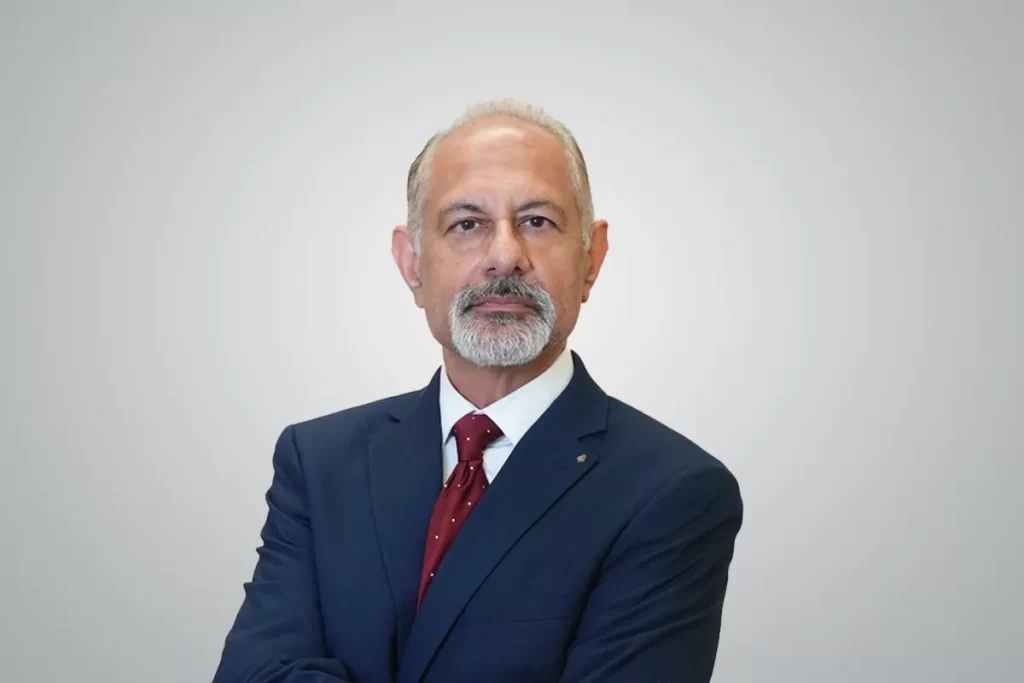

Turning Momentum Into Endurance
Swapan Kumar
Managing Partner
Turnkey Tech Consulting
Long before technology became a boardroom priority, business leaders were wrestling with a more fundamental challenge. Growth creates complexity. Complexity creates inefficiency. Left unchecked, both eventually begin to slow the very organizations they were meant to strengthen.
Much of Swapan Kumar’s career has been spent stepping into that exact moment. Across technology, cybersecurity, healthcare, real estate, and enterprise operations, he has repeatedly taken on businesses, projects, and initiatives that required more than technical expertise. They required clarity, discipline, and the willingness to make difficult decisions when momentum alone was no longer enough. Having built and exited companies of his own while also turning around multimillion-dollar initiatives for Fortune 500 entities, Kumar has seen growth from both sides of the table. In an exclusive conversation with TradeFlock, he reflects on leadership, transformation, and the realities of building organizations designed to endure long after the excitement of growth has passed.
Which phase of your entrepreneurial journey changed your understanding of leadership the most?
Early success can create a dangerous illusion. When a company is small, speed solves almost everything, and founders naturally become the center of every important decision. The challenge appears later, when growth demands a completely different leadership model and the organization starts depending on systems, teams, and processes rather than individual effort.
Periods of growth, restructuring, and eventual company exits forced me to confront a difficult question: could the business continue to succeed without the founder at the center of every major decision? Many organizations struggle at that point because knowledge, authority, and problem-solving remain concentrated in one person long after the company has outgrown that structure.
Working across technology, cybersecurity, and real estate reinforced the same lesson repeatedly. Sustainable organizations are built on strong teams, operational discipline, and cultures that can outlast individual personalities. Leadership today feels less connected to control and far more connected to creating an environment where capable people can thrive independently.
Which changes in AI, automation, and cybersecurity excite you most?
Much of the conversation around AI focuses on the technology itself, yet the more significant shift is happening underneath it. AI, automation, analytics, and cybersecurity are beginning to operate as parts of a single business ecosystem rather than as separate initiatives competing for attention and investment.
Organizations can now make decisions faster, identify risks earlier, automate repetitive work, and uncover patterns that would have been difficult to detect only a few years ago. Competitive advantage will increasingly come from embedding intelligence directly into operations, customer engagement, risk management, and decision-making processes rather than treating it as a standalone capability. The opportunity is substantial, but success still depends on fundamentals. Clean data, disciplined processes, strong cybersecurity controls, and clear governance matter far more than chasing the newest platform. Automation can accelerate growth, but it can just as easily magnify inefficiencies when the underlying operation lacks structure and discipline.
How are you preparing for a future defined by constant technological change?
Every generation of leaders tries to predict the next major technology shift. Experience has taught me that forecasting matters far less than building organizations capable of adapting to whatever emerges next. The specific tools will continue changing. Adaptability remains the constant.
My focus is on creating strong operational foundations supported by resilient systems, cybersecurity readiness, and a culture of continuous learning. Technology creates value only when people understand how to use it effectively and when leadership encourages adaptation rather than resistance. Sustainable transformation depends as much on organizational readiness as it does on technical capability. Some of the most successful transformations I have witnessed were not driven by technology alone. They succeeded because organizations invested in communication, training, and cultural readiness alongside technical implementation. Businesses that combine innovation with disciplined execution consistently navigate disruption more effectively than those who expect technology to solve fundamentally organizational challenges.
What is the toughest turnaround decision you have had to make?
I once took over a project that was in the red, and by the time I stepped in, costs were climbing, timelines were slipping, and stakeholder confidence was already fading. The organization had committed $23.5 million to a technology and infrastructure initiative that had gradually expanded beyond what it could realistically execute. Every challenge triggered calls for more resources, more oversight, and more activity, yet none of those measures addressed the underlying issue.
A closer assessment revealed that the project had become too broad, too complex, and increasingly difficult to manage effectively. Success depended on narrowing the focus rather than expanding it further. We reduced the scope, concentrated resources on the highest-value objectives, strengthened vendor accountability, and introduced tighter financial controls and reporting discipline.
The project was ultimately completed successfully and came in roughly $9 million under budget. More importantly, it reinforced a lesson that has stayed with me throughout my career. Leadership often requires creating clarity and discipline at the exact moment when others are demanding expansion and complexity.
What technology and cybersecurity risks do leaders still consistently underestimate?
Most cybersecurity failures begin long before an attacker appears. They often start quietly inside organizations as systems become more complex, accountability becomes fragmented, and technology expands faster than governance can keep pace. Companies continue to add cloud platforms, AI tools, vendors, and integrations, assuming that more technology automatically creates better outcomes.
The consequences usually become visible during a crisis. Decision-making slows, responsibilities become unclear, and organizations struggle to determine where their actual exposure exists. Technology rarely fails on its own. Weak oversight, fragmented processes, and communication breakdowns almost always contribute at some point along the chain. The human element remains the most important. According to the World Economic Forum, nearly 95% of cybersecurity incidents involve some form of human error. Strong cybersecurity depends as much on culture, accountability, awareness, and operational discipline as it does on infrastructure and technical controls. Organizations that understand both dimensions are far better positioned to respond when pressure arrives.
“The strongest organizations are not the ones that depend on exceptional individuals. They are the ones built to keep succeeding long after those individuals step aside.”
Featured Magazine -

All Magazines-









Other Interviews-
- Swapan Kumar-Best Corporate Leaders in USA 2026
- Aashik Khakoo-Best Corporate Leaders in USA 2026
- Inaas Arabi-Best Corporate Leaders in USA 2026
- Mark Newsome-Best Corporate Leaders in USA 2026
- Manar Elsakka-Best Corporate Leaders in USA 2026
- Dawn Stastny-Best Corporate Leaders in USA 2026
- Troy Negley-Most Inspiring Global HR Leaders 2026
- S. Indrani Shanmugam-Most Impactful Women Leaders from Asia 2026
- Gutti Malleswara Reddy-10 Best Tech Leaders in India 2026
- Rajesh Pasari-Best Education Leaders in India 2026
