

The Silent Strategist Redefining the CFO Playbook
Dr. Debnath Mukhopadhyay
CFO
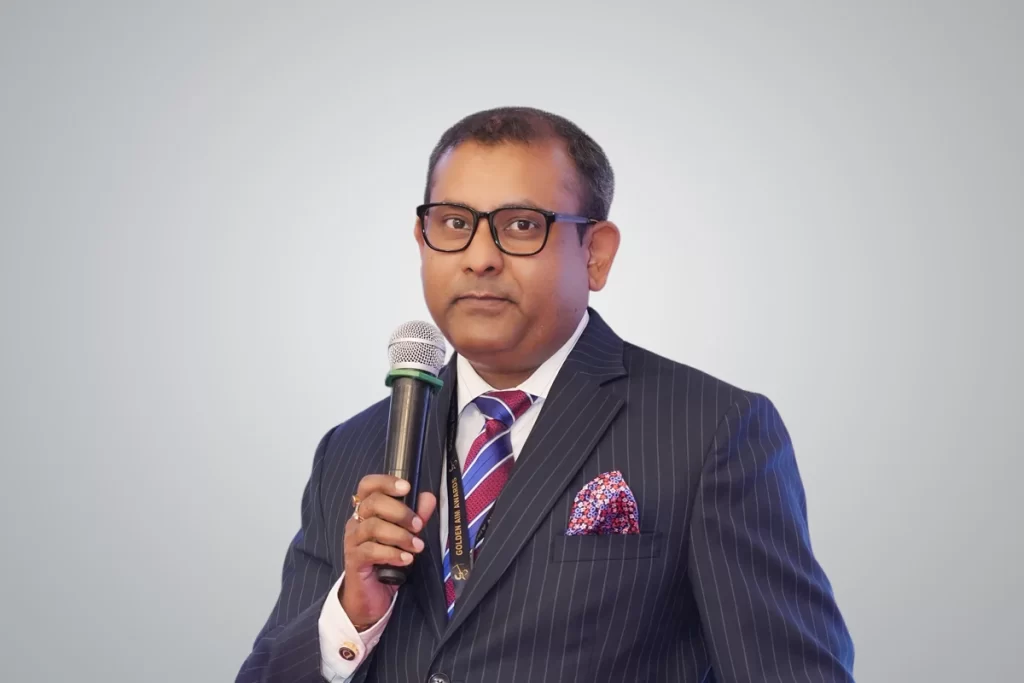
The Silent Strategist Redefining the CFO Playbook
Dr. Debnath Mukhopadhyay
CFO
Seros Energy Pvt. Ltd.
Not all strategic leaders operate in the spotlight. Dr Debnath Mukhopadhyay represents a new breed of CFOs, the silent strategists, who shape the trajectory of organisations through data-backed decisions, cross-functional alignment, and disciplined execution. His leadership reflects the profound evolution of the CFO’s role from a transactional, retrospective “bookkeeper” to a proactive, forward-looking strategic partner and digital leader. At the core of his approach lies a shift from historical reporting to strategic foresight, where predictive modelling and scenario planning drive business decisions. By leveraging cloud-based planning tools and real-time dashboards, he enables agile, insight-led responses in an increasingly dynamic and volatile environment.
Equally, he embraces the CFO’s expanding mandate in digital transformation. Through the adoption of AI and automation, he streamlines routine processes, enhances data-driven decision-making, and strengthens cyber risk management to safeguard business integrity and data privacy. His role extends well beyond finance, with active involvement across HR, IT, legal, procurement, and commercial functions, where he builds cross-functional teams equipped with diverse capabilities right from data science to strategic planning.
A defining aspect of his leadership is stakeholder engagement. Whether interacting with investors, lenders, or the board, he brings clarity to complex financial narratives, enabling informed, confident decision-making. Underpinned by robust governance frameworks, continuously evolving SOPs, and a disciplined operating model, his approach minimises reliance on ad hoc decisions while ensuring scalability and resilience.
In this exclusive interview with TradeFlock, Dr Debnath shares how he creates value not by looking back, but by shaping what lies ahead.
What do companies misunderstand about investor expectations, and how can they bridge the gap?
Companies often misread investor priorities, assuming strong growth narratives alone will secure capital. In reality, investors, especially institutional ones, prioritise predictability, transparency, and disciplined risk management over “disruptive” potential. They are investing in future cash flows, with little tolerance for surprises. Yet, management teams frequently overvalue their businesses, underestimate due diligence rigour, and treat fundraising as the end rather than the start of accountability. In debt markets, the focus is even sharper on cash flow stability and repayment capacity.
Bridging this gap requires a shift from optimism to credibility. Companies must ensure proactive transparency, consistent communication, and early disclosure of challenges. Strong governance, audit-ready financials, and realistic valuations aligned with market benchmarks are essential. A clear, truthful narrative builds trust, positioning investors as long-term partners rather than just capital providers.
How are digital finance systems transforming performance and cash management?
Digital finance systems are transforming the CFO’s role from a retrospective record-keeper to a real-time, strategic decision-maker. Performance monitoring and cash management now rely on cloud-based ERPs, AI, and automated dashboards that provide instant visibility into financial metrics. This enables proactive liquidity management, optimised working capital, and faster decisions.
AI-powered forecasting and scenario modelling allow CFOs to simulate “what-if” situations and anticipate risks with greater accuracy. Meanwhile, automation streamlines routine tasks like reconciliations and payables, freeing teams for strategic work. Technologies such as cloud ERPs, AI-driven cash flow tools, FP&A platforms, and automated reconciliation systems are driving a more agile, data-driven, and resilient finance function.
What integration blind spots do companies often miss in M&A, and how do you mitigate them?
The most common blind spot in M&A integration is neglecting cultural alignment and human capital, often overshadowed by a focus on financial and operational synergies. This leads to talent attrition, employee resistance, and productivity decline. Companies also underestimate integration timelines and overlook operational dependencies, assuming systems can merge seamlessly.
Mitigating these risks requires a human-centred approach. Embedding HR into due diligence helps assess leadership, cultural fit, and talent risks early. Retention plans for key employees ensure continuity, while proactive communication addresses concerns and aligns cultures. Identifying informal “culture leaders” further supports smoother transitions. Ultimately, prioritising long-term value and synergy over speed drives more sustainable and successful integration outcomes.
What was your boldest financial decision as a CFO, and what was its impact?
One of the boldest decisions was prioritising a major investment in AI-driven digital transformation, including upgrading to SAP S/4HANA, during a period of market downturn. Instead of resorting to traditional cost-cutting, the focus was on building long-term capability.
The risk involved significant upfront capital and potential short-term pressure on cash flows. However, the impact was transformative, enabling real-time cash visibility, stronger risk management, and faster, data-driven decision-making. It also elevated the finance function into a strategic partner, improving agility and resilience. Ultimately, this shift drove sustainable value creation and positioned the organisation for stronger, future-ready growth.
What will define a successful CFO in the next decade?
Over the next decade, a successful CFO will be defined less by reporting and more by their role as a strategic co-pilot to the CEO, like driving value creation, digital transformation, and resilience. The role will shift from scorekeeper to playmaker, leveraging AI and analytics to predict outcomes and shape strategy.
Technology leadership will be critical, with AI embedded into core finance processes and real-time data guiding decisions. CFOs will also lead capital allocation and scenario planning and navigate volatility. Equally, they will integrate ESG and risk management into strategy while building agile teams and fostering cross-functional collaboration to drive sustained, future-ready growth.
Featured Magazine -

All Magazines-



Other Interviews-
- Inaas Arabi-Best Corporate Leaders in USA 2026
- Mark Newsome-Best Corporate Leaders in USA 2026
- Manar Elsakka-Best Corporate Leaders in USA 2026
- Dawn Stastny-Best Corporate Leaders in USA 2026
- Troy Negley-Most Inspiring Global HR Leaders 2026
- S. Indrani Shanmugam-Most Impactful Women Leaders from Asia 2026
- Gutti Malleswara Reddy-10 Best Tech Leaders in India 2026
- Rajesh Pasari-Best Education Leaders in India 2026
- Sinan Safaa Aboeless-Asia’s Best Business Leaders 2026
- Dr. Sandeep Chatterjee-Best Education Leaders in India 2026
