

Consumer Insight–Driven Growth Strategist
Jayaraman P
AVP Marketing
GRT Jewellers (India) Pvt.Ltd.
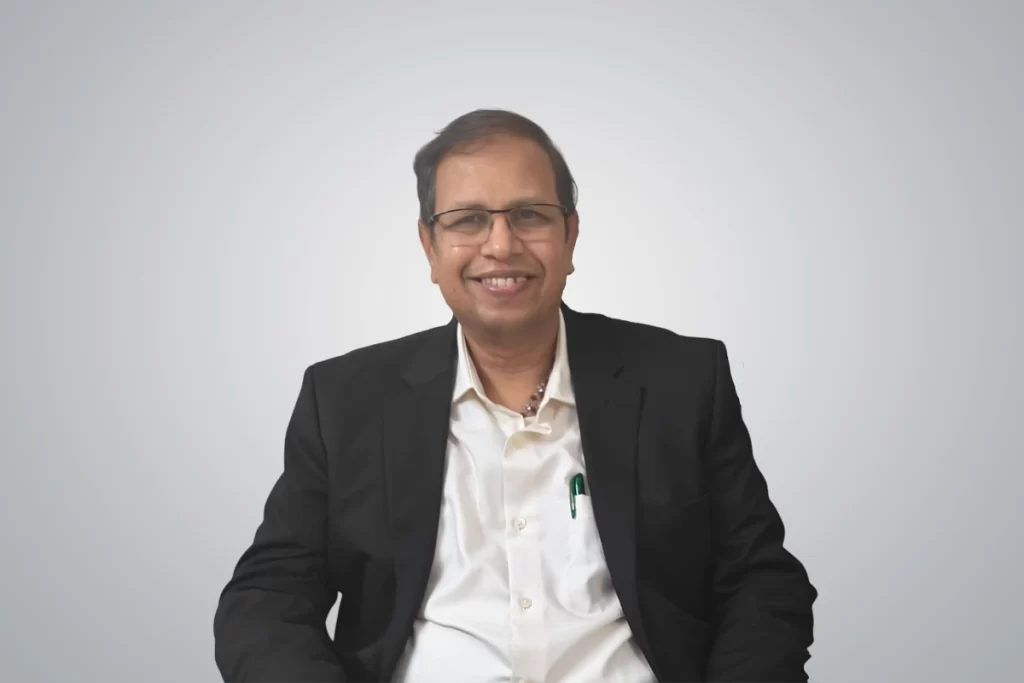
Consumer Insight–Driven Growth Strategist
Jayaraman P
AVP Marketing
GRT Jewellers (India) Pvt.Ltd.
In an era where consumer attention shifts in seconds and brand loyalty must be earned repeatedly, marketing leadership is no longer about visibility alone but about relevance, reinvention and measurable business impact. Jayaraman P has navigated this evolution from the front lines for over 28 years, building and transforming brands across FMCG, telecom, and retail with uncommon clarity of purpose. From steering the high-stakes transition of Hutch to Vodafone, to contemporizing Kohinoor and scaling Durex at TTK-LIG, from architecting the identity shift from Reliance Trends to Trends and crafting the powerful “Get Them Talking” proposition for Trends, to launching GAP in India and now shaping marketing at GRT Jewellers in a leadership role, his journey reflects marketing as both art and enterprise discipline. Each chapter has strengthened his belief that brands grow when insight meets execution. TradeFlock spoke with him to better understand his journey, challenges, evolving strategies and perspective on modern marketing leadership.
Can you walk us through your journey and the milestones that defined your career?
Over the last 28 years, my career has spanned FMCG, telecom, and retail, with a common thread: brand transformation. I have been fortunate to work on assignments where the task was not incremental growth but a tectonic evolution in brand identity.
At Reliance Trends, the challenge was to reposition a corporate-linked brand into a contemporary fashion identity that was relevant and appealing to today’s generation. We retained the Reliance endorsement through the roundel while evolving the primary name from Reliance Trends to Trends, making it more consumer-facing. That shift went beyond a logo change. We elevated the store experience to make it more fashion-forward. It didn’t stop with this. To ensure relevance and differentiation, we created a brand proposition, that was conceived on a simple but profound consumer insight- which was that in today’s day and age of social and digital media, consumers feel good with getting complements on how they look; trolls is also something that they take in their stride; however they are just never ok to be ignored. Out of this was born a brand proposition for Trends -“Get Them Talking”, that clearly enhanced brand appeal for Trends, outperforming established competitors. The result was measurable growth in TOM, a key driver of Trends’ growth, scale, and revenue, making it the No. 1 brand not just in size and scale but also in brand perceptions and brand preference. While Marketing played a prominent role, the success was due to a wonderful collaboration among Merchandising & Design, Operations, Store Design, Marketing & Visual Merchandising.
Earlier, I had led the transition from Hutch to Vodafone, ensuring continuity while embracing global identity. In FMCG, repositioning Kohinoor and managing Durex are testimony to the fact that even identical products can follow entirely different growth trajectories through clear positioning and targeting – backed by a robust understanding of audience demographics and psychographics. Kohinoor was contemporised for the mass-market relevance, while Durex strengthened its premium appeal, each resulting in significant volume and margin expansion.
Later, launching GAP in India from scratch required a digital-first approach, backed by In-Mall visibility drives, to grow awareness, interest, and engagement among the TG and establish GAP as an international mid-premium brand in India through a rapid retail build-out. Each of these milestones reinforced one belief: marketing, when done right, reshapes perception at scale.
What is an uncomfortable truth young marketers must understand?
Young marketers often believe they control the entire brand experience through the four or seven Ps. In reality, those levers are distributed across product teams, operations teams, sales teams, IT Teams, finance teams, and other functions. Marketing influences perception, but the consumer experience is delivered collectively by different departments that need to come together in a synergistic way at the consumer’s moment of truth.
Understanding this shared ownership is critical. Influence requires collaboration, not authority. Recognising that limitation early prevents frustration and builds stronger cross-functional alignment.
“Ultimately, marketing is less about control and more about stewarding perception, value, and trust among customers – both external and internal.”
How have your beliefs about marketing evolved, especially when strategies fail or intuition conflicts with data?
I have always believed that brands must occupy a distinct mental territory. That remains unchanged. What has evolved is the understanding that narrative alone is insufficient in today’s marketplace. Functional value, strategic and tactical agility, and quick action/reaction must consistently support the overarching proposition.
One important lesson has been the need for constant consumer validation. Experience and instinct are valuable, but they must be grounded in real feedback. Campaigns that feel powerful internally can fail externally if not tested for clarity and differentiation. Marketers cannot afford to operate in isolation, either from consumers or from frontline sales and operations teams.
Intuition still matters, but it is not guesswork. It is an accumulated consumer understanding. Data provides direction at a specific moment, while insight provides context. When both align, decisions gain strength. When they do not, the answer is not to ignore one but to investigate further. At the centre of every decision must sit the consumer, not as rhetoric but as an operating principle.
In an AI-driven era, what must remain human in marketing?
AI has transformed execution. It improves speed, reduces cost, enhances reach and enables quicker turnaround times. However, the essence of marketing remains human because consumers are human.
Technology can process information, but it cannot independently generate lived emotional insight. Qualitative research, in-depth interviews, and understanding the triggers and barriers behind choices remain fundamentally human exercises. AI amplifies what we feed it; it does not replace empathy and core consumer insights.
When a consumer chooses or rejects a brand, the reasons are layered – both rational and, importantly, emotional. That nuance cannot be automated. Artificial intelligence can enhance capability, but natural intelligence must guide it.
Has success made you more curious or more cautious?
It has made me both. The marketing ecosystem today demands rapid response, scale and agility. With multiple channels and real-time shifts in consumer behaviour, curiosity is essential to remain relevant, while caution ensures disciplined decision-making.
Earlier, marketing cycles were slower and simpler. Today, the speed of change requires sharper awareness and faster recalibration, which naturally increases both vigilance and the appetite for learning.
Featured Magazine -

All Magazines-




Other Interviews-
- Inaas Arabi-Best Corporate Leaders in USA 2026
- Mark Newsome-Best Corporate Leaders in USA 2026
- Manar Elsakka-Best Corporate Leaders in USA 2026
- Dawn Stastny-Best Corporate Leaders in USA 2026
- Troy Negley-Most Inspiring Global HR Leaders 2026
- S. Indrani Shanmugam-Most Impactful Women Leaders from Asia 2026
- Gutti Malleswara Reddy-10 Best Tech Leaders in India 2026
- Rajesh Pasari-Best Education Leaders in India 2026
- Sinan Safaa Aboeless-Asia’s Best Business Leaders 2026
- Dr. Sandeep Chatterjee-Best Education Leaders in India 2026
