
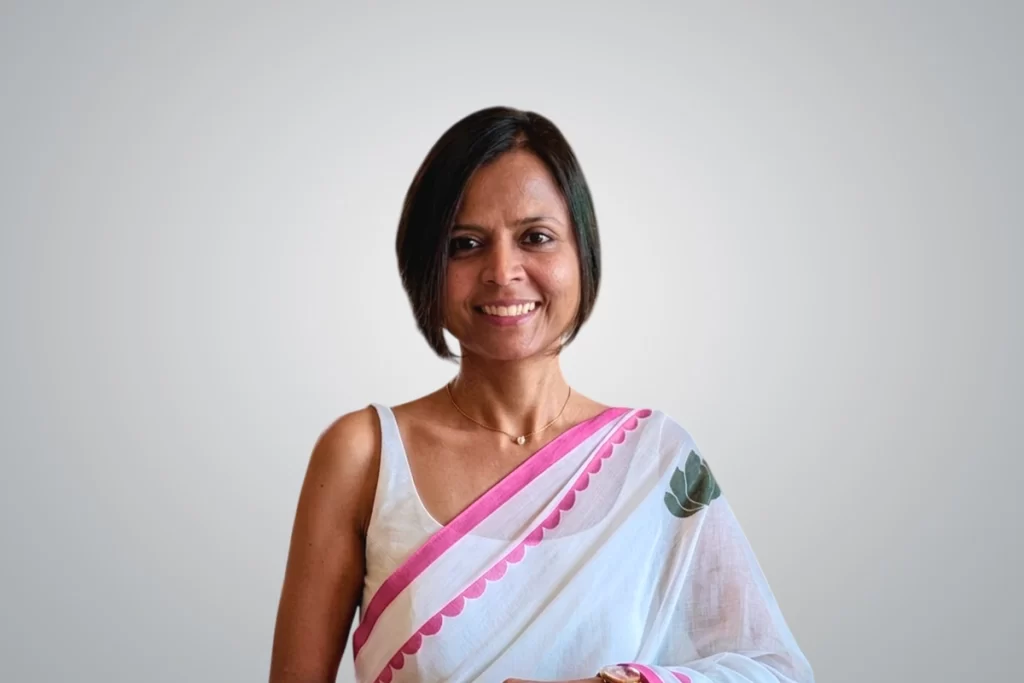
Shaping Purpose-Led Leadership
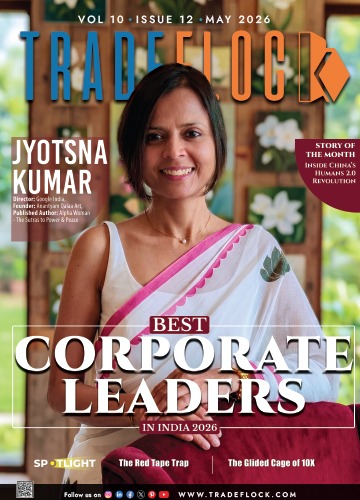
Jyotsna Kumar
Director: Google India, Founder: Anantyam Qalaa Art, Published Author: Alpha Woman - The Sutras to Power & Peace
Shaping Purpose-Led Leadership
Jyotsna Kumar
Director: Google India, Founder: Anantyam Qalaa Art, Published Author: Alpha Woman - The Sutras to Power & Peace
Google India
What drives your multi-faceted career across Google, Anantyam Qalaa Art, and your 2026 book, and how do you integrate it all?
For me, motivation exists at the intersection of technology, creativity, and human impact. My work at Google India drives scale, innovation, and complex problem-solving at a global level. Through Anantyam Qalaa Art, I extend that mindset to the art world, creating visibility and opportunity for artists through a more accessible ecosystem. My book, Alpha Woman: The Sutras to Power & Peace, brings these experiences together, reflecting on power, purpose, and inner alignment.
I don’t view these as separate identities competing for balance. They are expressions of one intent. Whether leading organisations, building platforms, or writing, I stay anchored in clarity, empathy, and purpose. That alignment naturally creates integration, where each pursuit strengthens the other and sustains focus, energy, and meaningful impact.
How do you define human-centric AI innovation, and what boundaries should technology never cross over human intuition?
At Google India, I view human-centric AI innovation as a way to amplify human capability rather than replace it. AI brings strength in processing data, identifying patterns, and improving efficiency, enabling people to focus on creativity, empathy, strategy, and meaningful problem-solving. Its true value lies in enhancing clarity and decision-making at scale.
At the same time, human intuition must remain central. While AI can analyse and predict, human judgement is shaped by lived experience, ethics, emotional intelligence, and cultural context. My engagement with the world of art reinforces this belief, where creativity is driven by instinct, emotion, and depth that cannot be replicated through algorithms.
The book too talks about this philosophy in detail. I emphasise that inner clarity and self-awareness remain essential foundations for responsible leadership in an AI-driven world.
How has early family responsibility shaped your approach to sponsoring and developing talent at Google?
Early family responsibility shaped how I understand leadership long before I entered the corporate world. It taught me resilience, emotional awareness, and the ability to stay grounded in uncertainty, providing a sense of stability and growth to the ones around me. Those experiences helped me look beyond performance metrics and see people more holistically, recognising silent struggles, identifying untapped potential, and offering calm & stability when the ground under the feet is shifting.
This foundation strongly influences my approach to talent at Google. I draw a clear distinction between managing and sponsoring talent. For me, sponsorship means actively investing belief, trust, and opportunity into someone’s growth journey, especially for individuals whose potential may not always align with conventional expectations.
As a mentor, I encourage leaders to embrace ambiguity, take ownership, and build confidence through experience. At the same time, I prioritise psychological safety so they can take bold decisions and learn with speed. With deep belief in this psychology, I reflect on how inner grounding becomes the foundation for leadership, empathy and sustained human development in my book.
In Alpha Woman, you note the most important meeting happens within the mind. How do you lead global teams through uncertainty?
In my book, I write about mastering the “meeting within” before entering any leadership environment. During uncertainty or rapid market shifts, a leader’s role is to create clarity, stability, and confidence for the organisation. At Google India, I help global teams focus on high-impact priorities within their control. Composure sets the tone. Teams mirror leadership’s emotional steadiness in challenging moments. I prioritise transparent communication and calm decision-making, ensuring clarity on reality and direction.
I also encourage confidence in capabilities and adaptability rather than volatile conditions. Over time, navigating uncertainty builds resilience and agility, becoming a lasting professional advantage beyond disruption or change.
What is the one “sutra” from your time at Google India and the Alpha Project you hope future global leaders adopt as standard practice?
When people reflect on the Alpha Project and my journey at Google India, I hope they carry forward one guiding principle—“10X Extreme Ownership”. For me, leadership means bringing full passion, intellect, and execution to everything you build long before recognition or reward appears. True impact is shaped in the early stages, when visibility is low and consistency defines character.
In Alpha Woman, I speak about uncompromised commitment and intentional effort as the foundation of meaningful leadership. When leaders adopt this mindset, they stop chasing outcomes externally and instead create a standard of excellence that naturally attracts opportunity, trust, and lasting influence over time.
What was the most important unlearning in your journey from account leader to director at Google?
Joining Google India in 2007 meant stepping into a digital ecosystem still defining its own boundaries. My journey from account leader to director was shaped more by unlearning than accumulation. I realised that sustained relevance in a fast-moving industry comes from releasing outdated thinking as much as gaining new skills.
The first shift was moving beyond the “doer” identity. Early success was tied to execution, speed, and personal output. Over time, leadership became about creating leverage and building organisation, trust, and clarity so impact could scale beyond individual contribution. The second shift was embracing ambiguity. In technology, certainty rarely arrives early. I learned to trust intuition, act on evolving information, and treat direction as adaptive rather than fixed.
The final shift was moving from managing processes to leading through purpose. When organisation connect deeply to the “why”, they operate with ownership, creativity, and momentum. That shift defined my evolution into leadership at a very early stage in my career.
What is your framework for balancing operational discipline with creative freedom across global teams?
Leading global teams across Google India, I learnt that performance drivers remain consistent across cultures. To balance discipline with innovation, I developed the “Guardrails & Playgrounds Framework”. The “guardrails” ensure operational clarity through aligned goals, accountability, measurable outcomes, and psychological safety. This structure creates consistency and frees teams from execution uncertainty, allowing focus on impact.
The “playgrounds” create intentional space for experimentation, curiosity, and calculated risk-taking. Here, teams are encouraged to challenge assumptions, collaborate across diverse perspectives, and treat failures as learning inputs that accelerate progress.
By clearly separating execution discipline from creative exploration, the organisation gains both stability and freedom. This distinction helps them operate with confidence while thinking expansively. For me, sustainable innovation emerges when structure provides the foundation and creativity is given room to evolve, enabling the organisation to deliver outcomes that are both scalable and transformative across markets and functions.
What makes the shift from seeking permission to owning precedence difficult for women in India, and how is leadership solitude managed?
For many women in the Indian corporate landscape, the shift from seeking permission to owning precedence begins within. Early conditioning often emphasises validation, consensus-building, and defined boundaries. Leadership demands a deeper shift, trusting one’s voice, owning decisions, and shaping direction with conviction. The hardest part lies in replacing external approval with internal authority and stepping into visibility with clarity and intent.
I believe in this with full conviction, hence you’ll find a mention in my book as well. I emphasise inner anchoring as the foundation of sustainable leadership, especially during leadership solitude, often described as the “loneliness of the throne”. I navigate this through a multidimensional ecosystem rooted in my work at Google, Anantyam Qalaa Art, writing, spirituality, and family.
How has Google influenced your approach to democratising art through Anantyam Qalaa Art?
The art scene in Hyderabad, and India at large, has historically been fiercely guarded, deeply subjective, and shaped by legacy networks that limited access for emerging artists and wider audiences. When I founded Anantyam Qalaa Art, my goal was to build a transparent, inclusive ecosystem for artistic talent. My experience at Google India shaped this approach significantly.
Technology taught me how to navigate fragmented systems, design user-centric platforms, and build scalable structures that enhance visibility, trust, and access. I applied this through digital outreach, transparent pricing, and meaningful opportunities for artists to reach wider audiences. Art remains deeply human, but its ecosystem can evolve through clarity and innovation, enabling creativity, storytelling, and sustainable growth together.
When your corporate and art worlds converge, what legacy do you hope to leave behind?
I’m aggressively ambitious and demanding of myself. I see my career as an expanding arc where technology, art, and inner evolution converge into one cohesive narrative. It has never been about endpoints but about continuous reinvention and impact at scale.
Through Anantyam Qalaa Art, I aim to reshape the art ecosystem into a transparent, accessible space where artists gain visibility, value, and sustainable opportunity. Through my work at Google and the philosophy in Alpha Woman, I hope to reflect a leadership model where inner alignment becomes the true source of external power.
At the core is a guiding belief: quiet the noise, anchor into inner divinity, and give your highest expression even amid uncertainty. Over time, aligned intent shapes unprecedented outcomes, influence, and legacy.
Featured Magazine -

All Magazines-

Other Interviews-
- Dr Bharati Banerjee-Women Leaders in India 2026
- Justine Paula Nichol-10 Best Healthcare Executives Transforming 2026
- Vivek Jhanjhri-10 Best COOs in India 2026
- Jerry Creech-10 Best Healthcare Executives Transforming 2026
- Daniel Gandia-10 Best Healthcare Executives Transforming 2026
- Keshmahinder Singh-Asia’s Best Business Leaders 2026
- Rifkhan Siddeek-Asia’s Best Business Leaders 2026
- Dr Nabeel Abdul Hour Tomman-Asia’s Best Business Leaders 2026
- Kate Melnikova-Most Inspiring Leaders in Finance USA 2026
- Lalit Laungani-Asia’s Best Business Leaders 2026
