
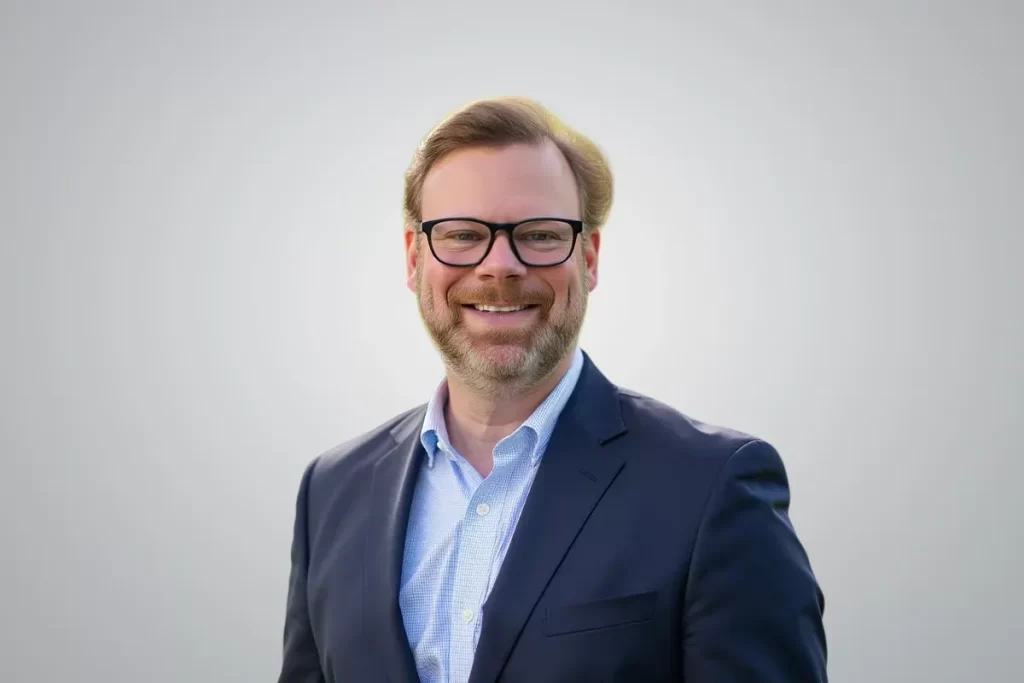

Building Systems That Think and Scale
Kevin R Jaffe
COO & Co-Owner
Mopeka Products LLC
The best operations leaders are rarely the loudest voices in the room; they are the ones who quietly turn complexity into clarity, and momentum into something repeatable. In an era where businesses are under constant pressure to move faster, scale smarter, and adapt continuously, the role of a COO has evolved from execution oversight to building systems that can think, respond, and sustain themselves.
That evolution is reflected in the journey of Kevin R. Jaffe, COO and Co-Owner of Mopeka Products LLC, whose career has been defined not by isolated achievements but by an ability to step into moments of transition and bring structure where it matters most. Across organisations like PwC, CA Technologies, and Vertrax, he has consistently worked at the intersection of people, process, and technology, designing operating models that do more than function; they scale with intent.
At Mopeka, that perspective takes on sharper relevance. Operating wi USA’s thin an industry still navigating its digital curve, his focus is not just on advancing technology, but on aligning teams, expectations, and market readiness in a way that progress becomes both achievable and sustainable. What emerges is a leadership approach grounded in discipline, shaped by experience, and sharpened by the understanding that real impact in operations is built over time, not declared in moments.
In an exclusive conversation with TradeFlock, he reflects on the decisions, challenges, and philosophies that continue to define his approach to modern operational leadership.
What has defined your journey across three decades in technology leadership?
Three decades in technology rarely unfold as a sequence of roles; they unfold as a sequence of decisions, many of which only make sense in hindsight. Early in the journey, the focus was never on chasing titles or compensation, but on deliberately stepping into environments where something new had to be learned. That often meant taking unconventional paths, including roles that did not immediately look like forward movement but offered depth, exposure, and long-term advantage.
Looking back, what stands out is not a single milestone, but a pattern of intent. Every role was chosen with a purpose, and every experience was treated as part of a longer learning curve. Relationships built along the way became a natural extension of that philosophy, not as a strategy, but as a byproduct of working closely with people over time.
Career progression, in that sense, became less about movement and more about the accumulation of perspective.
How do you navigate the complexity of leading people through change?
Most resistance inside organisations does not come from disagreement; it comes from misalignment. Decisions get made at one level, but the reasoning behind them does not travel far enough or clearly enough. That gap creates uncertainty, and uncertainty slows everything down.
Bridging that gap has less to do with persuasion and more to do with clarity. Openly sharing why decisions are being made, even when they are difficult, creates a very different dynamic. People may still question or challenge the direction, but they are engaging with it rather than resisting it blindly.
Over time, this also changes how teams participate. Instead of waiting for direction, they begin contributing to the logic itself, questioning assumptions, offering alternatives, and refining outcomes. Leadership then becomes less about directing action and more about creating an environment where better decisions can surface from anywhere within the organisation.
In roles where expectations are high, how do you approach decision-making and mentorship?
Expectation at leadership levels often creates a misconception that answers must always come from the top. In reality, long-term effectiveness comes from building people who can think through problems independently rather than rely on direction.
When challenges are brought forward, the focus shifts immediately to how the individual is approaching the problem. Conversations become less about providing solutions and more about exploring options, understanding trade-offs, and developing confidence in decision-making. Over time, this builds self-sufficiency within teams, which is far more scalable than centralised control.
Equally important is recognising that leadership does not operate in isolation. Networks built over the years become critical at this stage, offering perspective, challenge, and insight across different contexts. Those relationships act as an extension of thinking, allowing decisions to be more informed and less constrained.
“You are not expected to have all the answers, but you are expected to know how to find them.”
That distinction fundamentally changes how both mentorship and leadership are approached.
How do you think leadership is changing and what would it mean for the next generation?
A noticeable shift is emerging in how younger professionals approach careers, often focusing on outcomes without fully engaging with the process that leads to them. Expectations around progression, environment, and rewards are evolving, but the fundamentals of growth remain unchanged.
Experience still needs to be earned, and capability still develops over time. Early roles should not be seen as endpoints, but as extensions of learning, where each position contributes to a broader understanding of how work, people, and systems operate. A useful way to think about this is balance, where a role should feel familiar enough to execute, but challenging enough to stretch. Without that stretch, growth plateaus.
There is also a need to revisit communication itself. In an environment dominated by digital tools, the ability to clearly express ideas, motivate people, and engage in meaningful dialogue is becoming increasingly rare, yet more important than ever.
Progress, ultimately, is less about speed and more about depth.
“Great leaders don’t rise by knowing more, they rise by learning faster and building people who can think for themselves.”
Which transformations have most significantly shaped your leadership approach?
Growth stages reveal more about leadership than stability ever can. Early exposure to that came during the evolution of Priceline, when a fast-moving, unstructured environment began transitioning into a more disciplined organisation. Energy and creativity had to coexist with process and accountability, and that balance was not easy to achieve. People who thrived in freedom often saw structure as a limitation, which meant leadership had to focus not just on implementation, but on helping teams understand why that shift was necessary.
A completely different dimension of transformation unfolded at Bridgewater, where the challenge was not organisational alone, but deeply personal. The environment demanded an unusual level of openness, where strengths, weaknesses, and decision patterns were not just recognised internally but examined publicly. That kind of reflection changes how decisions are made and how accountability is understood.
“Every mistake has a root cause, and if you are not willing to examine it, you are choosing not to grow.”
Experiences like these move leadership away from control and closer to awareness, where understanding becomes more valuable than authority.
How has your leadership philosophy evolved over time?
Early career success can create a sense of control, where outcomes feel directly tied to individual contribution. As responsibilities grow, that perception begins to shift. Complexity increases, and it becomes clear that no single person can carry the weight of every decision or outcome.
One of the more important realisations over time has been accepting that not having all the answers is not a limitation, but a necessity. Leadership becomes more effective when it shifts from doing to enabling, from solving to structuring how solutions are found.
There is also a subtle but important shift in how work gets approached. Instead of relying only on what is immediately available, the mindset moves toward identifying the right people, the right inputs, and the right tools for each situation. Many leaders fall into the habit of “working with what they have,” while stronger outcomes often come from deliberately seeking what is needed.
Listening, in this phase, becomes a more active discipline, where understanding intent matters more than simply receiving information.
What are the most pressing challenges you face today as a COO?
Operating in a space where internal capability outpaces industry readiness creates a unique kind of friction. Within Mopeka, the pace of innovation, product development, and technical capability is significantly ahead of where much of the industry currently operates.
The broader fuel industry, in many ways, is still catching up to concepts that are already well established elsewhere, whether it is automation, integration, or advanced data usage. This creates a situation where progress internally needs to be balanced with the speed at which customers and partners can realistically adapt.
Managing that gap requires constant recalibration. Teams that are used to moving quickly need to understand why certain phases require patience, while still staying engaged and motivated. The challenge is not capability, but alignment between ambition and adoption. Transparency once again plays a role here, ensuring that even when the pace slows, the purpose remains clear.
Featured Magazine -

All Magazines-

Other Interviews-
- Mallika Arora-Women Leaders in India 2026
- Sudeepthi Apsingekar-Women Leaders in India 2026
- Chetna Sharan-Women Leaders in India 2026
- Asha Subramanian-Women Leaders in India 2026
- Victoria Tzareva-Most Influential Leaders to Watch in 2026
- Mitul Gada-Most Influential Leaders in India 2026
- Anu Bedi Salwan-Women Leaders in India 2026
- Shweta Singh-Women Leaders in India 2026
- Archana Tarun Dave-Women Leaders in India 2026
- Dr Bharati Banerjee-Women Leaders in India 2026
