Sharing A People-first Intelligence
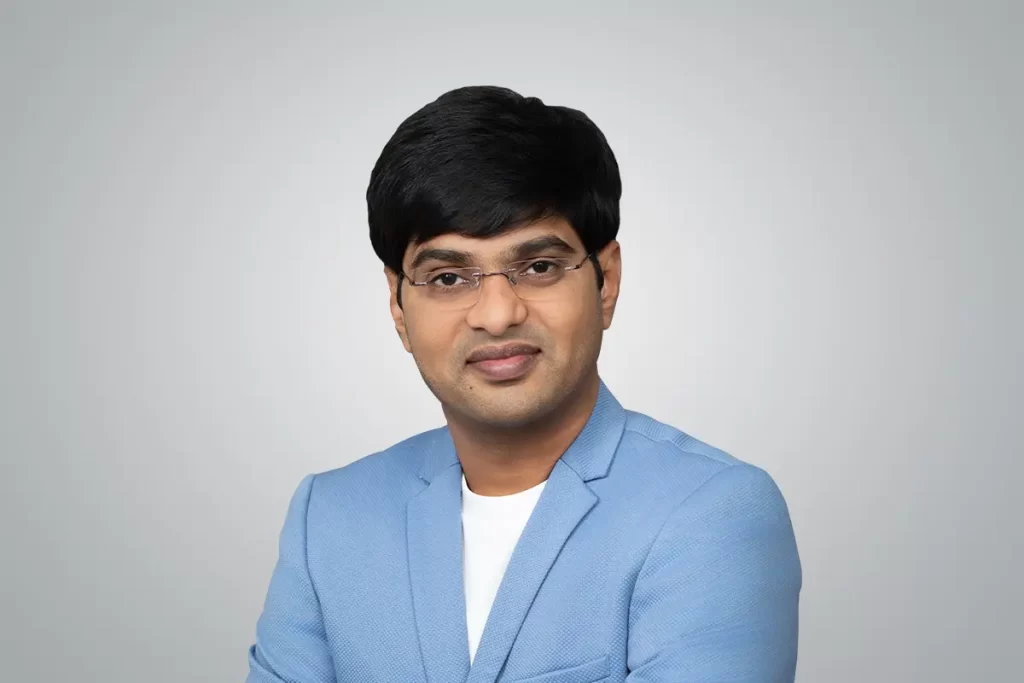
Mahesh Devalla
Chief Technology Officer
PlayersHealth
Sharing A People-first Intelligence
Mahesh Devalla
Chief Technology Officer
PlayersHealth
Modern organisations rarely struggle with technology itself. They struggle with clarity. Innovation now moves faster than organisational understanding, leaving leaders searching for systems and strategies that simplify decisions instead of overwhelming them. In a world where complexity expands every quarter, the true differentiator is the ability to convert intelligence into direction and transform emerging possibilities into meaningful outcomes. Mahesh Devalla, Chief Technology Officer of Players Health, recognised as a Global Top AI 100 Leader and an Asian American 40 Under 40 honoree, stands at the centre of that transformation. His career reflects more than technical depth; it demonstrates a leadership philosophy grounded in bringing order, purpose, and human clarity to rapidly advancing technology. The foundation for this perspective was shaped through engineering roles across Hexagon, Dartmouth, and Citi along with research in AI, where he saw firsthand how large systems behave under high-stakes conditions and how real-world constraints refine technical judgment. Across subsequent leadership roles at American Water, Bank of America, AppOrchid etc., Mahesh strengthened his ability to align technology with business value and developed an instinct for solving problems at enterprise scale. He advanced this discipline further by architecting AI-driven platforms that improved efficiency and reimagined user experience to many industries. This trajectory ultimately set the stage for his impact at Players Health. First as Director of Engineering and now as CTO, Mahesh has modernised core infrastructure, unified product and engineering roadmaps, and embedded AI at the centre of Players Health’s safety ecosystem by driving automated risk intelligence, data-driven underwriting, and real-time decision support across the organisation. In an exclusive conversation with TradeFlock, he shared deeper reflections on leadership, clarity, and the future of intelligent systems.
What guiding principles do you follow when designing AI architectures that serve both business impact and human-centric outcomes?
I begin every AI architecture with a simple belief: Technology is meaningful only when it improves the lives of the people who interact with it. My first principle is purposeful design. I spend time understanding the real business problem and the real emotion behind it because an architecture that does not honour context usually fails to create lasting impact. Once the purpose becomes clear, the structure becomes far easier to shape. My second principle is accessible intelligence. I want the system to feel sophisticated on the inside and effortless on the outside. While building the AI layer, I ensured teams could trust the insights without feeling overwhelmed by the science behind them. People adopt technology much faster when they understand its value. The third principle is ethical clarity. An AI system earns trust only when it protects fairness, transparency and dignity. Much of this thinking shaped my reflections in my book “The AI Dilemma-Why Businesses Fail to Embrace AI”, where I explored the cost of designing intelligence without accountability.
"Responsible AI is shaped not only by the systems we build but by the kind of leaders we become while building them."
As someone who’s led cross-functional engineering teams, how do you ensure alignment between technical innovation and the strategic goals of a fast-evolving organisation like PlayersHealth?
Alignment begins with clarity of direction. I make sure every team understands the organisation’s larger ambition before we dive into the technical details. People work with more purpose when they see how their efforts shape the company’s future. I spend time translating strategic goals into simple technical language so the team can connect the vision to the decisions they make each day. I also create frequent moments of shared understanding. Product, engineering, data and business leaders sit together to revisit priorities, challenge assumptions and ensure every build choice strengthens the company’s long-term trajectory. During our transformation at Players Health, this cross-functional rhythm helped us modernize legacy systems while still delivering immediate value to operations, finance and safety teams. I also protect a culture where ideas move freely. People think boldly when they feel heard, and bold thinking supported by clear strategic guardrails allows the organisation to move forward with confidence and speed.
You’ve often said that AI is a force for solving humanity’s biggest challenges. Can you share an example of how this philosophy influenced a real-world product or solution under your leadership?
I have always believed that AI becomes truly meaningful when it touches a real human problem. This belief shaped many of the solutions I led, especially the safety and risk intelligence work at Players Health. Youth sports involve millions of children, and every decision carries emotional weight for families, coaches, and organisations. I wanted AI to bring clarity and protection to a space where mistakes can carry lifelong consequences. One example was the intelligence layer we designed to identify high-risk patterns across programs. Manual reviews and fragmented information often prevented organisations from seeing a full picture. The system analysed injuries, compliance gaps, environmental conditions, and historical behaviour to guide safer decisions. It supported organisations that struggled to interpret complex data and helped parents feel more confident about the environments their children participated in. The philosophy behind this work was simple. AI should not only optimize processes but should elevate human well-being.
Mentoring startups across the USA, India, and Europe provides a global perspective. What differences do you see in how emerging and developed markets are adopting and scaling AI responsibly?
Mentoring startups across regions has shown me that the pace of AI adoption is influenced as much by culture and mindset as by technology. In emerging markets, I often see an intense hunger to leap forward. Founders are willing to experiment, take risks, and bypass traditional constraints. They build with urgency because AI becomes a way to close long-standing gaps in access, efficiency, and opportunity. The energy is raw and transformative, even while frameworks for responsible use continue to evolve. Developed markets approach AI with a more structured lens. Leaders prioritise governance, transparency, and long-term sustainability. The systems they design typically move more slowly but rest on deeper foundations for safety and trust. Teams want innovation, yet they also want assurance that the technology respects ethics, privacy, and societal impact. The most remarkable outcomes appear when both worlds learn from each other. Emerging markets bring courage. Developed markets bring discipline. These perspectives, together, create the strongest path to responsible AI at scale.
"Bold ideas surface in cultures where people feel heard, not in rooms where they compete to be right."
What does ethical use of AI mean to you in an era where technology decisions increasingly impact human lives and trust?
Ethical use of AI begins with a simple understanding that every decision made by a system eventually touches a human life. Ethics is not a checklist. It is a mindset that guides how we design, deploy, and evolve intelligence across an organisation. An AI system earns the right to operate only when its purpose is transparent, its outcomes are fair, and its behaviour can be explained with confidence. Trust forms the second pillar. People trust technology when they believe it respects their dignity. This means protecting privacy, avoiding hidden biases, and ensuring automation never replaces human judgment in moments where empathy is essential. At Players Health, this philosophy shaped how we used AI in safety decisions, ensuring families received clarity rather than uncertainty. Ethics also requires courage. Leaders must be willing to slow down when something feels misaligned, even when business pressure is strong. Responsible AI is not only about what we build. It is about who we become as we build it.
What are the three most common mistakes founders make when growing AI startups, and how can they prevent these errors?
I often see three patterns repeat themselves across AI startups. The first involves treating the model as the product. Founders become so focused on accuracy and benchmarks that they forget the customer experience. An AI solution succeeds only when people can use it without friction. Validating real problems early and shaping the product around human behaviour helps prevent this mistake. The second mistake is scaling too soon. Many teams rush to expand before the core value is stable, creating technical debt and weakening trust. A disciplined approach works better. Strengthen the foundation, refine the workflow, and let scale follow strength rather than ambition. The third mistake appears when governance is ignored until it becomes a crisis. Responsible AI cannot be added at the end. It must be built into data choices, feedback loops, and decision frameworks from the beginning. When founders treat trust as seriously as growth, they build companies that last.
"The next generation of leaders will be defined by how they hold courage and responsibility together, especially when the pressure to move quickly is high."
What is the impact of mentorship on your career trajectory, and how do you prepare the next generation of leaders in the industry?
Mentorship has shaped my career in ways that go far beyond professional guidance. Every mentor I met offered a different form of clarity. Some taught patience, some taught discipline, and others taught me how to see around corners when the path felt uncertain. These lessons helped me evolve from a builder of systems into a leader trusted to guide AI transformations across countries, sectors, and industries. As my work expanded globally, I realised leadership grows stronger when experience turns into perspective, which is why I captured many of these learnings in my book The AI Dilemma: Why Businesses Still Fail To Embrace AI. This understanding guides how I mentor the next generation. I focus on helping young leaders develop a strategic mindset rather than relying only on technical expertise. I encourage them to search for purpose, communicate with empathy, and design solutions that honour both innovation and responsibility. I share real experiences from my journey so they can see how conviction grows through practice. Many rising leaders look to me for direction, and I consider it a privilege to support them with the same honesty and clarity that shaped my own path.
If you weren’t working in tech, what field do you think you would be in?
If I weren’t working in tech, I would still choose a path where leadership, purpose, and human transformation sit at the centre. I have always been drawn to the idea of guiding people through complex decisions and helping them see potential they did not realize they carried. I could see myself in public leadership or education, shaping policy or influencing how communities grow and think. Even today, the part of my work that fulfills me the most is not the architecture, it is the ability to mentor, inspire, and lift others into their own possibilities. If technology had not become my world, I would have chosen a field where vision, service, and responsibility come together to create change. That is the space where my instincts and values naturally belong.
Featured Magazine -