Shaping India’s Industrial Future Through Circular Water Leadership
Malu Kamble
Managing Director
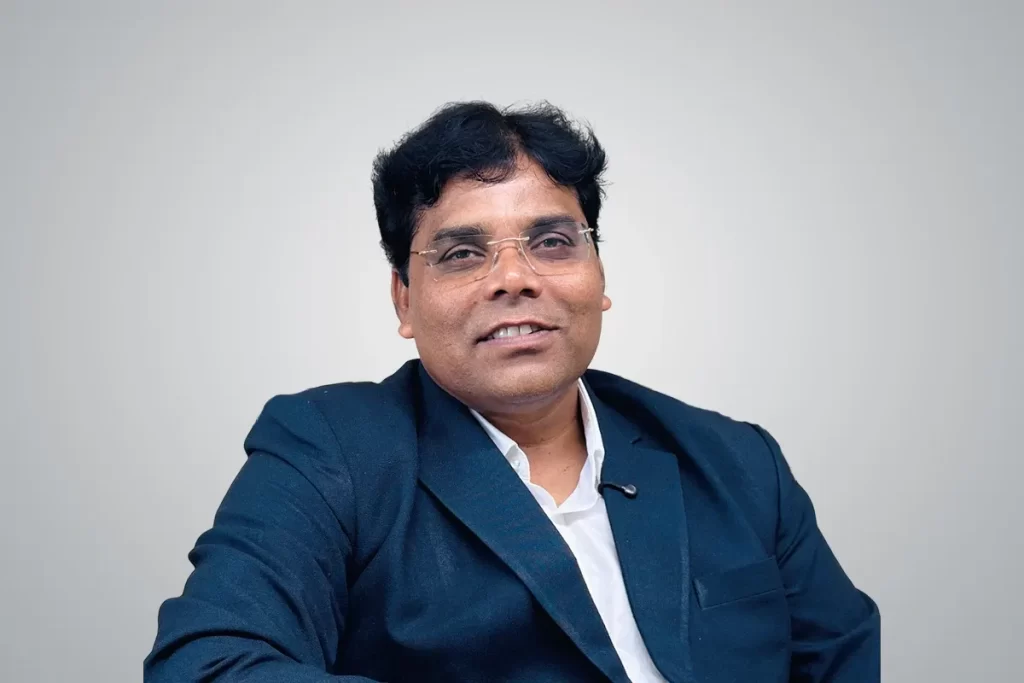
Shaping India’s Industrial Future Through Circular Water Leadership
Malu Kamble
Managing Director
KEP Engineering Pvt Limited.
When Malu Kamble walks into a room, the conversation rarely begins with machinery, regulations, or compliance checklists. It begins with responsibility towards water, towards industry, and towards the future. As Managing Director of Hyderabad-based KEP Engineering Services Pvt. Ltd., Malu has spent over 15 years challenging a deeply held industrial belief that liquid waste is a liability, not a resource.
In a water-stressed country like India, his thinking is both pragmatic and forward-looking. Malu believes that industries which recover, reuse, and respect water are not just meeting environmental norms; they are building long-term resilience. This philosophy has positioned KEP Engineering as a trusted partner for organisations aiming to move beyond basic compliance and adopt meaningful sustainability. At the heart of his approach is a shift from the traditional “use-and-dispose” model to circular economy principles, where industrial by-products are reintegrated into productive use.
Under his leadership, KEP Engineering delivers advanced Zero Liquid Discharge (ZLD) solutions across more than 35 industrial sectors, including pharmaceuticals, chemicals, metals and steel, textiles, food processing, automobiles, mining, and solar PV manufacturing. Its technology portfolio, spanning MEE, ATFD, MVRE, CIGAR systems, and customised effluent treatment plants, is designed not just to treat wastewater but to recover clean water, reusable materials, and long-term operational value.
Beyond engineering, Malu’s leadership is anchored in purpose. He views sustainability as a strategic imperative shaped by scarcity, climate risk, and responsibility to future generations. In redefining waste as value, Malu is helping shape a new industrial mindset. He shares deeper insights into this journey in an exclusive interview with TradeFlock.
What do smart economies understand about liquid industrial waste that others still don’t?
The question today is no longer whether industries can afford wastewater treatment. It is whether economies can afford to ignore the value locked inside liquid industrial waste. Smart economies understand that wastewater is not an environmental burden but an economic multiplier.
When managed intelligently, it strengthens sustainability, industrial resilience, and long-term competitiveness. India’s opportunity illustrates this clearly. According to the Council on Energy, Environment and Water (CEEW), scaling treated wastewater reuse could unlock USD 35 billion in economic value by 2047, create over one lakh jobs, and significantly reduce freshwater stress.
Globally, the industrial wastewater treatment market continues to expand, driven by efficiency gains, ESG mandates, and cost optimisation. The real divide is no longer between developed and developing economies, but between those that plan for water security and those that react after scarcity arrives.
How are Indian and global markets evolving in terms of value creation from industrial liquid waste?
The industrial liquid waste-to-value market is undergoing rapid transformation, driven by economic, environmental, and regulatory pressures. Global research shows the water recycling and reuse market was valued at over USD 26 billion in 2024 and is projected to reach USD 63.6 billion by 2033, growing at nearly 10% CAGR.
In India, the wastewater recycling market stood at about USD 1.17 billion in 2024 and is expected to expand to USD 3.15 billion by 2033, at over 10% CAGR. These trends signal a clear shift beyond compliance, as industries invest in technologies that turn wastewater into value. Globally, industrial water reuse systems are forecast to exceed USD 40 billion by 2033, driven by scarcity and stricter discharge norms, reinforcing the move toward circular water use.
Which sectors benefit most from KEP’s liquid waste management solutions?
KEP Engineering has commissioned over 650 plants across 35+ diverse sectors, serving industries where water reuse and liquid waste management are critical. Key sectors include pharmaceuticals, speciality chemicals, textiles, steel and metals, food processing, energy, solar manufacturing, mining, oil and gas, dyes and paints, and leather.
Each sector faces unique wastewater challenges, from high COD and BOD in textiles to heavy metals in mining. Our advanced technologies enable efficient water recovery, reduced freshwater use, and compliance with stringent environmental regulations.
How does KEP approach HR and workforce development, given its rural manufacturing base?
Our people are our strongest asset. Being in a rural area, we focus on building an inclusive and supportive work environment. We have distributed cycles to employees to ease daily commuting and provide special facilities to enhance comfort, safety, and well-being.
Continuous training and skill upgradation are integral to our HR philosophy, ensuring employees grow alongside evolving technologies. We actively encourage one-to-one interactions and follow a strict open-reach policy, where any employee can approach me anytime, without barriers or hierarchy. This openness builds trust, ownership, and long-term commitment.
With rising environmental anxiety among Gen Z and millennials, how should industries respond?
This finding is a wake-up call. Gen Zs and millennials are deeply concerned about the future of the planet they will inherit. Their anxiety reflects a loss of trust in how resources are being managed today.
Industries must respond by embedding environmental responsibility into core business strategy, not treating it as CSR or compliance. When companies invest in water reuse, waste-to-value systems, and circular economy models, they demonstrate accountability and long-term thinking. This reassures younger generations that growth and sustainability can coexist. Responsible resource management is no longer optional; it is essential to rebuild trust and credibility.
What message would you like to share with industries struggling to convert liquid waste into value?
My message to industries is clear: treat liquid industrial waste as an opportunity, not a liability. When managed professionally, it provides reusable water and recovered materials, strengthening resilience.
As India’s economy grows, industries must focus on their core operations and entrust complex wastewater management to experienced partners. With KEP’s 360-degree approach, from design and execution to operation and optimisation, we ensure compliance, efficiency, and sustainability, helping build an industrial ecosystem that is responsible, competitive, and prepared for the future.
Why is water emerging as the next gold for India and the world?
Water is fast emerging as the next gold because it has no substitute. As industries expand, cities grow, and climate patterns become increasingly unpredictable, assured access to water will define economic strength and competitiveness. Rising freshwater stress and tighter regulations are forcing industries to fundamentally rethink how they source, use, and manage water.
The real shift underway is from consumption to conservation and from disposal to reuse. Today, treated wastewater is a strategic resource that can support industrial cooling, process operations, construction, irrigation, and non-potable urban use. Companies that invest in circular water systems today will protect themselves from future disruptions, rising costs, and regulatory risks. In the coming decade, water will not merely support growth; it will decide which businesses, cities, and economies lead and which struggle.
What technologies does KEP Engineering deploy to convert industrial liquid waste into value?
In a water-stressed country like India, every drop reused strengthens industrial resilience. At KEP Engineering, our focus is on enabling industries to recover maximum value from wastewater with minimal energy and environmental impact.
Headquartered in Hyderabad, KEP Engineering has served over 550+ clients across 35+ industrial sectors. Our technology portfolio includes Multi-Effect Evaporators (MEE), Agitated Thin Film Dryers (ATFD), Mechanical Vapour Recompression (MVRE), Condensate Integrated Gas Recovery (CIGAR), Zero Liquid Discharge (ZLD) systems, and customised Effluent Treatment Plants (ETPs). Backed by strong in-house R&D, we continuously optimise these systems to reduce energy consumption, lower operating costs, and minimise carbon footprints. Across sectors, our clients recover up to 90% of wastewater, significantly reducing tanker dependency and environmental impact.
You often say industries must revisit their sustainability policies. Why is this urgent now?
Industries can no longer view wastewater as a by-product to be discarded. With rising water scarcity, stricter regulations, and growing ESG expectations, it is both a compliance requirement and a strategic resource.
India’s reuse mandates are 20% by 2027–28 and 50% by 2030–31, making circular water practices essential. Treating wastewater as a resource allows recovery for processes, cooling, irrigation, and construction, reduces costs and environmental impact, and builds long-term resilience. Companies embracing waste-to-value strategies will gain a decisive competitive edge in the decade ahead.
Why do you believe sustainability must be part of school education?
Sustainability must begin early. Environmental challenges, from climate change to water scarcity, which affect every aspect of life. Schools are not just centres of academic learning; they shape future citizens and values.
Integrating sustainability into education helps build responsible habits such as water management, energy conservation, waste reduction, and mindful consumption. It also fosters critical thinking and innovation, encouraging students to engage with real-world challenges. By embedding sustainability into school curricula, we prepare young minds not only to understand 21st-century challenges but also to lead solutions for a more resilient future.
What motivates your continued involvement with your alma mater, JMV, and its students?
JMV has played a formative role in shaping who I am today, and giving back is both a responsibility and a privilege. My engagement goes beyond nostalgia. I actively participate in student development through sports initiatives, especially cricket and athletics, motivational lectures, and regular interaction with students to share real-world perspectives.
The recent alumni meet was a powerful reminder of how education builds lifelong communities. We also support infrastructure and structural development at the school to improve learning and sporting facilities. Investing in students is investing in the future, and institutions like JMV deserve sustained support.
Featured Magazine -

All Magazines-


Other Interviews-
- Mallika Arora-Women Leaders in India 2026
- Sudeepthi Apsingekar-Women Leaders in India 2026
- Chetna Sharan-Women Leaders in India 2026
- Asha Subramanian-Women Leaders in India 2026
- Victoria Tzareva-Most Influential Leaders to Watch in 2026
- Mitul Gada-Most Influential Leaders in India 2026
- Anu Bedi Salwan-Women Leaders in India 2026
- Shweta Singh-Women Leaders in India 2026
- Archana Tarun Dave-Women Leaders in India 2026
- Dr Bharati Banerjee-Women Leaders in India 2026
