

Leading On Her Own Terms
Michele LaFemina
Clinical Director
Pathways Treatment Center
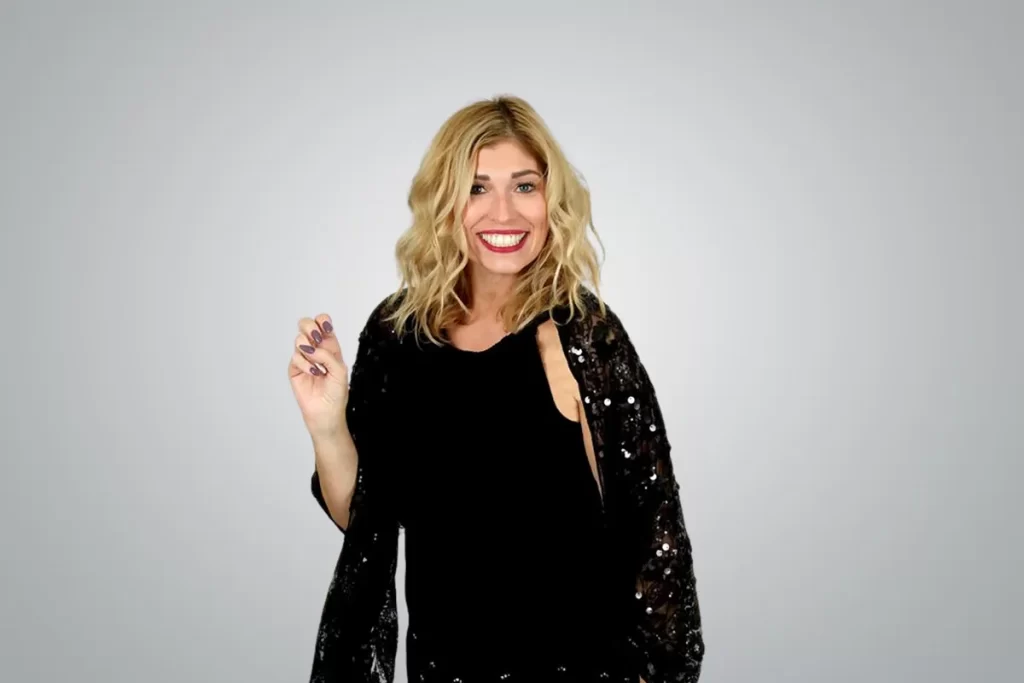
Leading On Her Own Terms
Michele LaFemina
Clinical Director
Pathways Treatment Center
People rarely come to treatment at their strongest, and leadership in those moments does not look like direction or certainty, but like the ability to stay present while someone else is unraveling, without rushing them toward resolution or offering answers that have not yet earned their place.
Michele LaFemina has spent much of her professional life inside those spaces, where progress does not announce itself clearly and where the work demands patience, discernment, and a willingness to sit with discomfort longer than most systems allow. Over time, those experiences shaped not only how she practices clinically, but how she understands responsibility, care, and leadership itself.
Rather than approaching healing as something to be managed or corrected, her work reflects an understanding that people arrive carrying layered histories, quiet resilience, and contradictions that cannot be organized into neat categories. Years spent across agencies, recovery settings, schools, telehealth platforms, and private practice reinforced a simple but demanding truth: care only works when it adapts to the human in front of it, not the other way around.
Now, as Clinical Director at Pathways Treatment Center, Michele brings that perspective into the systems she leads, shaping environments where clinicians are supported without being shielded from accountability and where treatment remains grounded in both evidence and lived reality. Her influence is less about visibility and more about consistency, showing up day after day in a field where endurance often matters more than recognition.
TradeFlock spoke with Michele to explore the experiences that shaped her leadership, the thinking behind her clinical approach, and the responsibilities she continues to carry in work that rarely allows for certainty.
How has your clinical journey influenced the way you design treatment today?
It’s hard to point to one moment because it didn’t happen that way. It happened over years, across places that looked nothing alike, with people whose stories refused to fit the frameworks I had been taught early on. Each environment taught something different, often by showing what didn’t work.
What stayed with me was how unpredictable healing actually is. People rarely arrive in the shape expected, and progress almost never moves in straight lines. Sitting with that reality changed how care is imagined now. Structure still matters, but rigidity has not made sense for a long time.
Treatment today grows out of listening first. Evidence-based work forms the backbone, yet space is intentionally left open for the meaning, creativity, and belief systems that clients bring. When people feel respected in that way, engagement deepens naturally and change becomes something they participate in rather than endure.
How do you see technology shaping the future of addiction and mental health care?
are used to feel bound by time and place. Once a session ended, support often disappeared until the next appointment. That gap has always felt unnatural, especially for people navigating recovery in real-world environments.
Technology offers a way to soften those edges. Progress can now be tracked as it unfolds. Support can exist between sessions rather than only during them. Access expands for people who would otherwise remain outside the system entirely.
Human connection remains the center of effective care. Technology works when it extends that connection instead of competing with it.
That belief continues to shape how innovation is approached at Pathways.
Cold roll-formed components offer superior strength-to-weight ratios and high dimensional stability, making them suitable for chassis members, crash structures, battery enclosures, and reinforcement beams. As OEMs increasingly adopt global vehicle architectures, the ability to deliver identical components at scale has become a decisive advantage.
"People don’t struggle on a schedule. Care shouldn’t operate on one either.."
Which moment in your career most shaped you as a clinical leader?
Leadership wasn’t something I set out to pursue. It showed up gradually, almost uncomfortably, as the work expanded beyond individual sessions and into the responsibility of shaping how care was delivered by others.
Direct clinical work teaches presence. Leadership teaches consequences. Decisions made at the systems level quietly influence every interaction that follows, whether anyone notices or not. That realization carried weight.
Building a culture where clinicians feel both supported and accountable became central. When teams feel safe enough to think clearly and honestly, clients receive better care without anyone having to force outcomes. That understanding continues to guide how leadership is practiced every day.
How has integrated behavioral health changed the way you guide care and outcomes?
Separation once felt efficient. Addiction here, mental health there, trauma somewhere else. Over time, that separation began to feel artificial.
People don’t experience their lives in categories. Anxiety bleeds into substance use. Trauma-informed coping. Depression alters motivation. Treating these elements in isolation often misses the deeper story.
Integrated behavioral health allowed care to mirror lived reality more honestly. Teams now work from a shared understanding rather than parallel tracks. Clients respond to that coherence. Engagement improves because treatment finally makes sense in the context of their lives.
How do you envision the future of behavioral health, and how do you mentor the next generation of clinicians?
Care should not begin at the point of crisis. Support belongs in schools, workplaces, families, and communities long before someone reaches a breaking point. The future of behavioral health feels broader and more embedded than it once did.
Mentorship follows that same philosophy. Clinical skill matters, yet longevity in this field depends on self-awareness, boundaries, and the willingness to keep learning. New clinicians are encouraged to remain curious rather than certain and compassionate without self-sacrifice.
Sustainable care requires caregivers who remain grounded themselves. When clinicians are supported as whole people, they bring steadiness into spaces where it is needed most.
Featured Magazine -

All Magazines-





Other Interviews-
- Swapan Kumar-Best Corporate Leaders in USA 2026
- Aashik Khakoo-Best Corporate Leaders in USA 2026
- Inaas Arabi-Best Corporate Leaders in USA 2026
- Mark Newsome-Best Corporate Leaders in USA 2026
- Manar Elsakka-Best Corporate Leaders in USA 2026
- Dawn Stastny-Best Corporate Leaders in USA 2026
- Troy Negley-Most Inspiring Global HR Leaders 2026
- S. Indrani Shanmugam-Most Impactful Women Leaders from Asia 2026
- Gutti Malleswara Reddy-10 Best Tech Leaders in India 2026
- Rajesh Pasari-Best Education Leaders in India 2026
