

Establishing Trust-Led Responsible Marketing in BFSI
Pradeep Singh Negi
Vice President- Head Marketing
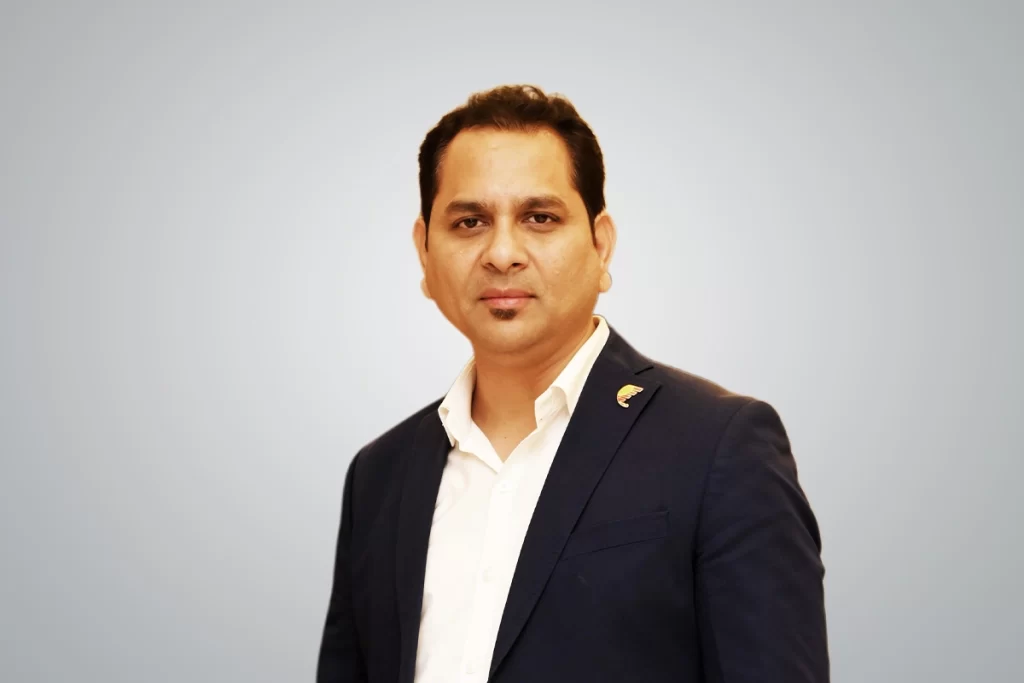
Establishing Trust-Led Responsible Marketing in BFSI
Pradeep Singh Negi
Vice President- Head Marketing
Bajaj Capital Limited
Marketing in financial services is less about persuasion and more about responsibility, especially when every message influences decisions that shape long-term security, a belief that has guided. Pradeep Singh Negi, Vice President and Head of Marketing at Bajaj Capital Limited, has built his career navigating this balance with precision. Starting his journey in design and visual communication, he has spent nearly two decades within the organisation, evolving across roles to lead its marketing function today. This progression has given him a rare ability to combine creative execution with strategic thinking, shaping campaigns that go beyond promotion to build long-term relationships. Having led brand, experiential, and integrated marketing initiatives across the country, Negi’s approach is deeply rooted in responsibility, trust, and value-driven communication. In an exclusive conversation with TradeFlock, he shares his insights on marketing, leadership, and building enduring financial brands.
Looking back at your journey, what experiences have shaped your perspective as a marketing leader?
My journey with Bajaj Capital began in 2006 as a Visualiser and Designer, and over nearly two decades, it has been a deeply enriching experience spanning brand management and marketing leadership. Moving through different roles has provided a strong foundation in understanding how brands are built, communicated, and sustained over time. A defining influence in shaping my perspective has been the guiding philosophy of our Founder and Chairman.
“Treat your investor’s money as your retired father’s money, who has done his last savings and who is not able to earn again in life.”
– Shri K.K. Bajaj, Founder and Chairman Emeritus, Bajaj Capital Limited
This principle has reinforced a strong sense of responsibility in how marketing is approached. Over time, it has become clear that trust is the most valuable asset a financial brand can build, strengthened through consistent messaging, transparency, and long-term value-driven communication.
What challenges do marketing leaders face today in building trust and engagement?
One of the most significant challenges today is building trust in an environment where customers are constantly exposed to information, choices, and competing narratives. While visibility is easier to achieve, credibility requires far greater consistency and authenticity.
In such a landscape, communication that focuses only on products often struggles to create meaningful engagement. A more effective approach lies in value-driven communication, where marketing clearly demonstrates how solutions contribute to customers’ life goals and financial security. I firmly believe that;
“Marketing creates impact only when it connects purpose with people and delivers real value.”
Data and digital platforms play an important role in this process by enabling deeper insights and more relevant interactions. However, the real differentiator remains the ability to combine purpose-led storytelling with consistent delivery, ensuring that engagement translates into lasting trust.
How do you ensure experiential marketing creates long-term value rather than short-term visibility?
A key strength of our approach lies in Bajaj Capital’s phygital business model, where a strong physical presence through investment centres is seamlessly complemented by digital platforms. This integrated ecosystem allows experiential marketing to go beyond immediate engagement and contribute meaningfully to long-term brand value.
Experiential initiatives are designed around key life goals such as education, home ownership, or retirement, ensuring that every interaction remains relevant to the customer’s journey. Rather than focusing only on visibility, the objective is to deepen trust, strengthen engagement, and reinforce the brand promise.
Measurement also extends beyond short-term metrics. Continuous evaluation through digital analytics and client feedback helps us understand how these experiences influence long-term behaviour and relationships. When aligned with clear brand objectives, experiential marketing becomes a powerful tool for building credibility, recall, and sustained customer connection.
What principles guide you in building trust and long-term customer relationships?
In financial services, trust and credibility form the foundation of every long-term relationship. The principles that guide our marketing approach are rooted in transparency, consistency, and client education, which together create a strong base for sustained engagement.
Simplifying complex financial concepts is a critical part of this process. When clients clearly understand the purpose and value of their investments, it builds confidence and enables more informed decision-making. Marketing, in this sense, becomes an enabler of clarity rather than just communication.
Consistency in messaging and delivering on promises further strengthens credibility over time. Every interaction, whether through campaigns or service delivery, must reflect the same commitment to the client’s interests. Value-driven engagement remains central to this approach, ensuring that relationships are built not just on transactions but on long-term trust and meaningful outcomes.
Which emerging capabilities will define successful marketing leaders in the coming decade?
The next decade will require marketing leaders to seamlessly integrate technology, data intelligence, and human insight. While digital tools and analytics will continue to evolve, the real impact will come from translating data into meaningful and personalised customer experiences.
Capabilities such as AI-driven marketing, predictive analytics, and content automation will play a significant role in improving efficiency and scale. At the same time, formats like video marketing are becoming increasingly important for simplifying complex ideas and creating more engaging brand communication.
However, technological advancement alone will not define success. Purpose-driven branding and empathetic communication will remain essential to building lasting customer relationships.
Despite all technological advancements, one principle remains unchanged: Technology enables us, but trust and human understanding define our success as marketers. Leaders who can balance both will shape the future of marketing.
Featured Magazine -

All Magazines-




Other Interviews-
- Inaas Arabi-Best Corporate Leaders in USA 2026
- Mark Newsome-Best Corporate Leaders in USA 2026
- Manar Elsakka-Best Corporate Leaders in USA 2026
- Dawn Stastny-Best Corporate Leaders in USA 2026
- Troy Negley-Most Inspiring Global HR Leaders 2026
- S. Indrani Shanmugam-Most Impactful Women Leaders from Asia 2026
- Gutti Malleswara Reddy-10 Best Tech Leaders in India 2026
- Rajesh Pasari-Best Education Leaders in India 2026
- Sinan Safaa Aboeless-Asia’s Best Business Leaders 2026
- Dr. Sandeep Chatterjee-Best Education Leaders in India 2026
