

Navigating the Science Behind Marketing Decisions
Prakash Narayan Singhdeo
Marketing and Business Development Lead
Pharmaceuticals & Healthcare
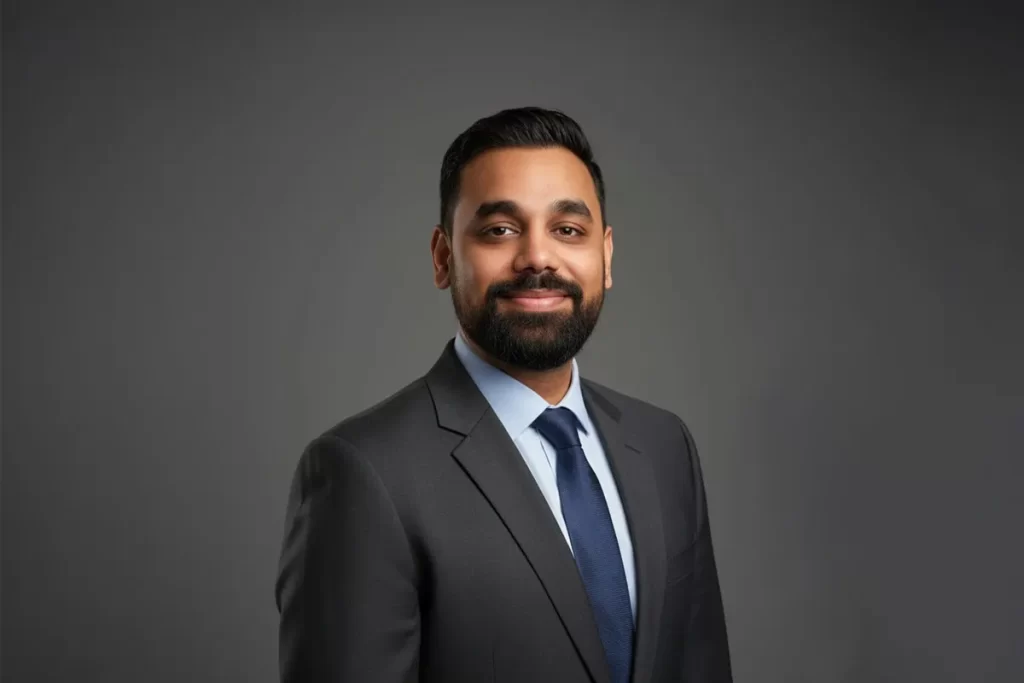
Navigating the Science Behind Marketing Decisions
Prakash Narayan Singhdeo
Marketing and Business Development Lead
Pharmaceuticals & Healthcare
Marketing today is being shaped less by visibility and more by the ability to influence decisions that carry real-world impact. As industries become more data-driven and outcome-focused, the role of marketing leaders has moved closer to strategy, requiring a sharper understanding of context, behaviour, and long-term value creation.
Within this evolving landscape, Prakash Narayan Singhdeo brings over 15 years of experience across Pfizer, Roche, Johnson & Johnson, and Novartis, navigating complex oncology portfolios and high-stakes brand decisions. His approach reflects a consistent focus on turning insight into action while keeping outcomes at the centre of strategy. Alongside business performance, his emphasis on mentoring and well-being highlights a more balanced view of leadership. In an exclusive conversation with TradeFlock, he shares more.
How has your definition of successful marketing evolved over time, especially in healthcare and pharma?
Success in marketing looked very different at the beginning. Visibility, recall, and brand presence felt like the right markers, and for a while, that seemed sufficient. The shift came gradually, not from a framework, but from seeing how decisions actually impact patient outcomes.
At some point, it stops being about how effectively a message travels and starts becoming about whether the right therapy reaches the right patient at the right time. That changes how you evaluate success altogether.
In oncology, this becomes even more real. Every interaction carries weight because it sits between science, access, and trust. The patient journey is never singular; it is shaped by multiple stakeholders at once. Staying credible in that space requires scientific rigour, clinical relevance, and a consistent focus on outcomes that genuinely matter.
Can you share a bold decision that redefined growth for your organisation?
There was a point where improving communication alone no longer felt like the answer. The larger constraint seemed to sit within the system itself, particularly in how diagnosis was happening in lung cancer.
That led to a decision to bring multiple pharma organisations together, which is not the most natural alignment in this industry. The idea was simple in intent, making testing accessible and free to patients regardless of location or socio-economic background, but complex in execution. The uncertainty was real because the returns were not immediate or directly measurable. What made it work was a shared understanding among individuals who were willing to prioritise patient outcomes.
Over time, the impact became visible not just in access, but in enabling more precise and personalised treatment pathways.
“In pharma, the biggest growth lever isn’t promotion—it’s enabling the system to evolve.”
What will define the next decade of marketing leadership, and what advice would you give to future leaders?
The shift is already underway; you can see it in how decisions are being influenced today. Data, real-world evidence, and more personalised approaches to treatment are starting to redefine how therapies are positioned and adopted.
What this means for marketing is a deeper level of involvement. Understanding data is no longer a specialised skill; it becomes part of everyday thinking. Engagement also becomes more contextual, shaped by specific needs rather than broad messaging.
At the same time, the pace of innovation brings its own responsibility. Greater advancement will naturally invite greater scrutiny, which makes trust harder to build and easier to lose. For anyone entering this space, depth will matter more than speed. A strong understanding of clinical pathways, a clear view on access and affordability, and the willingness to take considered risks will shape meaningful impact over time.
As marketing becomes more strategic, how have you navigated the expanding role of a marketing leader?
The role didn’t expand overnight, but at some point, it became clear that marketing could not remain a function that simply executes strategy. It had to participate in shaping it. Working in pharma brings you into constant interaction with medical evidence, physician behaviour, access challenges, and policy dynamics. It becomes difficult to separate marketing from these conversations because decisions in one area influence outcomes in another.
Bringing marketing closer to medical and regulatory discussions was not a structural move; it was a necessary one. In oncology, growth is not only about gaining share; it is about ensuring that innovation actually reaches patients in a meaningful way.
What also becomes evident over time is how much team culture influences outcomes. Some teams simply operate with more clarity and ownership, and those differences often come from what can be described as microcultures.
When building teams, what distinguishes high-impact marketing talent in healthcare?
The difference starts becoming visible quite early when you look at how individuals engage with the work itself. In healthcare, it is difficult to contribute meaningfully without developing a certain level of scientific understanding.
People who are curious about science tend to ask better questions and make more grounded decisions. Alongside that, ethical clarity becomes equally important because communication in this space carries real consequences. The role also demands the ability to work across functions. Marketing cannot operate in isolation from medical or regulatory teams, so collaboration becomes part of everyday decision-making.
What often gets underestimated is the role of the work environment. Teams that feel energised and connected tend to perform better over time. Eventually, the most consistent performers are those who think beyond brand metrics and stay focused on patient outcomes.
Featured Magazine -

All Magazines-


Other Interviews-
- Inaas Arabi-Best Corporate Leaders in USA 2026
- Mark Newsome-Best Corporate Leaders in USA 2026
- Manar Elsakka-Best Corporate Leaders in USA 2026
- Dawn Stastny-Best Corporate Leaders in USA 2026
- Troy Negley-Most Inspiring Global HR Leaders 2026
- S. Indrani Shanmugam-Most Impactful Women Leaders from Asia 2026
- Gutti Malleswara Reddy-10 Best Tech Leaders in India 2026
- Rajesh Pasari-Best Education Leaders in India 2026
- Sinan Safaa Aboeless-Asia’s Best Business Leaders 2026
- Dr. Sandeep Chatterjee-Best Education Leaders in India 2026
