
Where Empathy Meets Economics in Modern HR Leadership
Sahil Survase
Vice President - HR Operations
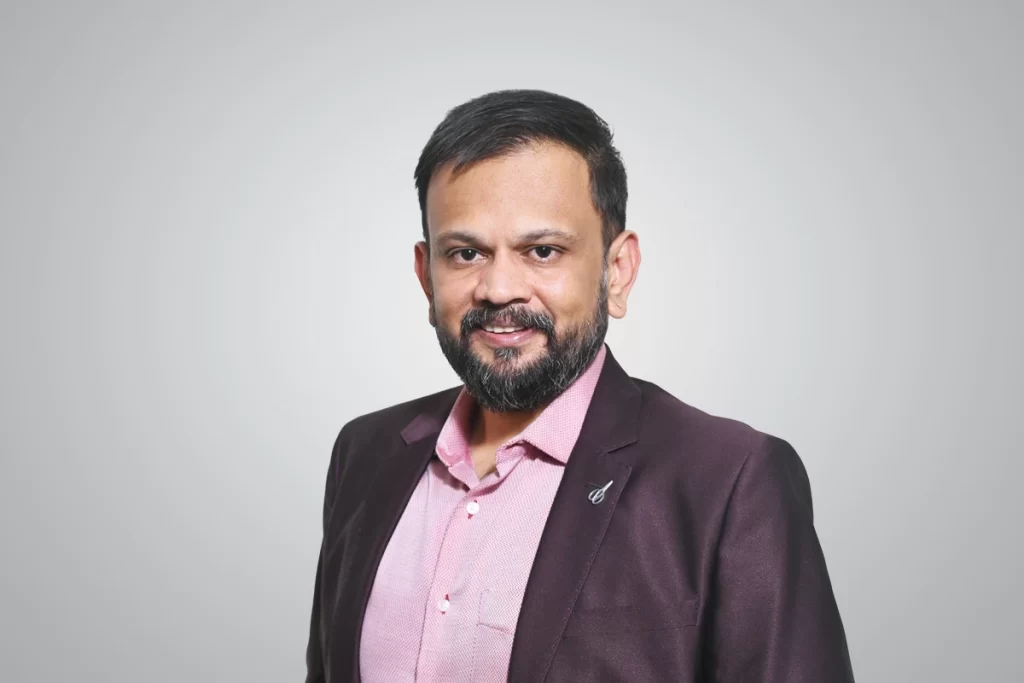
Where Empathy Meets Economics in Modern HR Leadership
Sahil Survase
Vice President - HR Operations
Vidushi Infotech Software Solutions Provider Private Limited
Boardrooms today run on numbers. Growth projections, EBITDA margins, cost efficiencies, and scalability targets dominate strategic conversations. Yet behind every metric sits a far more complex variable: human behaviour. Performance is driven by belief. Innovation is fuelled by trust. Execution depends on clarity and ownership. The tension between financial discipline and human motivation defines modern enterprise success.
Bridging these two worlds, empathy and economics, requires strategic courage more than operational expertise. Sahil Survase thrives in that rare space where people strategy directly influences business velocity. He understands that culture is not a “soft” lever but a measurable performance multiplier and that leadership behaviour ultimately reflects on the balance sheet.
As Vice President – HR Operations at Vidushi Infotech Software Solutions Provider Private Limited, Sahil positions People Operations not as a support mechanism but as enterprise infrastructure. For him, HR is about maintaining policies and simultaneously architecting data-driven systems that enable sharper decision-making, faster execution, and scalable growth.
What distinguishes Sahil is his boardroom mindset paired with deep human insight. He reads financial statements with the same intensity that he studies organisational behaviour. He recognises that when employees are treated as stakeholders in the workplace experience, they respond with accountability, innovation, and resilience.
Sahil represents a new breed of HR leadership that turns human potential into measurable business power. He shares insights about his journey in this exclusive interview with TradeFlock.
What strategies are most effective in building a strong employer value proposition in today’s competitive talent market?
In 2026, a high salary is simply the baseline. Building a truly competitive employer value proposition requires authenticity over branding, as today’s talent quickly recognises substance versus surface messaging. At Vidushi Infotech, our EVP stands on three pillars: ownership, outcome, and right-skilling. We offer more than a job; we create a playground for innovation where individuals take charge of meaningful work and measurable impact.
One of the most powerful strategies is enabling employees to become authentic storytellers. When a developer shares their journey of building a generative AI project from the ground up, that narrative resonates far beyond traditional recruitment campaigns. A strong EVP must also embrace radical flexibility, fostering genuine work-life integration that values personal growth and mental well-being alongside performance and professional achievement.
How will AI transform talent acquisition and engagement, and what challenges must HR prioritise?
AI is evolving from a support tool into a strategic agent. In the coming years, talent acquisition will become truly agentic, moving beyond resume screening to predicting cultural fit and future potential through deep data intelligence that extends beyond human bandwidth. Employee engagement will also become hyper-personalised, with AI identifying burnout signals, growth readiness, and leadership potential in real time.
The priority, however, must be ethical governance and closing the “humanity gap”. As transactional processes become automated, relational leadership must strengthen. HR leaders need to prevent AI from turning into an opaque decision-maker that risks bias or weakens trust. A strong human-in-the-loop philosophy is essential. AI delivers insight, while human judgement ensures empathy, fairness, and accountability remain central.
What key cultural challenges arise during organisational change, and how can HR effectively overcome them?
In my experience, the most significant barrier to organisational change is rarely the strategy itself; it is the “loss of control” anxiety that accompanies it. When introducing a new AI workflow or restructuring a department, employees often question their relevance, capability, and stability. The unfamiliar can feel threatening, especially when established routines have provided confidence and
predictability. This concern typically manifests as passive resistance, cautious engagement, or attachment to legacy processes.
To address this, I rely on a principle called “normalisation before announcement”. Senior leaders begin modelling the new behaviours within their own teams well ahead of any formal rollout. By the time the change is officially introduced, employees have already witnessed it in action. The transition feels like a natural progression rather than an abrupt shift, which sustains morale and trust.
I also adopt a beta-testing approach, involving a diverse pilot group in shaping the change. When their feedback directly influences the outcome, hesitation transforms into ownership and shared momentum.
How do you balance strong HR compliance with a culture that encourages innovation and risk-taking?
I do not see policies as handcuffs or rigid constraints; I see them as the “Guardrails of a Racetrack”, as structures that provide direction and confidence. Without guardrails, speed becomes dangerous; if they are too narrow, performance suffers. The right framework allows people to accelerate with clarity and security.
At Vidushi Infotech, we follow a “safe-to-fail” approach. We remain uncompromising on core non-negotiables such as integrity, data security, AI ethics, the backbone of any future-ready tech firm, and workplace respect. These principles create stability. Beyond them, we actively promote controlled experimentation.
We consciously recognise intent alongside outcomes. When a calculated risk does not deliver the expected result, we conduct blameless post-mortems focused on insight and improvement. This reinforces a culture where progress matters more than perfection. When employees feel secure in thoughtful risk-taking, innovation becomes embedded in the organisation’s DNA rather than dependent on directives.
Featured Magazine -

All Magazines-


Other Interviews-
- Victoria Tzareva-Most Influential Leaders to Watch in 2026
- Mitul Gada-Most Influential Leaders in India 2026
- Anu Bedi Salwan-Women Leaders in India 2026
- Shweta Singh-Women Leaders in India 2026
- Archana Tarun Dave-Women Leaders in India 2026
- Dr Bharati Banerjee-Women Leaders in India 2026
- Justine Paula Nichol-10 Best Healthcare Executives Transforming 2026
- Vivek Jhanjhri-10 Best COOs in India 2026
- Jerry Creech-10 Best Healthcare Executives Transforming 2026
- Daniel Gandia-10 Best Healthcare Executives Transforming 2026
