

Designing Growth with Accountability at the Core
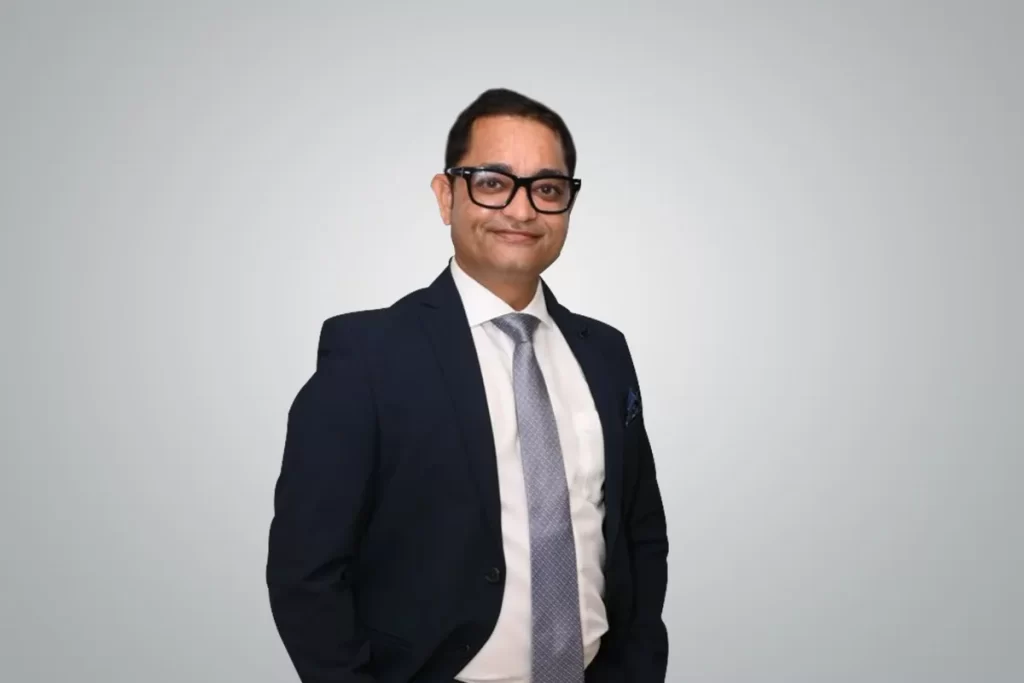
Sanjeev Kumar
Founder & CEO
Designing Growth with Accountability at the Core
Sanjeev Kumar
Founder & CEO
Skyline Digital Growth LLC
Behind every performance-driven system is a leader who has learned to question what growth really means. Sanjeev Kumar built his journey from the ground up, beginning on the sales floor and moving through e-commerce, affiliate networks, and performance marketing roles that exposed him to both the promise and the inefficiencies of the industry. Those experiences shaped a clear point of view that growth without accountability rarely sustains itself.
Today, as the Founder & CEO of Skyline Digital Growth LLC and the force behind Morphix Marketing, he focuses on building structured, performance-led growth systems where data, intent, and execution align to deliver measurable outcomes. His approach reflects a consistent emphasis on clarity, discipline, and long-term value over short-term gains.
In an exclusive interaction, TradeFlock spoke with Sanjeev to understand his journey, challenges, key strategies, and the road ahead.
From the floor supervisor to founding your own agency, what shaped your journey and decision to build independently?
Understanding business from the floor leaves a very different imprint. There is no room for abstraction in that environment, only immediate decisions, people to manage, and problems that demand resolution in real time. That phase shaped my operational instinct in a way that stayed with me even as I moved into digital marketing.
What became increasingly difficult to ignore was the gap between effort and outcome. Brands were investing heavily, yet the conversations rarely moved beyond impressions and clicks. Very little accountability existed around actual revenue, and over time, that disconnect became too visible to overlook.
Building the agency came from that tension. The intent was not to add another service provider to the market, but to create a model where results defined credibility. Entrepreneurship then forced a shift inward, where leadership moved away from control and toward building systems that could deliver consistently without dependence.
In a crowded marketing landscape, what truly differentiates your agency today?
Crowded markets tend to reward clarity more than capability. Many agencies continue to operate around activity because it is easier to present and justify, but activity without outcome eventually loses meaning.
The distinction for us came from aligning directly with revenue. Performance-driven models such as CPA, CPS, and pay-per-call create a structure where results are not optional; they are the only measure that matters. That naturally removes excess and forces sharper execution.
What supports this approach is not just access to platforms but also a deeper understanding of intent, audience behaviour, decision-making, and how conversion actually happens. While tools and algorithms continue to evolve, these underlying patterns remain consistent. Over time, this has shaped a very clear position. The work is not centred on marketing activity but on building a system that consistently generates measurable business outcomes.
Where do you see the biggest opportunities in marketing, and how are you preparing for what’s next?
Marketing is gradually moving toward a point where visibility alone is no longer sufficient. The emphasis is shifting toward accountability, where every effort is expected to directly connect to measurable outcomes. At the same time, technology is reshaping how that accountability is achieved. AI-driven execution is beginning to influence decisions at scale, while the move toward owned data ecosystems is changing how businesses think about control and sustainability.
These shifts are not independent; they reinforce one another to create a more structured and performance-led landscape. The opportunity lies in building systems that can operate effectively within that structure while maintaining the flexibility to adapt. Preparation, therefore, is less about reacting to trends and more about anticipating direction. The focus remains on creating an environment where data, distribution, and monetisation work together seamlessly, because in the long term, growth will be defined by how clearly it can be measured.
What has been the most difficult personal challenge in your journey as a founder?
Pressure in entrepreneurship rarely announces itself in obvious ways. It builds gradually in the space where decisions have no clear reference point and no one else to absorb the consequences.
Being the final decision-maker changes how uncertainty is experienced. Each choice carries weight not only because of its outcome but also because there is no fallback. Early in the journey, that mental load was underestimated, especially during phases where well-thought-out strategies failed to scale or external variables disrupted momentum.
Clarity began to emerge only after stepping back from reactive decision-making. Discipline replaced urgency, and data began to guide direction more than instinct alone. Over time, the focus shifted toward building systems that could perform with consistency rather than chasing isolated wins. What seems like a technical shift is actually a psychological one, where patience and structure begin to outweigh intensity.
“Growth without accountability is just activity, and activity does not build businesses.”
What do you prioritise when building your team in such a high-performance environment?
The kind of environment we operate in does not allow for passive contribution. Situations change quickly, expectations remain high, and outcomes are closely tied to execution quality, which makes mindset more important than skill alone.
What stands out over time is how individuals respond when things do not go as planned. Ownership shows up in those moments, not in structured settings. The ability to move quickly while maintaining accuracy is equally important, as speed without direction tends to create more problems than it solves.
Integrity forms the foundation of everything else. In performance marketing, numbers are not just metrics; they represent trust, and once that is compromised, it becomes difficult to rebuild. Beyond all of this, adaptability remains critical. The environment does not remain stable long enough for rigid thinking to survive, and those who continue to evolve tend to carry the system forward.
Featured Magazine -

All Magazines-





Other Interviews-
- Inaas Arabi-Best Corporate Leaders in USA 2026
- Mark Newsome-Best Corporate Leaders in USA 2026
- Manar Elsakka-Best Corporate Leaders in USA 2026
- Dawn Stastny-Best Corporate Leaders in USA 2026
- Troy Negley-Most Inspiring Global HR Leaders 2026
- S. Indrani Shanmugam-Most Impactful Women Leaders from Asia 2026
- Gutti Malleswara Reddy-10 Best Tech Leaders in India 2026
- Rajesh Pasari-Best Education Leaders in India 2026
- Sinan Safaa Aboeless-Asia’s Best Business Leaders 2026
- Dr. Sandeep Chatterjee-Best Education Leaders in India 2026
