

Supply Chain Strategist with Execution Depth
Sanket Ramchandra Moharir
Chief Operating Officer
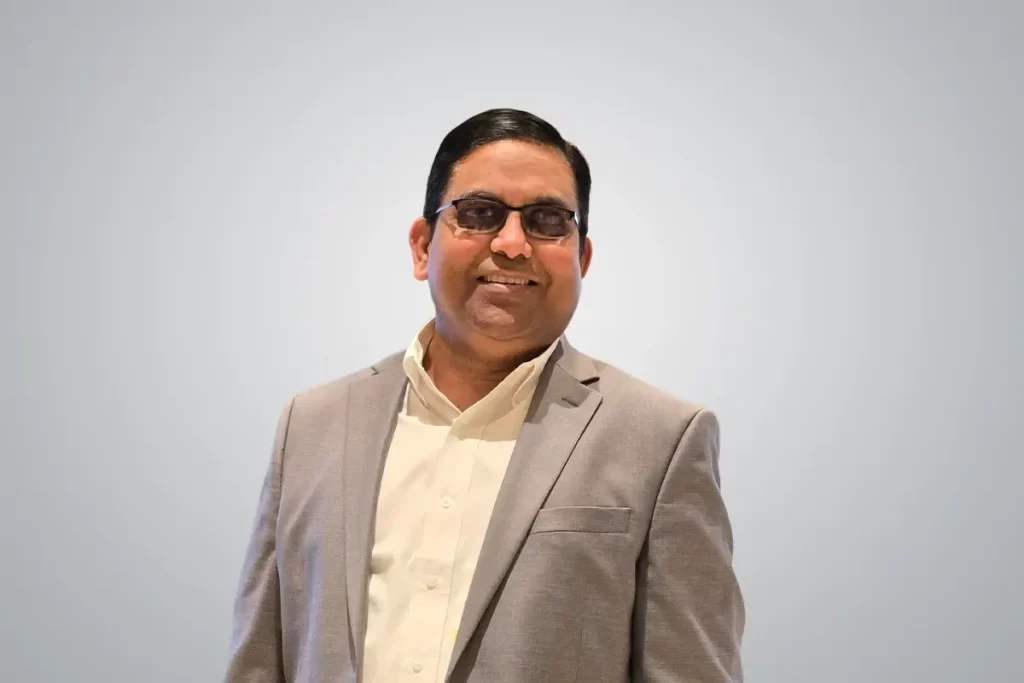
Supply Chain Strategist with Execution Depth
Sanket Ramchandra Moharir
Chief Operating Officer
Mid-West Textile LLC
The role of a Chief Operating Officer today extends far beyond aligning resources and driving efficiency; it demands clarity of judgment in moments where scale, cost, and long-term value intersect. Within this evolving landscape, Sanket Ramchandra Moharir has built his leadership through nearly two decades of hands-on operational depth. Beginning his journey in core manufacturing roles and progressing through plant leadership, sourcing, and supply chain strategy at Mid-West Textile LLC, he has experienced a steady expansion from execution to enterprise-wide thinking. Early exposure across quality, production, and multi-plant operations shaped a leadership approach grounded in systems, people, and discipline that he now applies to drive operational excellence and sustainable growth.
In an exclusive interaction, TradeFlock spoke with Sanket to understand his journey, challenges, key strategies, and the road ahead.
You’ve spent your career deep inside operations. What shaped your instincts early on?
Operations often look precise from a distance, but real understanding develops only when you begin to see how work unfolds on the ground. Early in my career, that shift happened quite naturally. My background in Industrial Engineering gave me a structured lens, yet the real learning came at Mid-West Textile LLC, through everyday interactions on the production floor.
Spending time with employees, observing how they performed their tasks, and listening to their suggestions on improving processes became central to how I approached operations. Improvements in plant layout, ergonomics, and production standards were not isolated decisions but outcomes of those interactions. Over time, a sense of partnership developed, built on trust and mutual respect.
Technology, such as real-time data and performance dashboards, only strengthened that system because people were already aligned. Instincts, in many ways, were shaped less by data alone and more by staying close to the people generating it.
“The real strength of operations lies not in systems alone, but in the trust that allows people to improve them.”
How did working across cultures influence your leadership approach?
Leadership often evolves through exposure rather than design, especially when one is placed in unfamiliar environments early in their career. Moving from India to the United States brought not only a change in geography but also in how teams interacted, communicated, and operated.
Working across the US-Mexico region required adapting to language and cultural nuances, including learning Spanish to connect more effectively with the workforce. Those experiences shaped a more grounded understanding of people and how trust is built across different contexts.
Rather than relying on a fixed leadership style, the approach developed through engagement—spending time with teams, understanding their perspectives, and creating an environment of mutual respect. With employees from multiple countries, diversity became less of a challenge and more of a strength.
Leadership, over time, became about alignment rather than control, where people contribute more effectively when they feel understood.
In a market where price pressure is relentless, how do you determine what cannot be compromised?
The role of a COO today extends beyond managing efficiency; it involves defining the boundaries a business is unwilling to cross, especially as cost pressures intensify. Not every saving strengthens the business, and that distinction becomes clearer with experience.
In our operations, the quality of raw materials has always been non-negotiable. While markets offer multiple options at different price points, the starting input determines everything that follows. Any compromise at that stage tends to surface later in product consistency and overall reliability.
Serving customers across more than 40 countries has reinforced this approach. Expectations may vary, but trust is built on delivering consistent quality products. Our sales teams carry that confidence because they know what stands behind the product. Cost efficiency continues to matter, but certain decisions define the product itself. Holding that line has been central to sustaining both growth and reputation.
What are people still getting wrong about global textile shifts today?
Much of the conversation around global textiles is centered on shifts in sourcing locations, yet that only reflects part of what is changing. A deeper shift is visible in how products are consumed and how quickly they exit the lifecycle.
The rise of fast fashion has accelerated production and disposal cycles, often at the cost of durability. This becomes particularly evident when viewed through the lens of recycling. Over the past two decades, we have processed more than a billion pounds of used textiles, and that experience reveals a recurring pattern—many products are discarded long before their functional life should end.
Our work focuses on extending that lifecycle by grading and redistributing used clothing across global markets, reducing landfill impact. Sustainability, therefore, is not only about where products are made but how long they remain usable.
Without addressing this imbalance between production and lifecycle, shifts in sourcing will continue to overlook the larger environmental challenge.
How has your definition of success evolved over the years?
Success, in the earlier years, was closely tied to visible growth. Expanding from a single facility to multiple production units and warehouses across the US and Mexico, entering retail through Thrift Town, and building collection operations across states were clear indicators of progress.
Over time, that definition has expanded. While scale remains important, it does not fully capture the strength of an organization. Greater emphasis now lies on how people within the business grow and evolve.
Creating structured opportunities for employees to develop and progress has become a key focus. Watching individuals build their careers within the organization reflects a different dimension of success, one that extends beyond operational metrics. Growth in infrastructure builds capacity, but growth in people builds continuity. A balance of both now defines what success truly means.
Featured Magazine -

All Magazines-


Other Interviews-
- Mallika Arora-Women Leaders in India 2026
- Sudeepthi Apsingekar-Women Leaders in India 2026
- Chetna Sharan-Women Leaders in India 2026
- Asha Subramanian-Women Leaders in India 2026
- Victoria Tzareva-Most Influential Leaders to Watch in 2026
- Mitul Gada-Most Influential Leaders in India 2026
- Anu Bedi Salwan-Women Leaders in India 2026
- Shweta Singh-Women Leaders in India 2026
- Archana Tarun Dave-Women Leaders in India 2026
- Dr Bharati Banerjee-Women Leaders in India 2026
