

Execution-Led Healthcare Expansion Strategist
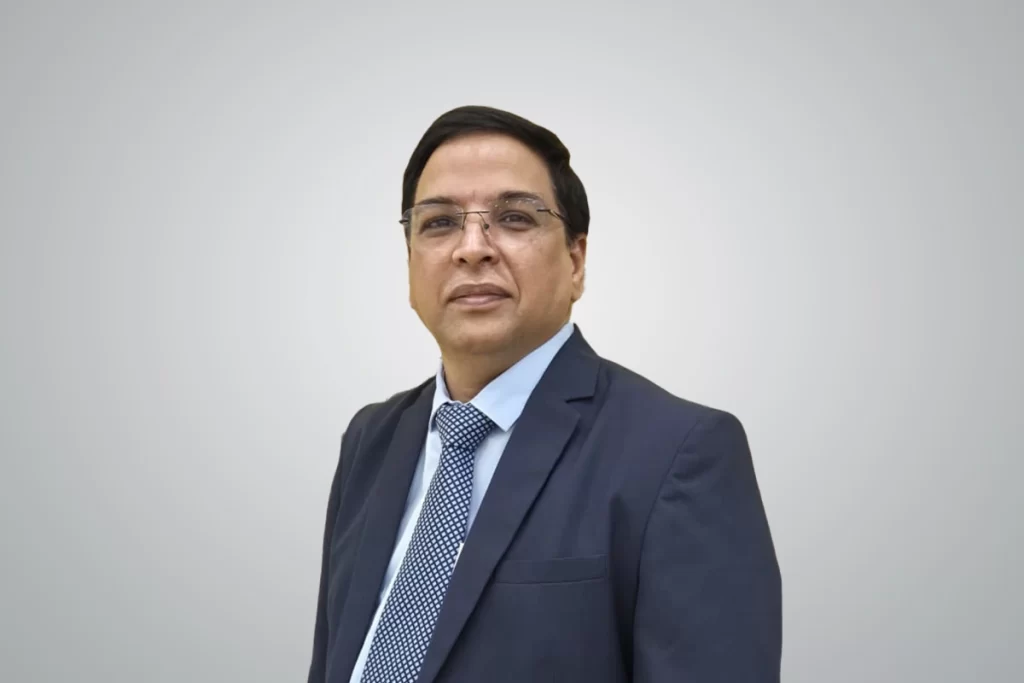
Santosh Aghamkar
Director - International Sales
Execution-Led Healthcare Expansion Strategist
Santosh Aghamkar
Director - International Sales
Medica Corporation
In diagnostics, markets are not built in boardrooms alone; they take shape across laboratories, hospitals, and distribution networks where trust is earned over time. That reality comes through clearly in the journey of Santosh Aghamkar, whose career reflects a consistently hands-on approach to building the in Vitro Diagnostics business across South Asia.
With over 23 years of experience, supported by a background in pharmacy and marketing, Santosh has grown from frontline roles into leading international sales at Medica Corporation. His work has extended beyond expansion to focus on strengthening dealer networks, driving collaborations with the Ministry of Health, and building enduring partnerships with hospitals and diagnostic chains across diverse markets during his association with Vitro Diagnostics.
What defines his approach is a clear focus on building transparent, accountable systems while nurturing teams that can sustain growth over time. His leadership is shaped by execution, informed by markets, and refined through experience. During an exclusive conversation with TradeFlock, he shares his journey, challenges, and perspective on the sector.
How has your journey shaped your approach to leadership and growth?
My journey has been a continuous progression of understanding how markets, people, and systems come together to drive meaningful growth. Starting in frontline roles at Bayer and Nicholas Piramal, I was closely exposed to customer realities, which grounded my perspective early on. A defining moment was working with Mr Ajay Piramal and Dr Swati Piramal on a Point-of-Care HbA1c Analyser project, which strengthened both my technical and commercial understanding while reinforcing the value of disciplined execution.
At Transasia Biomedicals Ltd, leading the critical care business and achieving strong growth in a competitive environment, shaped my ability to combine strategy with consistency and ownership. This evolved further at Thermo Fisher Scientific, where I transitioned into strategic marketing and expanded my perspective on positioning and scale.
At Medica Corporation, these experiences came together as I focused on building systems that sustain growth, shaping my belief that leadership is ultimately about creating structures that deliver long-term value.
Which leadership challenge tested your ability to drive real transformation?
One of the most defining challenges I encountered was reviving underperforming markets across India and several international regions, including Vietnam, Nepal, Sri Lanka, and Bangladesh. These markets faced structural issues, including fragmented distribution networks, low brand visibility, and inconsistent partner engagement, which made the situation complex and required a comprehensive approach.
The first step was rebuilding the distribution network by identifying the right partners and establishing clear accountability, creating a stable foundation for growth. This was followed by structured sales promotion and customer education initiatives to strengthen market presence and engagement. At the same time, introducing feedback mechanisms allowed insights from partners and end users to shape decisions more effectively.
What made the transformation sustainable was the focus on people. By building a trained and motivated ecosystem, we ensured that improvements were not temporary but led to consistent and long-term market growth.
What strategic priorities will define your focus over the next five years?
Looking ahead, my focus is on building healthcare business models that are scalable, resilient, and aligned with evolving market needs. Strengthening global distribution ecosystems remains a priority, with emphasis on compliance, transparency, and long-term partner alignment to ensure sustainable growth.
Driving customer-centric product innovation is equally important, which requires embedding structured market feedback into development processes so that solutions reflect real needs. Building high-performance teams through training, leadership development, and a culture of ownership will also be critical in sustaining growth.
Enhancing data-driven decision frameworks across functions will improve responsiveness and precision, particularly in dynamic markets. Expanding into emerging international regions where access to diagnostics is still developing presents a strong opportunity.
Ultimately, the goal is to combine global scale with local intelligence to ensure growth that is both relevant and sustainable.
“Leadership is not about achieving numbers, but about building systems that sustain them.”
Why do many healthcare organisations struggle to scale sustainably today?
In my experience, the challenge with scaling in healthcare rarely comes from a lack of ambition but from the absence of strong foundational structures to support it. Many organisations focus on rapid expansion and topline growth without investing in systems that ensure consistency and accountability, which eventually creates inefficiencies. This is often visible in distribution strategies where expansion lacks ownership, or in market approaches that treat diverse regions uniformly despite differing realities.
Internal alignment is another critical gap. When sales, marketing, and service functions operate in silos, execution weakens and outcomes become inconsistent. At the same time, the absence of structured customer feedback loops limits adaptability.
Sustainable scaling requires discipline, from building accountable distribution ecosystems to using data for decision-making and strengthening post-sales support. Ultimately, growth becomes sustainable only when the underlying structure is designed to support it consistently over time.
What technologies have created a meaningful impact on your business decisions?
Technology has created the most impact when it becomes an integral part of decision-making rather than functioning only as a reporting tool. Tools such as CRM and sales force effectiveness platforms have improved visibility, forecasting, and accountability across diverse markets, enabling more structured performance management.
At the same time, implementing 360-degree customer feedback systems has allowed us to understand real market needs and regional differences, shaping both product development and go-to-market strategies more effectively. Data-driven pricing and financial tools have also been critical, particularly during and after COVID, where balancing competitiveness with sustainability required more precise decisions.
Additionally, training and application support platforms have strengthened customer adoption and product utilisation. My recent exposure to AI further reinforced that technology delivers value only when it is embedded into decision-making processes rather than operating in isolation.
Featured Magazine -

All Magazines-




Other Interviews-
- Inaas Arabi-Best Corporate Leaders in USA 2026
- Mark Newsome-Best Corporate Leaders in USA 2026
- Manar Elsakka-Best Corporate Leaders in USA 2026
- Dawn Stastny-Best Corporate Leaders in USA 2026
- Troy Negley-Most Inspiring Global HR Leaders 2026
- S. Indrani Shanmugam-Most Impactful Women Leaders from Asia 2026
- Gutti Malleswara Reddy-10 Best Tech Leaders in India 2026
- Rajesh Pasari-Best Education Leaders in India 2026
- Sinan Safaa Aboeless-Asia’s Best Business Leaders 2026
- Dr. Sandeep Chatterjee-Best Education Leaders in India 2026
