

Redefining Financial Control Through System-Driven Thinking
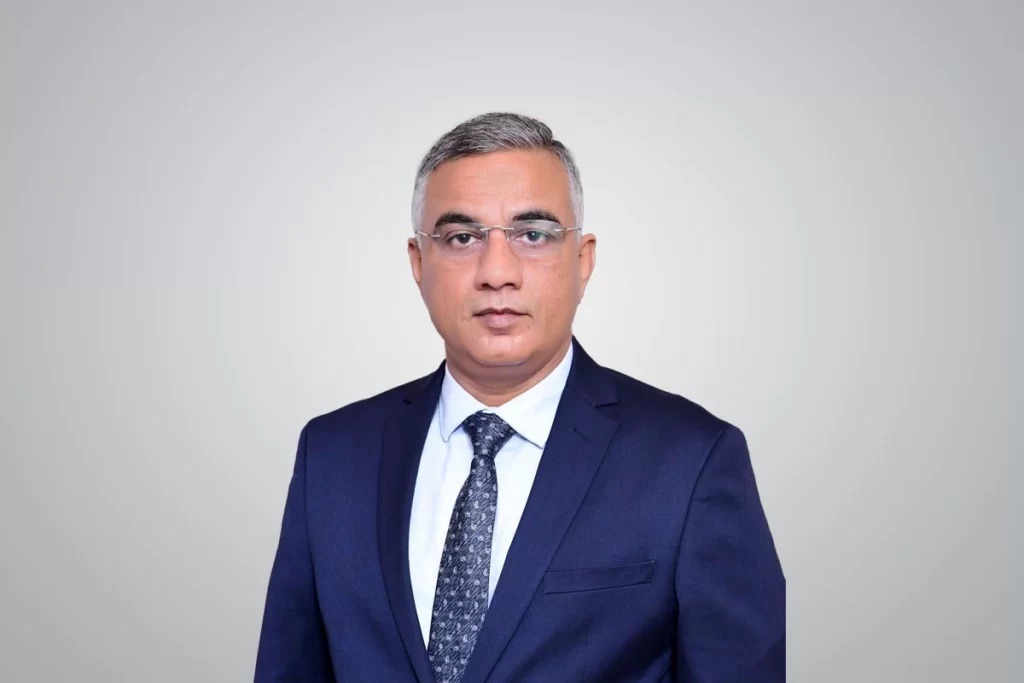
Faiz Abidi
CFO & CTO
Redefining Financial Control Through System-Driven Thinking
Faiz Abidi
CFO & CTO
Jaypee Infratech Ltd.
Modern enterprises operate in an environment where financial accuracy is expected in real time, yet the systems generating that data often remain fragmented. This creates a structural gap that surfaces as reconciliation delays, limited visibility, and increased risk exposure. As organisations scale, integrating financial governance with operational systems has become a strategic necessity rather than an efficiency measure.
Faiz Abidi, CFO and CTO at Jaypee Infratech Ltd, has placed his leadership at the centre of this convergence. With a foundation in financial control, reconciliation, and audit, he developed a disciplined approach to governance early in his career. This experience also helped him identify a recurring pattern that financial inefficiencies are frequently driven by gaps in processes and technology frameworks rather than isolated accounting issues.
Building on this insight, Faiz has actively bridged finance with enterprise technology, working across ERP platforms, CRM systems, and automated reporting environments to create cohesive and accountable operations. His focus extends beyond implementation to transformation by strengthening data flows, embedding system-led controls, and ensuring end-to-end traceability that reinforces financial discipline at scale.
At the core of his leadership is a systems-driven mindset that evaluates challenges through both financial impact and the structural interventions required to resolve them sustainably. This enables stronger cross-functional alignment and sharper, data-led decisions. By aligning digital capability with financial accountability, Faiz continues to build resilient, scalable frameworks for long-term strategic control.
How? Let’s explore here.
What has been your toughest financial challenge in infrastructure, and how did you address it?
One of the toughest challenges has been managing financial stability amid labour uncertainty. In infrastructure projects, execution depends heavily on labour and subcontractor performance. When labour availability becomes unpredictable, it directly impacts timelines, slows progress, and triggers contractor demands for cost escalations and revised payment terms. Since payments are milestone-linked, delays in execution disrupt receivables and put immediate pressure on cash flow and working capital.
Addressing this requires close alignment between operations and finance. The first step is gaining on-ground visibility by understanding labour shortages, wage pressures, and logistical constraints through continuous engagement with project and contractor teams. This enables prioritisation of high-impact activities to sustain progress. At the same time, financial oversight is strengthened through tighter monitoring of billing, resource utilisation, and milestone completion.
Structured discussions with contractors help recalibrate schedules and optimise labour deployment, while proactive coordination with clients ensures faster billing and certification cycles. This integrated approach helps stabilise cash flows and maintain project momentum despite operational disruptions.
How do you strengthen internal controls and reporting while maintaining business agility?
The focus is on embedding controls within processes and technology, so governance strengthens operations without adding friction. It begins with process standardisation and clearly defined approval hierarchies. When roles, responsibilities, and financial limits are well structured, teams can make faster decisions within a controlled framework.
System-driven controls play a central role. Leveraging ERP systems and digital workflows enables automated validations, approvals, and audit trails, ensuring compliance operates seamlessly in the background with minimal manual intervention.
Real-time reporting is equally critical. Dashboard-based monitoring of key metrics, such as project costs, receivables, and budget variances, allows continuous oversight and early risk identification, reducing reliance on delayed reviews.
Segregation of duties and disciplined documentation further strengthen accountability without disrupting flow. Ultimately, internal controls must enable the business. Close coordination between finance and operations ensures governance frameworks remain practical, responsive, and aligned with execution realities.
Which technologies or systems have you prioritised for financial transparency, control, and decision-making?
Enhancing financial transparency and operational control begins with systems that ensure accuracy, traceability, and real-time visibility across the organisation. A key focus has been strengthening ERP-based financial management systems by integrating accounting, procurement, project billing, and vendor management into a unified platform. This creates a structured environment where transactions are consistently recorded, approvals are workflow-driven, and leadership has clear visibility into project costs and revenues.
In parallel, aligning CRM and project monitoring systems with financial reporting has been critical in project-led environments. This integration improves receivables tracking, enhances visibility into customer commitments, and enables early identification of risks that could impact financial outcomes.
Another priority has been implementing digital documentation and workflow systems for approvals, vendor payments, and contract management. These systems create strong audit trails, reduce manual dependencies, and strengthen accountability across processes.
Equally important is the use of data analytics and real-time dashboards, offering actionable insights into cash flows, cost variances, and project performance. Together, these technologies create a transparent, system-driven ecosystem where decision-making is faster, informed, and aligned with operational realities.
How will finance–technology convergence shape infrastructure’s future?
The convergence of finance and technology will transform how infrastructure businesses plan, execute, and manage projects. In a capital-intensive sector, technology is enabling greater financial visibility, efficiency, and risk control across the lifecycle.
Real-time financial intelligence through ERP systems, project platforms, and analytics will allow continuous monitoring of costs, cash flows, and contractor performance, enabling early risk detection. Predictive analytics and AI-led models will improve forecasting, planning, and resource allocation.
Automated workflows, compliance systems, and traceable records will strengthen governance and transparency, while integrated dashboards will enhance cross-functional collaboration. This shift elevates finance into a strategic role driving efficiency, risk management, and long-term value creation.
Featured Magazine -

All Magazines-










Other Interviews-
- Dr Aarti Mishra Tripathi-Most Impactful Women Leaders from Asia 2026
- Deema Anani-Most Impactful Women Leaders from Asia 2026
- Dr Samah Abu Assab-Most Impactful Women Leaders from Asia 2026
- Vikas C Sajjan-10 Best Tech Leaders in India 2026
- Kadhirvel-10 Best Tech Leaders in India 2026
- Pullak Gupta-10 Best Tech Leaders in India 2026
- Nilanjan Mitra-10 Best Tech Leaders in India 2026
- Aman Sharma-10 Best Tech Leaders in India 2026
- Chakrapani Kodavati-10 Best Tech Leaders in India 2026
- Ashok Shankar P-Best Education Leaders in India 2026
