

Transforming Urgent Care with Speed,Strategy, and Empathy
Dr George Noel Fernandes
Chief Executive Officer
MMRI's Kamalnayan Bajaj Hospital
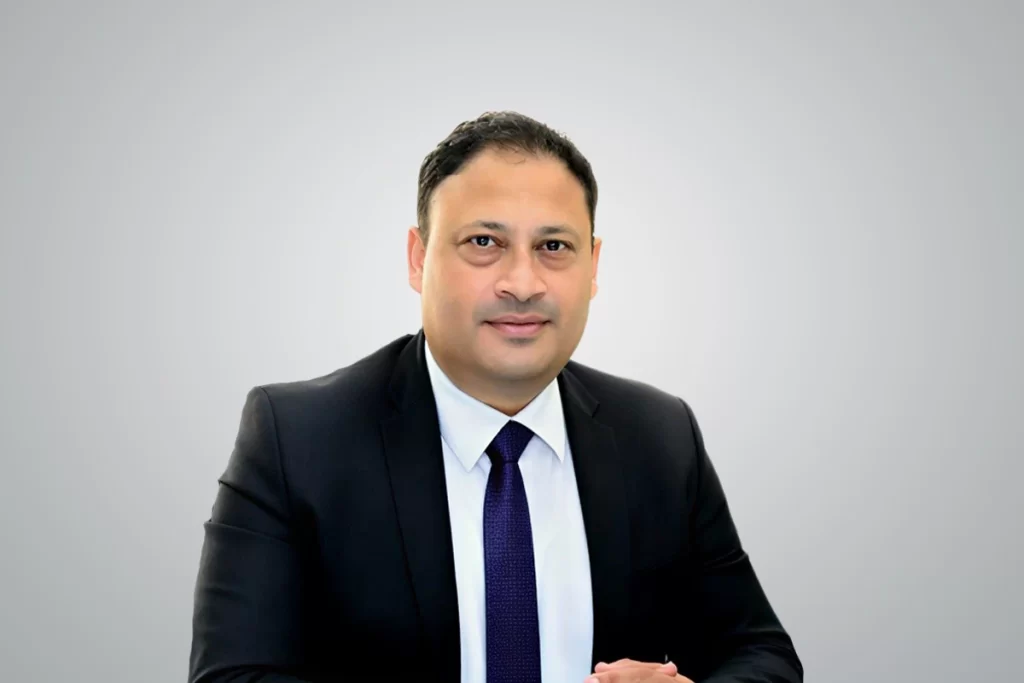
Transforming Urgent Care with Speed,Strategy, and Empathy
Dr George Noel Fernandes
Chief Executive Officer
MMRI's Kamalnayan Bajaj Hospital
In medicine, the line between life and death is often measured in minutes. Dr George Noel Fernandes has built his career around mastering that critical window. His early work in disaster management with the US Armed Forces, spanning crises from the Bali bombings to humanitarian missions in Haiti, placed him in high-pressure environments where every decision had immediate consequences. These experiences refined his clinical expertise and shaped a leadership philosophy defined by speed, precision, and accountability.
A graduate of St John’s Medical College, Bengaluru, Dr George further advanced his training across the UK and the US, where he led emergency ICUs and served as medical director within high-performance healthcare systems. His international exposure across France, Thailand, and Dubai broadened his perspective on delivering care across diverse ecosystems. Returning to India over a decade ago, he transitioned into leadership roles, including CEO positions within the Apollo Group and other leading institutions.
At the heart of his journey lies a personal turning point: the sudden loss of his father to a preventable cardiac event. This continues to drive his commitment to strengthening urgent care systems and ensuring timely intervention. For Dr George, healthcare is fundamentally about people, empathy, trust, and respect. As CEO of MMRI’s Kamalnayan Bajaj Hospital, he champions a model that blends clinical excellence with human-centred leadership. Speaking with TradeFlock, he shares deeper insights into his journey and vision for the future of healthcare.
What mindset shifts and leadership principles guided your transition from clinician to leader?
The transition from clinician to leader gave me a clear advantage. I understood both patient and doctor challenges firsthand. I adopted servant leadership early, with listening at its core, ensuring every decision reflected insights from patients, doctors, and staff. Honesty, trust, transparency, and ethics remained non-negotiable.
I believe leadership is demonstrated through action: being present, engaging directly, and supporting teams. This built a culture of empathy and accountability, with a consistent focus on clinical excellence, patient care, and quality outcomes, where financial success naturally follows trust.
How do you see healthcare evolving? How are you preparing for it?
Healthcare is shifting from reactive treatment to predictive and preventive care. I began preparing for this nearly five years ago by upskilling in artificial intelligence, including training at the Massachusetts Institute of Technology, which enabled effective implementation. Today, AI supports discharge summaries, clinical protocols, and post-treatment guidance.
We have also established a predictive healthcare clinic focused on early detection of conditions like diabetes and hypertension. Beyond hospitals, I’ve adopted over 80 villages for screening, early diagnosis, and affordable care. The future lies in integrating predictive analytics, community outreach, and prevention at scale; it is no longer optional.
What is your core success mantra?
My mantra? Success rests on clear values and consistent action. Hard work is non-negotiable, but it must be anchored in ethics, honesty, and humanity. Build a strong personal reputation because titles are temporary, but trust endures. Stay committed to continuous learning, embrace mistakes as lessons, and keep evolving. Above all, remain human; empathy is the most powerful differentiator.
How are you contributing to developing the next generation of leaders?
I see leadership as creating more leaders, not followers. I engage with schools through regular sessions and work with corporates to share practical insights. At a community level, I’ve trained over 250,000 individuals in first aid and emergency response, alongside awareness initiatives on organ donation and mental health.
I’ve also set up a 24/7 medical helpline to improve accessibility. Additionally, I contribute to policy initiatives with NITI Aayog and focus on skill development and mentorship to build stronger future leaders.
How did you embed patient-centricity into operations?
Patient-centricity must translate into execution. I addressed a key gap, i.e., communication, by making patients and families active participants in care decisions. Collaboration replaced one-way consultations, extending even post-discharge through continuous engagement.
Transparency was critical; I encouraged second opinions to build trust in the system. This shifted loyalty from individuals to the institution. We also integrated AI, automation, and digital tools to improve efficiency, outcomes, and affordability while keeping patient needs at the centre.
What were the key challenges in driving this shift?
The toughest challenge was shifting mindsets, especially among clinicians trained with limited focus on patient engagement. Embedding empathy and communication required consistent demonstration, not instruction. Over time, improved outcomes and trust validated the approach.
Driving adoption of digital tools, including AI, also faced resistance, but tangible benefits enabled gradual acceptance. Ultimately, strong patient feedback and advocacy reinforced the success of this transformation.
How has disaster management shaped your leadership and decision-making?
Disaster management reshaped my approach to leadership and decision-making. Working as a first responder during crises like the Bali tsunami reinforced the importance of preparedness, agility, and structured response systems. It highlighted the need for every organisation to have tested contingency plans for large-scale disruptions.
On a personal level, these experiences brought a deeper sense of empathy and perspective, underscoring the fragility of life and the value of human connection. This has made my leadership more grounded, human-centric, and focused on prioritising what truly matters in both care delivery and organisational culture.
Featured Magazine -

All Magazines-



Other Interviews-
- Mayur Nandan-Asia’s Best Business Leaders 2026
- Dr Aarti Mishra Tripathi-Most Impactful Women Leaders from Asia 2026
- Deema Anani-Most Impactful Women Leaders from Asia 2026
- Dr Samah Abu Assab-Most Impactful Women Leaders from Asia 2026
- Vikas C Sajjan-10 Best Tech Leaders in India 2026
- Kadhirvel-10 Best Tech Leaders in India 2026
- Pullak Gupta-10 Best Tech Leaders in India 2026
- Nilanjan Mitra-10 Best Tech Leaders in India 2026
- Aman Sharma-10 Best Tech Leaders in India 2026
- Chakrapani Kodavati-10 Best Tech Leaders in India 2026
