
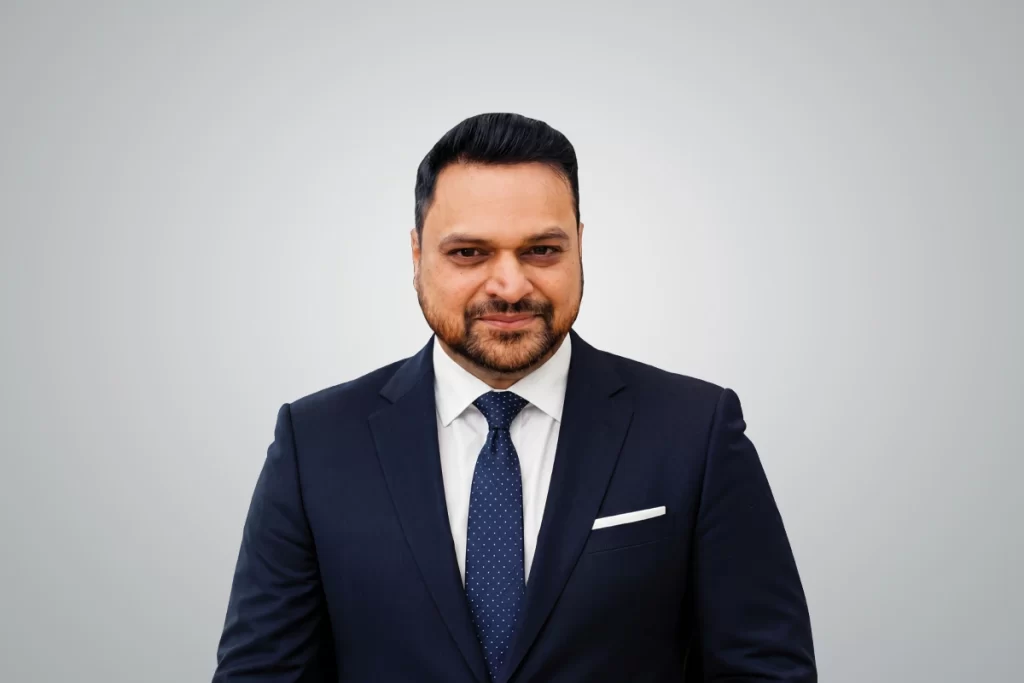

A CFO Built on Cross-Industry Transformation Experience
CA (Dr) Chintan Atul Shah
CFO
Classic Ornaments
Having navigated his career across power, media, integrated security and facility management, and now jewellery, Chintan Atul Shah has developed a rare ability to read businesses beyond their balance sheets. Each industry sharpened a distinct financial instinct. Power instilled discipline in capital allocation, regulatory accountability, and long-term infrastructure thinking. Media demanded agility, where speed, volatility, and commercial risk influenced every decision. Integrated security and facility management reinforced governance, scale, and process-led execution, where consistency mattered as much as growth. Together, these experiences shaped Shah into a finance leader who views numbers as enablers of better business decisions, not just outcomes.
Today, as CFO of Classic Ornaments Private Limited, he applies this multidimensional lens to a sector where inventory, liquidity, customer behaviour, and gold price movements are tightly interlinked. His approach is grounded in clarity, responsiveness, and commercial discipline, ensuring finance operates as a strategic driver rather than a reporting layer.
In an exclusive interview with TradeFlock, Chintan Atul Shah reflects on how cross-sector exposure has shaped his leadership philosophy, why he views finance as the operating system of an organisation, and how disciplined financial thinking can build resilience in rapidly evolving business environments.
Which phase across IPOs, M&As, ERP and shared services tested you the most, and what did it teach you?
The most testing phases in my career have been those where multiple transformation agendas, such as IPO or debt listing, acquisitions, ERP rollouts, and shared service setups, were running in parallel under tight timelines and intense stakeholder scrutiny. Technically, these initiatives are complex, but the real challenge is human. Balancing expectations of promoters, boards, investors, auditors, bankers, and internal teams while keeping day-to-day operations stable requires clarity, sequencing, and constant communication.
I learnt early that a CFO must hold the narrative together by defining what must be perfect, what can be good enough, and what can wait so teams do not feel overwhelmed. These experiences reinforced three lessons: communication prevents surprises, protecting teams from noise is essential, and transformation succeeds only when the business becomes easier to operate.
What makes a CFO a true strategic partner today, and what skills will future finance leaders need most?
A CFO becomes a true strategic partner when three qualities stand out: independent judgement, commercial fluency, and the ability to simplify complexity into clear business decisions. Over time, boards and CEOs increasingly expect the CFO to play a dual role—protecting downside risk while enabling growth. This demands comfort across pricing, customer behaviour, technology, ESG, and operations, alongside accounting standards and capital structures.
Today, the CFO often serves as the second strategic voice after the CEO, particularly in IPO readiness, M&A, and capital allocation. Future finance leaders will need strong foundations in accounting, regulation, and capital markets, combined with fluency in data, automation, AI-driven analytics, and modern operating models, along with strong communication and adaptability.
What core philosophies drive financial decision-making in the jewellery sector?
In jewellery, I believe capital, trust, and reputation are the real assets; gold and inventory are simply how they appear on the balance sheet. That is why I treat liquidity, risk capacity, and compliance as non-negotiables, while pursuing growth within those guardrails. My focus remains on the quality, velocity, and economics of inventory and receivables, ensuring cash conversion stays value-accretive rather than merely topline-driven.
I also believe finance in jewellery must stay close to the shop floor. Weekly visibility on inventory exposure, receivables ageing, stock turns, and order flows is essential because stress often appears in working capital long before it reflects in the P&L.
How are you preparing for the challenges and opportunities emerging from today’s geopolitical uncertainty?
Having worked across power, media, exports, security services, facility management, and jewellery, I have learned that volatility is constant; only its source changes. My approach is to build resilience at three levels: balance sheet, business model, and operating rhythm. On the balance sheet, this means conservative leverage, diversified banking relationships, prudent hedging, and strong liquidity planning.
At the business level, we focus on customer mix, sourcing channels, and contractual safeguards so disruptions in one area do not impact the entire business. Operationally, I believe in frequent, data-driven reviews and scenario planning around demand shifts, price volatility, and policy changes. Geopolitical uncertainty will continue, but disciplined preparation allows businesses to remain stable while also identifying opportunities that emerge during disruption.
What drives your constant upskilling mindset, and how do you instil it within your team?
I cleared Chartered Accountancy in my first attempt alongside my graduation in commerce and LL.B., and since then, continuous learning has remained central to my professional journey. I later pursued an MBA, a PhD in finance management, and advanced programmes in CFO leadership, AI/ML, and data analytics to broaden the way I understand business and transformation. What drives me is curiosity and responsibility.
I believe a CFO cannot lead change without evolving personally. I encourage the same mindset within my teams by connecting learning directly to live business priorities such as ERP upgrades, analytics, and transformation projects, making upskilling practical, visible, and business-driven.
What is your success mantra?
My success mantra is simple: “Be curious, be credible, and compound.” Curiosity keeps me learning continuously about business, technology, regulation, and people, which is why my journey has expanded across finance, law, management, and now AI/ML. Credibility comes from consistency, governance, and protecting the organisation’s reputation even when short-term choices may seem easier.
Compounding, for me, is about disciplined improvement every day: better processes, sharper insights, stronger teams, and tighter execution rather than waiting for one defining moment. Over the years, this mindset has helped me navigate IPOs, M&As, ERP transformations, and changing business cycles while maintaining both performance and values across industries.
In the jewellery industry, how do you balance stability and growth amid volatile gold prices, sentiment, and working capital cycles?
Jewellery is a beautiful but unforgiving business. Consumer sentiment shifts quickly, gold prices move daily, and working capital pressure often appears before the P&L reflects it. My approach is to treat liquidity and risk capacity as non-negotiables, while pursuing growth within those boundaries. This requires weekly visibility on inventory, hedging positions, receivables, and ageing. Growth decisions are tied to cash conversion, not just the topline.
We also evaluate customer concentration, order economics, making charges, and design complexity to ensure every order is value-accretive after wastage and credit risk. What has worked is shared ownership between sales and finance, aligning cash, margin, and demand, enabling disciplined expansion where cash cycles are strong.
How do you integrate technology into your financial decisions?
Technology has remained central to my journey, from implementing Oracle and SAP in listed businesses to leading Oracle Fusion rollouts and strengthening ERP and analytics capabilities in jewellery manufacturing. I see technology as the nervous system of finance because it brings speed, accuracy, and decision-making clarity. My approach operates across three levels.
First, strong ERP and shared service platforms create standardised processes, stronger controls, and a single source of truth. Second, MIS and FP&A systems convert data into forward-looking insights through dashboards on working capital, profitability, and risk. Lastly, I continue investing in AI/ML and analytics capabilities so finance can move beyond descriptive reporting toward predictive decision support.
Whether it is pricing, hedging, customer selection, or capital allocation, technology should quietly handle complexity so leadership can focus on judgement, strategy, and long-term growth.
How do you make decisions while placing ethics and values at the centre?
For me, ethics is not separate from financial decision-making; it is the foundation underneath it. Across industries such as power, media, security services, facility management, and jewellery, I have seen that the cost of ethical compromise is always higher than any short-term gain. I apply four filters to every decision: transparency, fairness, compliance, and long-term alignment.
Transparency means clear communication with boards, investors, auditors, bankers, and teams, without surprises. Fairness means consistent treatment of customers, vendors, and employees, especially during difficult periods. Compliance means staying ahead of regulatory expectations rather than doing the bare minimum. Most importantly, I always ask whether a decision will still appear sensible and defensible years later before shareholders, regulators, and the wider business ecosystem.
What opportunities and challenges do you see shaping India’s business landscape, and how are you preparing for them?
I am very optimistic about India’s next decade. Formalisation, infrastructure growth, digital public infrastructure, and rising incomes are creating strong opportunities across sectors such as power, city services, security and facility management, and organised jewellery. At the same time, businesses will face challenges around regulatory complexity, demand volatility, working capital pressure, and talent depth, especially as companies move toward institutionally driven and listed models.
My preparation is both organisational and personal. Organisationally, I focus on strengthening governance, controls, systems, and data quality so businesses remain agile and investor-ready. Personally, I continue investing in law, capital markets, technology, and leadership to stay a forward-looking partner to boards, investors, and teams.
What drives you, and how do you maintain balance and fitness?
What drives me is the responsibility of being a multiplier within the organisation. As CFO, the quality of my thinking influences not only financial outcomes but also culture, credibility, and long-term business confidence. That is why I have continuously invested in learning through CA, LL.B., MBA, a Ph.D. in finance, and advanced programmes in CFO leadership, AI/ML, and data analytics, ensuring I remain relevant to the future, not just the present.
To sustain that intensity, I treat physical, mental, and emotional fitness as part of the role itself. I am a PADI-certified Open Water Diver and have travelled across more than 40 countries. A CFO Built on Cross-Industry Transformation Experience, grounded, and adaptable. A disciplined routine, reflection time, and conscious breaks help me manage stress and maintain clarity, because calm leaders make stronger business and human decisions.
Featured Magazine -

All Magazines-


Other Interviews-
- Victoria Tzareva-Most Influential Leaders to Watch in 2026
- Mitul Gada-Most Influential Leaders in India 2026
- Anu Bedi Salwan-Women Leaders in India 2026
- Shweta Singh-Women Leaders in India 2026
- Archana Tarun Dave-Women Leaders in India 2026
- Dr Bharati Banerjee-Women Leaders in India 2026
- Justine Paula Nichol-10 Best Healthcare Executives Transforming 2026
- Vivek Jhanjhri-10 Best COOs in India 2026
- Jerry Creech-10 Best Healthcare Executives Transforming 2026
- Daniel Gandia-10 Best Healthcare Executives Transforming 2026
