
Translating Technology into Measurable Business Outcomes
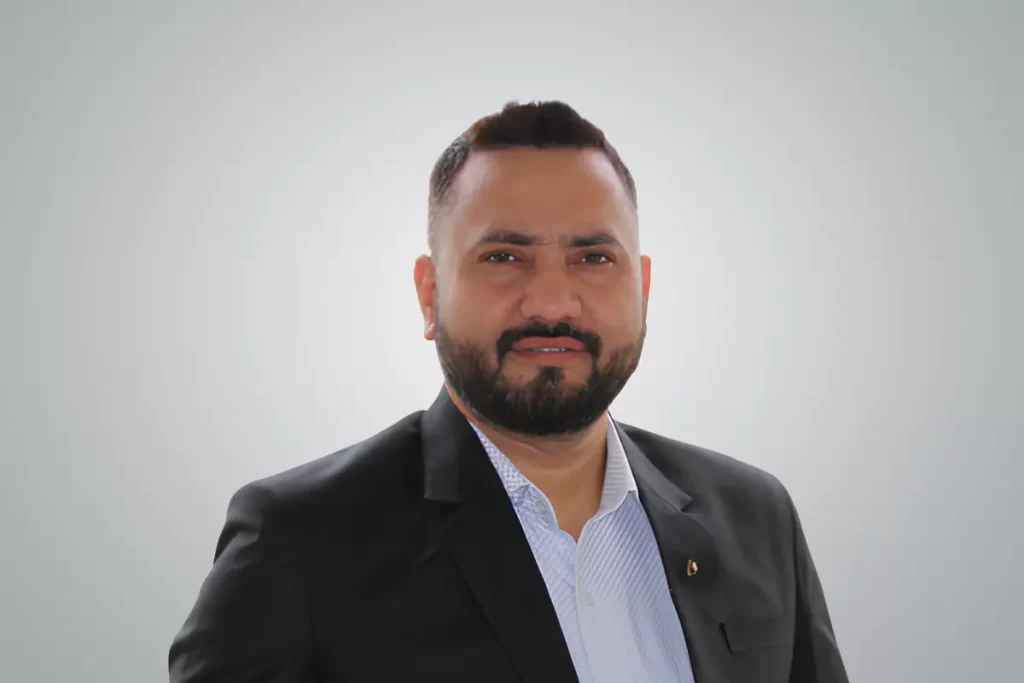
Nitin Thapliyal
Head IT (G.M.)
Duflon Industries Pvt. Ltd.
Translating Technology into Measurable Business Outcomes
Nitin Thapliyal
Head IT (G.M.)
Duflon Industries Pvt. Ltd.
In today’s manufacturing landscape, digital transformation is no longer about moving fast; it’s about moving right. Precision, resilience, and trust at scale now define success, especially where production, supply chains, compliance, and cost discipline converge. This is where technology leadership shifts from experimentation to judgment. With close to two decades of experience driving SAP-led transformations and enterprise IT across complex manufacturing environments, Nitin Thapliyal, Head of IT (General Manager) at Duflon Industries Pvt. Ltd., exemplifies this evolution. His career spans large-scale digital programs across organizations such as Hero MotoCorp, Havells, Fibcom, GreyOrange, Trident Group, and now Duflon, each reinforcing a core belief: technology must empower the shop floor as much as the boardroom. Nitin’s focus lies in building intelligent, secure, and scalable IT ecosystems—systems that enhance execution, improve decision quality, and sustain operational continuity rather than disrupt it. His leadership reflects a deep understanding that in manufacturing, real transformation happens when digital strategy aligns seamlessly with ground realities. In an exclusive conversation, TradeFlock speaks with Nitin about leadership, operational discipline, and what it truly takes to modernise manufacturing responsibly and at scale.
How have your role, leadership approach, and personal philosophy evolved from consulting to enterprise IT leadership?
When I started my career as a technology consultant, leadership was largely about precision and delivery. Problems came with clear scopes, systems had predefined requirements, and success was measured by how efficiently something was implemented. That approach worked well early on, but it began to feel incomplete as I moved into enterprise leadership roles. What changed was the nature of the impact. Technology decisions were no longer confined to project outcomes; they were also shaping cost structures, operational resilience, and the quality of decision-making across the business. That realisation pushed me away from being a solution designer and toward becoming a business transformation orchestrator, where accountability mattered more than output. Over time, my philosophy settled around three anchors that now guide every major decision. Technology has to be business-first, grounded in outcomes rather than tools. Decisions need to be data-led, replacing assumptions with evidence. Transformation must stay people-centric, because systems only deliver value when adoption is real and sustained. At the enterprise level, technology has become a growth enabler, and the CTO’s responsibility is to balance ambition with reality while protecting governance, scalability, and trust.
What have large SAP, ERP, and digitisation programs taught you?
Large SAP and ERP programs have repeatedly shown me that technology rarely fails to deliver on its capabilities. It fails when ownership sits in the wrong place. ERP initiatives struggle when they are treated as IT deliveries rather than organisation-wide change efforts that reshape how decisions and accountability flow. This understanding sharpened several principles I continue to rely on. Process discipline has to come before automation; otherwise, inefficiencies simply scale faster. Data foundations matter more than interfaces, because analytics, forecasting, and AI only perform as well as the data beneath them. Adoption consistently proves more valuable than customisation, since over-engineering reduces agility over time. Speed and stability do not compete when agile delivery is paired with strong governance. These lessons now translate into phased rollouts, businessowned KPIs, and continuous value creation, rather than disruptive, one-time implementations. “ERP succeeds when ownership shifts from IT delivery to business accountability.”
Can you share a technology initiative that delivered measurable business impact?
One initiative that stands out was a data-led enterprise transformation spanning finance, manufacturing, HR, operations, and supply chain, aimed at moving from reactive operations to predictive decision-making. The architecture brought together SAP S/4HANA as the transactional core, IoT-enabled plant telemetry, cloud analytics platforms, and AI-driven forecasting and risk models. The impact was visible across the business. Predictive maintenance reduced unplanned downtime by nearly 20%. AI-based demand forecasting improved working capital through inventory rationalisation. Real-time analytics delivered double-digit savings in energy and utilities, while finance teams gained advanced FP&A capabilities, including predictive cash flow and scenario modelling. KPIs were drawn directly from source systems, eliminating manual intervention and enabling leadership to shift from lagging metrics to forward-looking insight. Together, these outcomes strengthened EBITDA, governance, and decision speed while creating a scalable digital foundation.
How do you decide which AI, ML, and automation initiatives are relevant and scalable?
Relevance, rather than novelty, drives every evaluation. The first question is whether a technology addresses a real business constraint. The second is whether the data maturity exists to support it. The third is whether it can scale securely and responsibly. This approach keeps the focus on applied AI, where forecasting replaces experimentation, computer vision supports quality assurance, and automation is tied directly to measurable KPIs. Hands-on pilots, cloud-native experimentation, and ecosystem partnerships help maintain momentum while ensuring alignment with responsible AI and regulatory standards.
How do you envision Industry 5.0, and what should emerging leaders prepare for?
Industry 5.0 represents a shift toward augmenting human intelligence rather than replacing it. The future lies in human–AI collaboration, personalised manufacturing, resilient operations, and systems built on trust and explainability. Emerging leaders benefit from grounding themselves in data, cloud, and ERP fundamentals while learning to translate business problems into digital use cases. Change management and storytelling remain as critical as technical depth, because belief precedes adoption.
What gaps do organisations still struggle with in their digital journeys?
Even with significant investment, many organisations continue to face fragmented data, limited adoption of analytics, weak business ownership of digital initiatives, and persistent skill gaps between IT and operations. The most significant constraint remains execution discipline and cultural alignment. Transformation succeeds when data becomes a shared language across the organisation, and leadership commits beyond pilots to sustained, enterprise-wide change. “True transformation begins when execution discipline and culture align around shared data and long-term intent.”