Driving The Future Of Secure Enterprises
Sudarshan Rajamani
Director – Cybersecurity
Dexian India Technologies
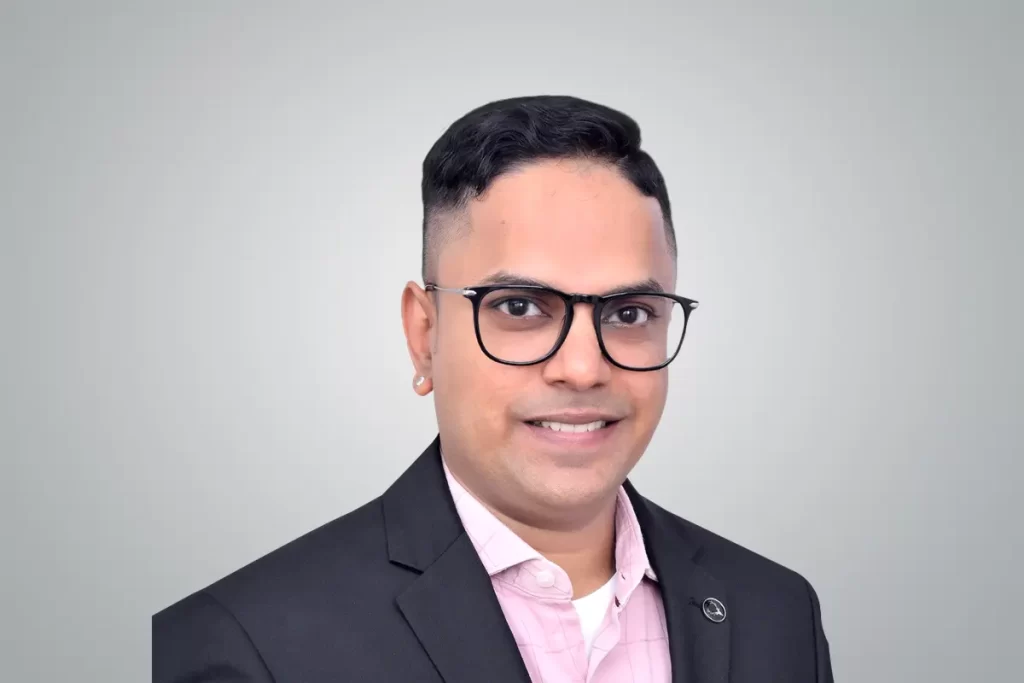
Driving The Future Of Secure Enterprises
Sudarshan Rajamani
Director – Cybersecurity
Dexian India Technologies
The rapid rise of AI-driven threats, widening skill gaps, and growing compliance demands have completely redefined the role of Chief Information Officers, pushing them to become Chief Inclusive Officers—leaders who balance innovation, trust, and human insight. Sudarshan Rajamani, Director of Cybersecurity at Dexian India Technologies, represents this evolution with quiet confidence and a clear vision. Over the years, he has steered complex challenges with strategic calm, leading global cybersecurity programs in governance, risk, and compliance. With credentials from Microsoft, Google, and IIT Kanpur’s C3iHub, he combines deep technical expertise with a forward-looking leadership approach. At Dexian, Sudarshan has built a culture where security empowers progress rather than restricts it. TradeFlock spoke with him to explore his journey and the philosophy behind his leadership.
You transitioned into cybersecurity from a nontraditional background. What key decision shaped your leadership journey?
What do you see as the next big challenge in cybersecurity, and how are you addressing it?
The next major challenge is AI-driven identity fraud and the growing exploitation of trust across systems, people, and processes. Cybercrime is advancing faster than regulations and technology can adapt, making identity the new frontline of defence. Our strategy is built on one core principle: Zero Trust Everything. We continuously validate identities, secure data pathways and third-party relationships, and protect automation flows. We are investing in AIbased anomaly detection supported by human context, deeper vendor risk intelligence beyond one-time audits, and cyber-resilient design thinking that prevents incidents before they occur. This is not only about security; it is about sustaining digital credibility and trust for the long term.
What recent initiative are you most proud of, and how has it strengthened organisational resilience?
I am leading Dexian’s journey toward global cybersecurity trust readiness, focusing on sustainable alignment with frameworks such as SOC 2 Type II and ISO 27001. The goal is to make compliance a continuous mindset, not a one-time exercise. We have achieved key milestones, including enterprise-wide single sign-on across critical recruiting platforms, which have reduced credential risks and eliminated password fatigue. Our third-party risk management process has also evolved from manual questionnaires to an automated, intelligence-led model that completes assessments in hours instead of days. Most importantly, we have fostered an always auditready culture where teams involve cybersecurity early in design discussions. The most rewarding outcome has been a shift in mindset. Security is now seen as a trusted partner in innovation, not a gatekeeper.
As Director of Cybersecurity, how do you build a security-first culture across the organisation?
My approach is built on three pillars: people, preparedness, and proactive intelligence. Security culture cannot be trained; it has to be influenced. We embed cybersecurity ownership into business KPIs, reward secure behaviour, and make it intuitive rather than instructive.Preparedness means continuously testing our readiness through real-world simulations, because every control must hold up when pressure is at its peak. The third pillar is proactive intelligence, where we shift from reactive checks to anticipatory defence by using data, automation, AI, and attack surface insights to address threats before they become incidents. This balance helps ensure cybersecurity is not viewed as an IT function, but as an enabler of trust, speed, and credibility across the organisation.
Could you share a challenging project or setback in your career and how it shaped your leadership approach?
Early in my leadership journey, I tried to scale a security framework too quickly, assuming process maturity could be implemented across countries overnight. The pushback from frontline teams was a humbling lesson that cybersecurity transformation cannot be imposed; it must be co-owned and driven. Since then, I have led with one principle: security must be designed for people, not forced upon them. I now focus on collaboration, stakeholder alignment, and communicating in business language to ensure shared ownership and accountability. This shift transformed my leadership from instructive to empowering and strengthening trust across the organisation.
How do you embed regulatory readiness into your strategy, and what guidance do you share with emerging cybersecurity leaders?
Regulatory readiness is not a compliance task; it is a discipline of trust. We follow a simple principle: trust but verify. Every control is validated through evidence, intelligence, and real-world testing, which keeps us audit-ready rather than audit-rushed. I have been privileged to learn from Derrick J. Harris and Scott Livingston, whose mentorship during my early career laid the foundation for the discipline, integrity, and leadership that continue to guide me today. I’ve also had the honor of working under Carlos Torres, whose visionary leadership and ability to align cybersecurity strategy with business objectives have profoundly influenced my approach to building resilient, trustdriven programs. Equally, Kumar Rajagopalan has exemplified what it means to lead with empathy and precision — fostering accountability, teamwork, and operational excellence through a people-first mindset. Alongside them, Venkatesh Perumal has reinforced the importance of disciplined execution and purpose-driven leadership. My advice to emerging leaders is to stay business-relevant, not tool-reliant; lead with influence, not enforcement; and build resilience that protects trust without slowing innovation.