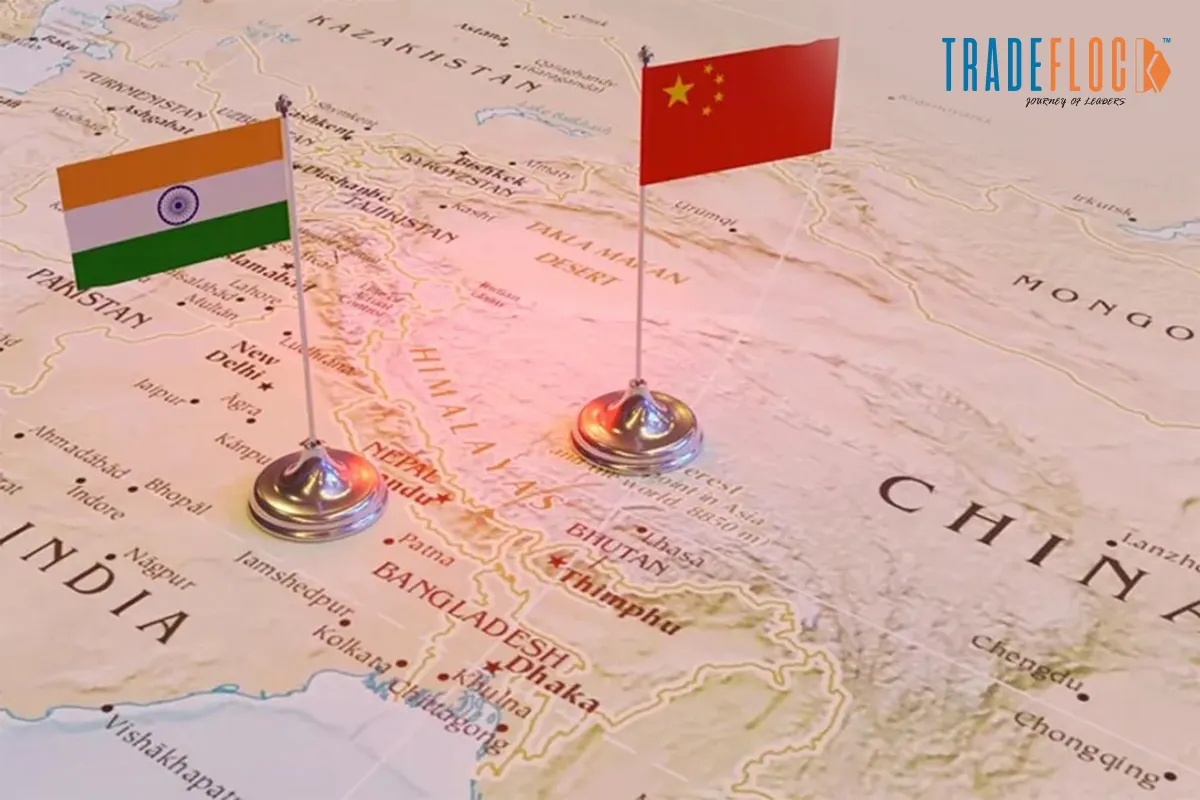
There is a major shift happening in the global economy, which is a rare occurrence that happens only once a generation. The manufacturing landscape worldwide is being reshaped as Western economies reconsider their dependence on China, reshuffling supply chains and revising investment policies. The prolonged, sluggish slowdown in China, rising labour costs, geopolitical tensions with the U.S., and concerns about over-reliance have propelled “China plus one” to become a buzzword, even a boardroom priority. This isn’t just an opportunity for India; it’s a second chance it’s been waiting for. As the world opens up, India should step in with a clear strategy, determination, and scale.
Table of Contents
When the World Looks Away From China, It Looks Toward India
The world is leaning toward India, a stance it hasn’t taken in decades. Multinational companies seek supply chain resilience. Governments aim for geopolitical diversification. Shareholders want growth-oriented economies protected from the uncertainty of dictatorial rule. India meets all three criteria.
India boasts a thriving domestic market, a favourable demographic dividend, and increasing technological resources, making it the most viable alternative to China for manufacturing and services. Even longtime supporters of China, like Apple and Foxconn, who have been key suppliers for Tesla, are now considering India as a serious manufacturing hub. The reassessment of global risk is no longer just speculation; it is already influencing tangible changes in investment flows, boardroom strategies, and long-term planning.
However, India’s success depends on its ability to turn policy intentions into efficient, friction-free implementation.
Make in India 2.0: Turning Vision Into Velocity
India’s manufacturing ambition is not new. Perhaps the Make in India phase 1 laid the groundwork for improved ease of doing business rankings, increased focus on digital governance, and industry-specific reforms. But Make in India 2.0 comes at a different moment globally, when countries are urgently trying to diversify supplier bases. This version must be sharper, faster, and more attuned to worldwide schedules.
Real progress has already been achieved through Production-Linked Incentive schemes: mobile manufacturing has grown nearly 20 times in less than a decade, electronic exports are at record levels, and India has become one of the fastest-growing automotive parts hubs globally. However, the next step should go beyond subsidies. It needs to develop industrial ecosystems, not just individual factories. A network of tier-2 and tier-3 suppliers should support every Foxconn that enters India. Without this, India risks becoming an assembly economy rather than a manufacturing powerhouse.
Infrastructure Is India’s Deciding Factor, Not Incentives
China’s resurgence was driven by infrastructure, not tax holidays, with ports, grids, hubs, highways, and power networks expanding rapidly. In contrast, India struggles with fragmented logistics, unreliable utilities, and bureaucratic delays hampering industry growth. The government has recognised this, initiating projects like the Gati Shakti masterplan, port upgrades, freight corridors, and high capital expenditure, signalling a move toward integrated planning.
Yet, execution remains inconsistent. Investors now prioritise reliable power, water, logistics, and quick turnaround over wages. To replace China in global supply chains, India must build a 24/7, efficient industrial ecosystem, determining if it becomes the next manufacturing hub or if opportunities shift to Vietnam, Mexico, and Indonesia.
Geopolitics Has Opened the Door, Policy Must Keep It Open
India’s geopolitical location is unique. Trusted by the West, respected by the Global South, and not seen as a threat to supply-chain stability, India remains predictable even when global politics are unpredictable. Washington, Brussels, and Tokyo are all making India partners in semiconductors, renewable energy, defence production, and critical minerals.
However, India should realise that such geopolitical opportunities come only once in a lifetime; maintaining consistent policies is key to capitalising on them. Frequent changes in regulations, trade obligations, and licensing delays are warning signs for international manufacturers. To turn India into the world’s manufacturing hub, reforms must be data-driven, stable, and aligned with long-term industrial plans.
Labour, Skills, and the Workforce of the Next Decade
India’s greatest strength is its people. With the world’s largest youthful workforce, India can supply talent across all areas of modern manufacturing, including electronics, renewable energy, AI-powered supply chains, and biotech.
However, the skill gap remains significant. High-tech manufacturing requires technical skills, discipline, and precision at scale. India must overhaul its skilling ecosystem to catch up with global standards. The future of manufacturing isn’t manual; it’s digital, automated, and data-driven. The workforce must be trained accordingly, or foreign investors will move to other countries where the skills align with the demands of next-generation production.
India’s Comeback Depends on Relentless Execution
This is India’s moment. Not because China is weakening, but because the world is rebalancing. Rarely do countries get such a broad geopolitical opportunity. India must act quickly on the global stage while staying committed locally: by building supply-chain clusters, modernising utilities, deepening reforms, and strengthening institutions.
India also has the potential to become the world’s manufacturing partner, replacing China if it acts decisively. Without boldness, others will fill the void. The world is reshaping its supply chains. The key question is: Will India be the centre of this new map, or just another footnote in the shift?