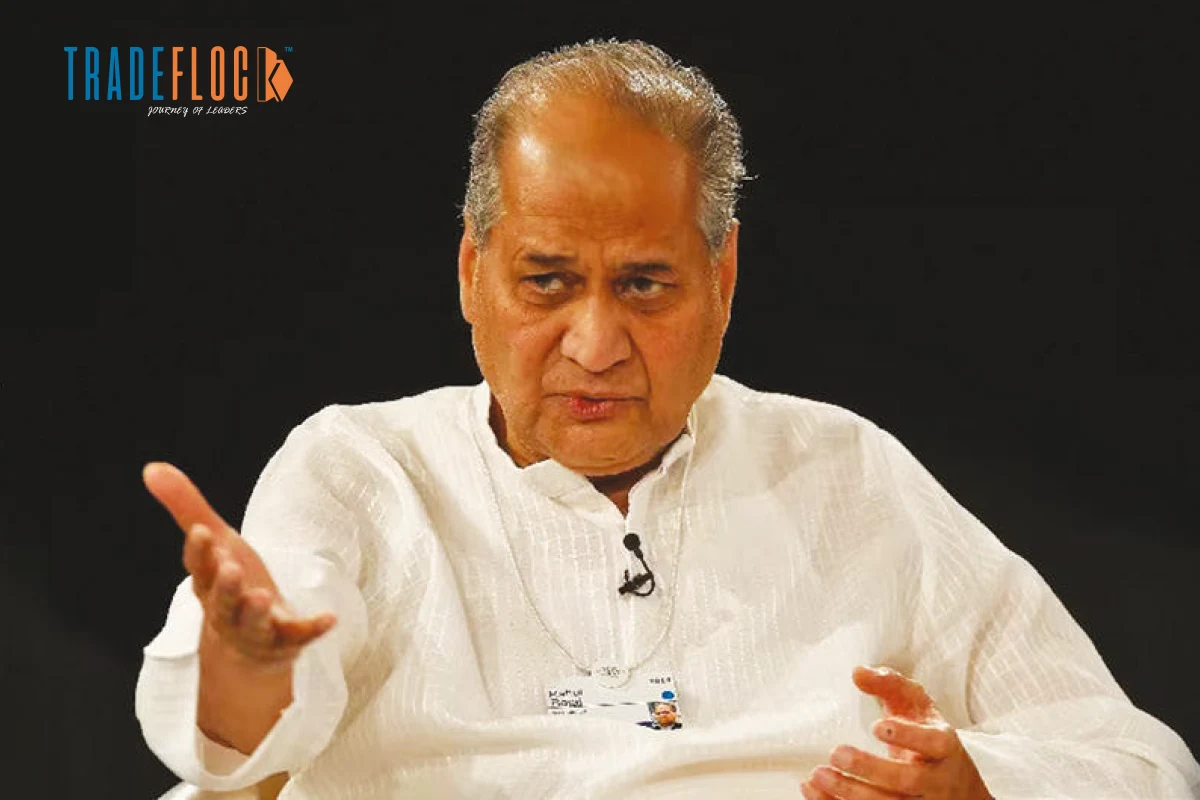
India has had few business leaders with the bravery, clarity, and conviction as deeply felt as Rahul Bajaj, the legendary Chairperson of the Bajaj Group. He is a giant in Indian industry and has not only built one of the most reputable conglomerates in the country but also redefined what principled leadership should look like in a rapidly changing economy. The story of a business empire is only a small part of what Bajaj has experienced. Still, it serves as a case study of how integrity-based decisions can thrive in a world increasingly driven by speed and scale.
Since acquiring a small scooter business and then developing it into a globally recognised brand, Bajaj has combined sharp intelligence with insight into India’s socio-economic landscape. He left a mark with his motorcycles, which became household favourites, but his legacy is also defined by the moral foundation on which the Bajaj Group has operated, even to this day.
Table of Contents
Transforming a Company Into a Cultural Icon
Rahul Bajaj took over the helm of Bajaj Auto when India was just beginning to figure out how to industrialise. The company’s scooter icon became not just a means of transportation but a symbol of middle-class aspiration. Behind this cultural phenomenon was a leader who believed in disciplined development, austerity combined with ambition, and a passionate devotion to quality.
Under his leadership, Bajaj Auto evolved from a manufacturing company into a brand now integral to India’s identity. His strategic brilliance was demonstrated through his ability to read consumer moods, anticipate economic trends, and steer major change with a sharp eye.
His leadership approach combined vision and practicality, ensuring each innovation addressed a genuine human need rather than just a business opportunity. He built an empire knowing that true growth comes from societal relevance, not market dominance.
Lesson: Good leaders create companies that become part of people’s lives rather than just their purchases.
Fearlessly Challenging Power and Policy
Rahul Bajaj built a legacy of being straightforward, just like the brands he created. While many corporate leaders relied on diplomacy, Bajaj used honesty. He was known to criticise policies that hindered growth, challenge governments unwilling to change, and tell the truth to power, even when it was uncomfortable.
This bravery was not born out of rebellion but from a sense of duty. Bajaj believed business leaders were agents of society, not just shareholders. In the 1980s, when he advocated for liberalisation, and in the 2000s, when he supported transparency in government, he always aligned with economic freedom and institutional change.
He was fearless, and this trait earned him respect across political, industrial, and public spheres. He was not just a player in the boardrooms but someone who shaped India’s economic course at crucial moments.
Lesson: It is not in the silence that the legacy is created, but in standing up when it really counts.
Modernising an Empire While Preserving Its Soul
The most important asset that Bajaj had was his ability to move smoothly between leading through professionalising operations and empowering the new generation. When the market shifted toward motorcycles instead of scooters, he promoted radical innovation rather than nostalgia.
This willingness to challenge his own achievements made Bajaj Auto relevant in an increasingly global industry. At the same time, his demands for governance, trust, and ethics kept the company on track. He demonstrated that modernisation doesn’t mean rejecting tradition but transforming it into future-ready structures.
Lesson: The most successful organizations balance innovation and responsibility.
A Legacy of Values Before Valuation
As Rahul Bajaj managed significant economic growth, his true leadership asset was his personality. He was also an advocate for philanthropy, education, rural development, and corporate responsibility long before ESG became a standard measurement tool.
His vision of inclusive growth shaped the Bajaj family’s lasting contributions to society. His leadership philosophy was simple yet profound: profits should not be the only focus. This outlook ensured that the Bajaj Group grew into a business entity built not just on financial strength but also on moral authority.
Lesson: The only assets that grow across generations are values.
A Legacy That Continues to Shape India’s Leadership Playbook
Rahul Bajaj’s leadership story is one of the best blueprints for upcoming leaders in India and around the world. He showed that brave and kind humanity can be combined, that greatness and morals can go together, and that business success and citizenship can be unified. His influence goes far beyond Bajaj Auto; it is felt in India’s economic liberalisation, its industrial culture, and leadership philosophy.
His legacy lives on in reform-minded entrepreneurs, principled executives, and leaders who prioritise conviction over convenience. Rahul Bajaj was not only able to build a successful business but also to inspire a generation of leaders who understand that integrity, resilience, and purpose are what truly make great organisations. In an era where leadership often gives way to pressure, his story teaches us that the leaders who stand up are the ones who stand tall, even when they stand alone.