
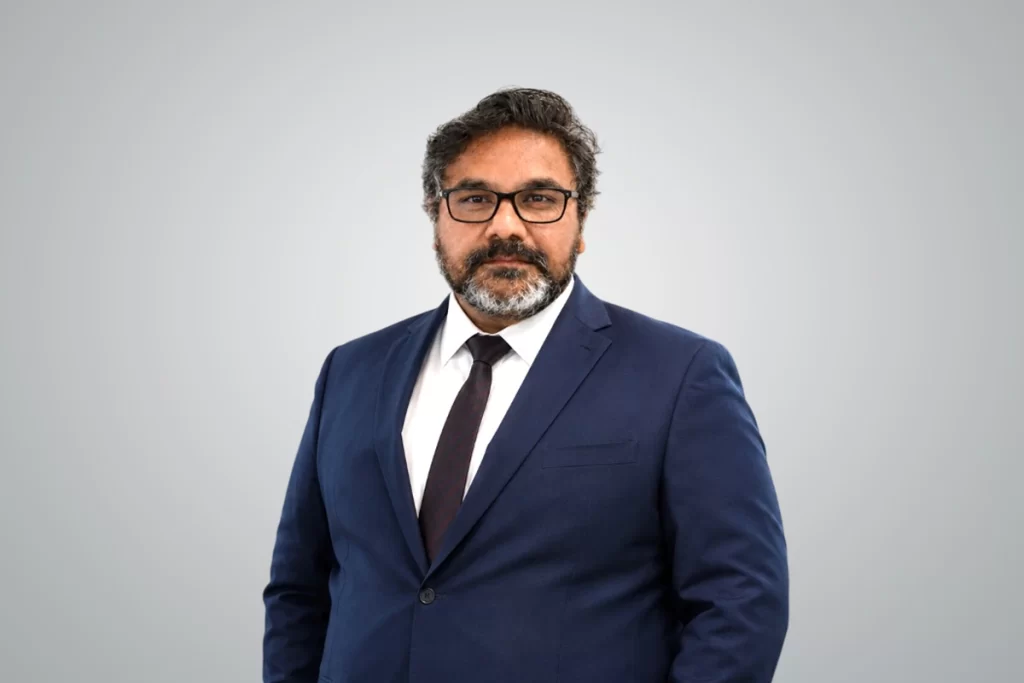

Building India’s Clean Energy Infrastructure
Vipul Jambucha
CEO
Ashapura Green Power Pvt. Ltd.
What has your experience been like balancing strategy with execution in renewable energy projects?
True leadership is tested at the intersection of strategy and execution. Ideas create direction, but execution creates value. I have always found that transition extremely satisfying because it allows you to see vision turn into real, tangible impact.
In my book, Renewable Energy Projects Don’t Fail on Technology—They Fail on Execution, I talk about this gap: how strong strategies often struggle during execution because of misalignment, unclear responsibilities, and ground realities.
The biggest challenge is ensuring that what is planned in boardrooms works effectively on the ground. Aligning people, processes, and pace with market and regulatory realities is where real leadership and management make the difference.
What excites you most about India’s next phase of renewable energy growth? How are you contributing to this next phase of growth?
India’s next phase of renewable growth is moving from scale to complexity, and that is where the real opportunity lies. Green hydrogen, storage integration, hybrid projects, and grid modernisation are shaping the foundation of a dependable 24-hour sustainable energy ecosystem. My focus as a leader is on building execution-led capabilities through technology integration, stronger project delivery systems, and scalable yet adaptable infrastructure.
The goal is to move from a megawatt mindset to a dependability mindset. We also work closely with government agencies, regulators, and ecosystem stakeholders, contributing practical industry insights and collaborating on execution-related solutions that can accelerate India’s renewable energy transition more efficiently.
How do you see your leadership evolving, and what are your key priorities for growth as a leader?
My leadership is evolving from being execution-driven to institution-driven. Earlier, the focus was on delivering projects efficiently; today, it is about building systems, teams, and a culture that can deliver consistently at scale. My priorities include strengthening leadership depth, embracing technology-led decision-making, and creating a culture of accountability and ownership. At the same time, I believe leadership also requires continuous learning, adaptability, and staying grounded while focusing on long-term value creation and meaningful impact.
Where do you see the biggest gap between renewable energy policy and execution, and what role do you play in bridging it?
The biggest gap today is not vision or intent; India’s renewable energy policies are ambitious, progressive, and strongly aligned with global sustainability goals. The real challenge lies in execution readiness. On the ground, project timelines are often influenced by factors such as land acquisition, grid infrastructure availability, approval processes, and financing alignment. These realities directly impact how quickly policy ambition can translate into commissioned projects.
Another important aspect is integration. Capacity addition alone will not define the success of the renewable sector going forward. The ecosystem supporting reliable, round-the-clock renewable power like storage, hybrid systems, transmission readiness, and advanced grid management, is evolving rapidly and will play a critical role in the next phase of growth. The focus now must shift from only adding megawatts to creating dependable and scalable energy infrastructure.
As a CEO, my role is to bridge policy ambition with execution realities. That means ensuring projects are execution-ready from the very beginning through the right site selection, stakeholder alignment, regulatory preparedness, and operational planning. It is equally important to maintain continuous engagement with policymakers, regulators, and industry bodies so that practical industry insights contribute to more efficient and implementation-friendly frameworks.
Within the organisation, we are focused on strengthening execution capabilities through technology-driven project management, faster decision-making, and building teams that can anticipate challenges early and respond proactively. Renewable energy growth today requires collective alignment between government, developers, financial institutions, and infrastructure partners. My responsibility is to ensure that we contribute actively to building an ecosystem where policy goals translate into measurable and sustainable progress on the ground.
Featured Magazine -

All Magazines-









Other Interviews-
- Dr Aarti Mishra Tripathi-Most Impactful Women Leaders from Asia 2026
- Deema Anani-Most Impactful Women Leaders from Asia 2026
- Dr Samah Abu Assab-Most Impactful Women Leaders from Asia 2026
- Vikas C Sajjan-10 Best Tech Leaders in India 2026
- Kadhirvel-10 Best Tech Leaders in India 2026
- Pullak Gupta-10 Best Tech Leaders in India 2026
- Nilanjan Mitra-10 Best Tech Leaders in India 2026
- Aman Sharma-10 Best Tech Leaders in India 2026
- Chakrapani Kodavati-10 Best Tech Leaders in India 2026
- Ashok Shankar P-Best Education Leaders in India 2026
