

Driving Impact Through Knowledge, Purpose, and Innovation
Dr Samah Abu Assab
Marketing Innovation Strategist
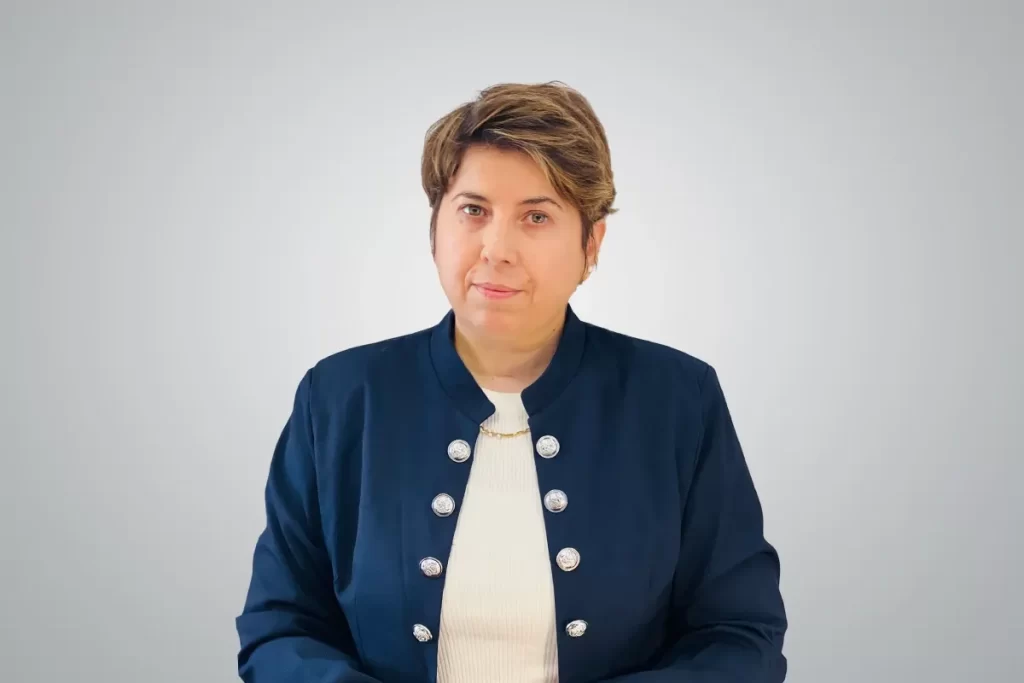
Driving Impact Through Knowledge, Purpose, and Innovation
Dr Samah Abu Assab
Marketing Innovation Strategist
Dr Samah Abu Assab has built her career at the intersection of academia and industry, where theory meets the realities of business execution. As a marketing innovation strategist, director of the MBA programme at Birzeit University, and entrepreneurship & business development consultant at Samah Abu Assab Advisory, she works across spaces that often operate in silos yet increasingly depend on each other.
In her view, the most significant shift today is less about technology and more about behaviour. Organisations are rethinking how decisions are made, who is empowered to make them, and what counts as valid insight. Marketing now extends beyond storytelling, analytics goes beyond reporting, and innovation is no longer confined to specific departments.
She sees AI less as a disruption and more as a lens that reveals gaps in leadership readiness and organisational thinking. Ultimately, she believes the leaders who will stand out are those who can navigate ambiguity while still driving clarity in decisions, as she shared in a conversation with TradeFlock.
What led you to move from engineering to leading MBA and EMBA programmes? Was there a defining moment?
I often say I never left engineering; I simply expanded its scope. It gave me a way of thinking rooted in systems, structured problem-solving, and practical innovation. Over time, I began to ask a deeper question: why do strong technologies succeed in some environments and fail in others?
The answer rarely lies in the technology itself but in leadership, strategy, culture, and people. A defining moment came during my studies in technology and innovation management in Germany, where I realised that true transformation happens at the intersection of technology, business, and human needs.
That insight shifted my focus from building solutions to shaping those who create them. Today, as director of the MBA programme at Birzeit University, I see education as innovation at scale.
What challenges do you face as a business development consultant? How do you address them?
A key challenge in business development consulting is not idea generation, but execution. Most organisations know what needs to change yet struggle to implement it in fast-moving, uncertain environments. My approach always begins with people and context, like understanding how an organisation thinks, operates, and makes decisions before proposing solutions.
Over time, I’ve realised the role is less about giving answers and more about building internal capability to find them. Real progress happens when organisations gain the confidence to adapt on their own, rather than depending on external direction.
How are you preparing for the future of teaching? How has your teaching style evolved over time?
The educator of the future acts as a catalyst for thinking, creativity, and adaptability. With AI, digital transformation, and interdisciplinary change reshaping learning, my focus is on continuous learning and staying engaged with emerging technologies while keeping human values at the core of education.
My teaching style has evolved at the intersection of innovation, technology, business, and human-centred leadership, shaped by experience across engineering, AI, entrepreneurship, and consulting. This helps keep learning practical, grounded in real challenges, and focused on problem-solving.
I encourage students to question assumptions, experiment, and see uncertainty as opportunity. Over time, authenticity has shown its value in building connection and shaping independent thinkers ready for future opportunities.
What legacy do you hope to leave for future leaders?
I hope to be part of shaping a view of leadership rooted in impact, integrity, and the ability to elevate others. Across academia, consulting, and innovation ecosystems, what has mattered most to me is seeing people grow in confidence, capability, and ambition.
As an Arab and Palestinian woman leader, I aim to reflect that leadership can be both bold and compassionate, innovative yet deeply human. If there is a legacy I would value, it is the belief that progress happens when knowledge meets purpose, and innovation is guided by responsibility.
I hope future leaders actively shape more inclusive and resilient systems while responding to change.
How is management teaching transforming? Where do educators still fall short?
Management education has shifted from a knowledge-transfer model to a capability-building discipline. With information now instantly accessible, the focus is less on delivering content and more on helping learners navigate complexity, uncertainty, and rapid change. This requires curiosity, adaptability, and systems thinking.
What remains often underestimated is the development of human capabilities. As AI takes over analytical and routine work, qualities such as creativity, ethical judgement, empathy, resilience, and visionary thinking are becoming central to leadership.
As an educator, my focus is on shaping leaders who think differently, collaborate meaningfully, and lead change with purpose and responsibility.
What major shifts have you seen in e-commerce, and where do you see it heading next?
E-commerce has moved from a simple sales channel to an intelligent ecosystem driven by data, personalisation, automation, and predictive insights. The shift toward anticipatory commerce now allows businesses to understand customer needs before they are expressed.
The convergence of AI, robotics, analytics, and human-centred design is creating new opportunities for efficiency and innovation. However, the real value lies in collaboration between human creativity and machine capability, not replacement.
As an educator and researcher, my focus is on how these technologies can enable sustainable, inclusive business models. Continuous learning and experimentation remain key to adapting to this rapidly evolving digital landscape.
How has your multidisciplinary career shaped your approach to leadership and problem-solving?
My multidisciplinary journey has shown that effective solutions often emerge at the intersection of disciplines. Engineering shaped my structured approach to problem-solving and systems thinking. Innovation management taught me how ideas translate into real impact. Consulting brought exposure to organisational realities, while academia strengthened my focus on learning and knowledge creation.
These experiences shaped how I approach leadership. I rarely view problems in isolation; I look at the broader ecosystem and the connections within it.
This interdisciplinary mindset helps me move between strategy, technology, and education with ease. Today, connecting perspectives is central to driving meaningful and sustainable transformation.
Featured Magazine -

All Magazines-

Other Interviews-
- Dr Aarti Mishra Tripathi-Most Impactful Women Leaders from Asia 2026
- Deema Anani-Most Impactful Women Leaders from Asia 2026
- Dr Samah Abu Assab-Most Impactful Women Leaders from Asia 2026
- Vikas C Sajjan-10 Best Tech Leaders in India 2026
- Kadhirvel-10 Best Tech Leaders in India 2026
- Pullak Gupta-10 Best Tech Leaders in India 2026
- Nilanjan Mitra-10 Best Tech Leaders in India 2026
- Aman Sharma-10 Best Tech Leaders in India 2026
- Chakrapani Kodavati-10 Best Tech Leaders in India 2026
- Ashok Shankar P-Best Education Leaders in India 2026
