

The Doctor Fighting Silent Damage
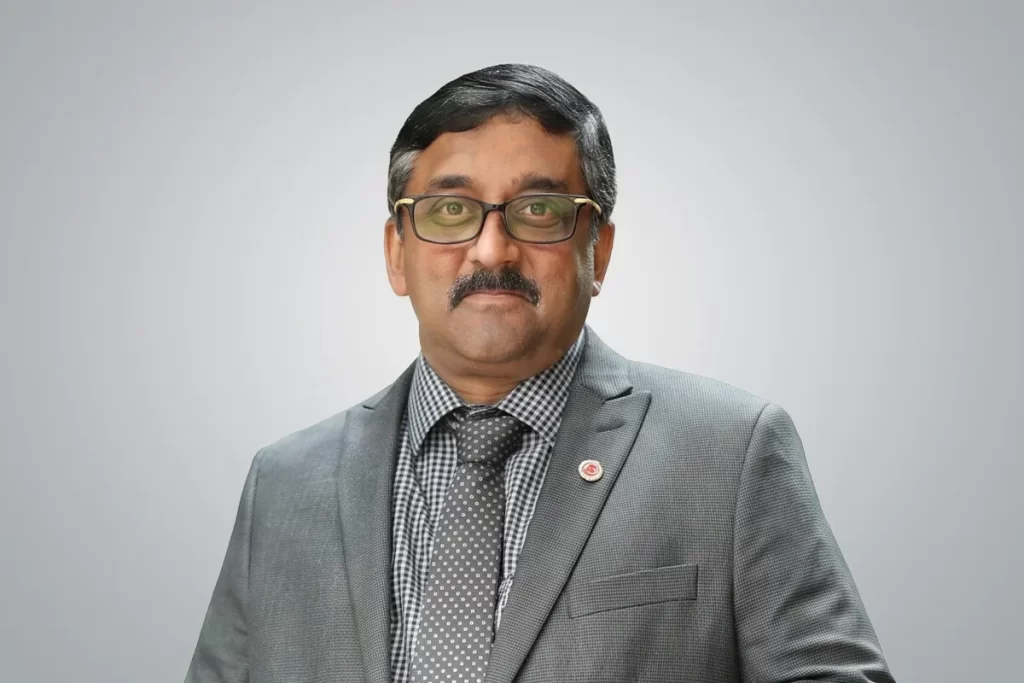
Dr Vijay Viswanathan
Chief Physician and Chairman & Managing Director
M. V. Hospital for Diabetes Pvt. Ltd.
The Doctor Fighting Silent Damage
Dr Vijay Viswanathan
Chief Physician and Chairman & Managing Director
M. V. Hospital for Diabetes Pvt. Ltd.
Diabetes in India no longer arrives as a single disease. Over the last three decades, it has evolved into a far more complex healthcare challenge, bringing with it rising kidney disease, amputations, cardiovascular complications, tuberculosis risks, and increasingly younger patient profiles. Over those years, Dr Vijay Viswanathan has worked at the centre of many of those realities, helping to shape integrated approaches around early diagnosis, diabetic foot care, nephropathy management, and amputation prevention — long before preventive diabetes care entered the national conversation.
Alongside publishing more than 250 research papers and building a multidisciplinary diabetic foot programme spanning 25 years, he has led major global and national diabetes organisations, including D-Foot International and RSSDI. His work reflects a single conviction that diabetes care cannot rely solely on treating complications after they emerge. Prevention, physician training, patient awareness, and continuity of care must become equally central to any functioning healthcare system.
In an exclusive conversation with TradeFlock, he reflects on the changing face of diabetes in India, the rise of AI-assisted care, and the healthcare priorities that will define the next decade.
Over three decades in diabetology, how have you seen diabetes evolve in India, and what role has awareness played in your work?
Diabetes is among the fastest-evolving fields in medicine, and India’s experience with the disease reflects that shift in full. Earlier, it was largely associated with older populations and limited therapeutic options. Over time, newer drugs available worldwide have become accessible here, including off-patent options now available at significantly lower cost. What has changed more fundamentally, however, is the patient profile itself. The disease is appearing far earlier in life now, driven largely by central obesity, which fuels insulin resistance, and compounded by sedentary lifestyles and poor dietary habits spreading across both urban and semi-urban populations. India now carries one of the world’s largest diabetes burdens, with nearly 101 million people living with the condition and around 105 million more at the prediabetic stage.
Awareness has remained an important thread throughout my career. We have conducted lifestyle intervention programmes across six schools, screening initiatives among police officers, and published findings in a scientific journal, and sustained public campaigns around World Diabetes Day in Chennai. For more than 15 years, prominent landmarks across the city have been illuminated in blue on that occasion to encourage wider awareness around diabetes prevention and care.
Where do you see the biggest gaps in diabetes care delivery across India today?
Late diagnosis remains one of India’s biggest healthcare failures and is driven by two compounding problems. Physicians sometimes refer patients too late, and patients themselves are slow to commit to consistent follow-up. Busy schedules, a shortage of caregivers for elderly patients, and difficulty accessing care worsen both problems.
Flexible care models have helped, but to a degree. Online video consultations, WhatsApp-based communication, and home visits have improved continuity of care, particularly since the pandemic. That said, an in-person consultation with a doctor remains the most reliable way to detect complications early through proper clinical evaluation. No digital tool fully replaces that.
Inside our practice, every patient is consistently advised to return every three to four months, regardless of whether symptoms appear controlled. Diabetes progresses silently in many individuals, which makes continuity of monitoring just as important as the treatment itself.
You’ve spent most of your career within one institution. What has that continuity allowed you to build?
It has allowed things to mature that simply cannot be rushed. Working for decades at M.V. Hospital for Diabetes and Prof. M. Viswanathan Diabetes Research Centre created a continuity of institutional memory that is genuinely rare in modern healthcare. Being part of India’s first dedicated diabetes speciality hospital, founded in 1954 by Prof. M. Viswanathan, who is widely regarded as the Father of Diabetology in India, gave me the opportunity to contribute to a much larger legacy rather than simply oversee an organisation.
That long-term association made it possible to develop a 360-degree diabetes care model covering prevention, early detection, management, research, and community outreach. It also allowed us to build standardised protocols and long-term patient follow-up systems, the kind that take years of consistent effort to establish and even longer to refine.
One of the proudest moments during my tenure as Chairman and Managing Director was seeing the institution repeatedly recognised by the International Diabetes Federation as a Centre of Excellence in Diabetes Care, a recognition reflecting decades of collective clinical discipline and research-driven practice.
“Diabetes does not become dangerous suddenly. Years of silent neglect make it dangerous.”
How do you evaluate rapidly evolving advancements in diabetes care today?
Staying current in a field that evolves as quickly as diabetology demands both structured learning and active professional engagement. Our institution maintains a well-equipped library with a wide range of national and international journals, which I rely on regularly. Participating as international faculty at global meetings of the American Diabetes Association, D-Foot International, and the European Association for the Study of Diabetes, as well as national forums including RSSDI and the Association of Physicians of India, all contribute meaningfully to remaining clinically current.
When evaluating whether a new advancement belongs in practice, I look at whether it is evidence-based, cost-effective, scalable, and genuinely suited to Indian patients. The goal is never novelty for its own sake. The question that matters is whether an advancement will practically improve care for the person sitting across from you.
What priorities define your next phase of work in diabetology?
My primary focus is preparing the next generation of professionals for a healthcare environment that will be far more technology-driven, data-oriented, and interdisciplinary than the one in which most practitioners are trained. At M.V. Hospital for Diabetes and Prof. M. Viswanathan Diabetes Research Centre, this means integrating advanced technologies into clinical training, strengthening research infrastructure, and building a culture of continuous learning that treats rigorous clinical judgment and innovation as complementary rather than competing forces.
We are also expanding international collaborations with institutions including Stanford University, the National University of Singapore, the World Health Organisation, and the International Diabetes Federation, which continue to open meaningful opportunities for research and knowledge exchange.
The broader vision is a centre of excellence where prevention, research, technology, and compassionate patient care operate as a unified system rather than parallel tracks, and where the next generation of professionals is equipped to lead that integration, not merely participate in it.
“Precision medicine will redefine diabetes care over the next decade, but precision without accessibility will widen healthcare inequality rather than solve it.”
Despite growing awareness, why do diabetic foot complications and amputations remain a major challenge in India?
The honest answer is that many patients simply arrive too late. By the time they reach a hospital, severe infection, vascular compromise, or advanced ulceration has already developed. Diabetic foot complications do not appear overnight, yet peripheral arterial disease, which is one of the key drivers, continues to go undetected in a large number of healthcare settings across the country.
At M.V. Hospital for Diabetes and Prof. M. Viswanathan Diabetes Research Centre, foot examination is treated as a non-negotiable part of every patient’s diabetes management. Physicians, nurses, and educators consistently reinforce preventive care because small, early neglect eventually leads to irreversible damage. Proper footwear, regular home-based inspection, and early reporting of any symptoms remain far too underappreciated across India’s diabetes ecosystem.
What India urgently needs is structured training for physicians and nurses in early diabetic foot assessment. Comprehensive foot examinations must become routine clinical practice rather than an afterthought, because prevention is less expensive, less traumatic, and clinically far more effective than managing an advanced amputation.
“Technology can support diabetes care, but prevention still begins with disciplined human behaviour.”
How serious is the overlap between diabetes, tuberculosis, and kidney disease in India?
This is one of India’s most serious and underappreciated public health challenges. With nearly 100 million people living with diabetes and around 105 million with prediabetes, a substantial share of the population already carries a heightened vulnerability to infections, particularly tuberculosis. India simultaneously holds one of the highest tuberculosis burdens globally, which makes this overlap clinically and epidemiologically dangerous in equal measure.
The relationship between diabetes and tuberculosis is bidirectional. Diabetes weakens immunity and raises the risk of active tuberculosis, while a tuberculosis infection worsens glycaemic control and can expose diabetes that had previously gone undiagnosed. Diabetic nephropathy adds a further layer of complexity by affecting how drugs are processed in the body and undermining long-term recovery.
The response must be integrated. Routine bidirectional screening for diabetes and tuberculosis, early detection of kidney disease, and stronger coordination between communicable and non-communicable disease programmes must all become standard practice. At our institution, we were among the first in India to introduce eGFR testing as a routine assessment for all patients with diabetes, precisely because kidney disease progresses silently long before symptoms emerge. Early detection remains one of the most powerful clinical defences available.
How differently does India approach diabetes management compared to global healthcare systems?
High-income countries can afford to anchor their diabetes care systems in advanced technology. Conversely, India operates under a different set of realities, where affordability, accessibility, and scale are as consequential as innovation. The focus here must shift more decisively toward preventing diabetes and its complications before they take hold, not responding to them afterwards.
With millions already in the prediabetic stage, early identification of high-risk groups and timely lifestyle intervention are among the most powerful and cost-effective tools available. Public education, universal screening, and better training of healthcare providers at every level of the system need far greater national investment and urgency.
India needs integrated, community-based care models that combine preventive strategies with affordable solutions. Waiting for complications before acting will overwhelm the healthcare system, both financially and clinically, in the years ahead.
What role do AI and digital technologies realistically play in diabetes care today?
In our practice, AI and digital tools are already contributing to risk stratification, neuropathy prediction, cardiovascular risk assessment, CGM data interpretation, telemedicine, and early detection of diabetic foot complications. Technologies such as autofluorescence analysis are being used to assess infection and predict foot ulcers. Remote monitoring and longitudinal tracking have also improved continuity of care for many patients who cannot visit the hospital as frequently as their condition demands.
The real value of these tools lies in supporting clinical judgment, not replacing it. AI performs best in screening, pattern recognition, and decision support, which is especially important in a high-volume setting like India’s. Effective diabetes management still depends fundamentally on clinician expertise, patient engagement, and sustained lifestyle modification. Technology earns its place only when it genuinely improves patient outcomes rather than functioning as an institutional showcase.
Featured Magazine -

All Magazines-








Other Interviews-
- Prahalad Singh Patel-10 Best CEOs in India 2026
- Rakesh Gaur-10 Best CEOs in India 2026
- Dr Vijay Viswanathan-India’s 10 Most Influential Healthcare Leaders 2026
- Dr Atantra Das Gupta-India’s 10 Most Influential Healthcare Leaders 2026
- Subhashis Chakraborty-Best Corporate Leaders in India 2026
- Vipul Jambucha-Best Corporate Leaders in India 2026
- Jyotsna Kumar-Best Corporate Leaders in India 2026
- Dr Vinay Kumar Putta-Best Corporate Leaders in India 2026
- Gurupad Hombal-10 Best CFOs in India 2026
- CA (Dr) Chintan Atul Shah-10 Best CFOs in India 2026
