
Building India’s Most Powerful Bridge to Japan’s Skilled Workforce
Ashok Shankar P
Chief Mentor & Founder
Sri Sankara Japanese Language Training and Consultancy
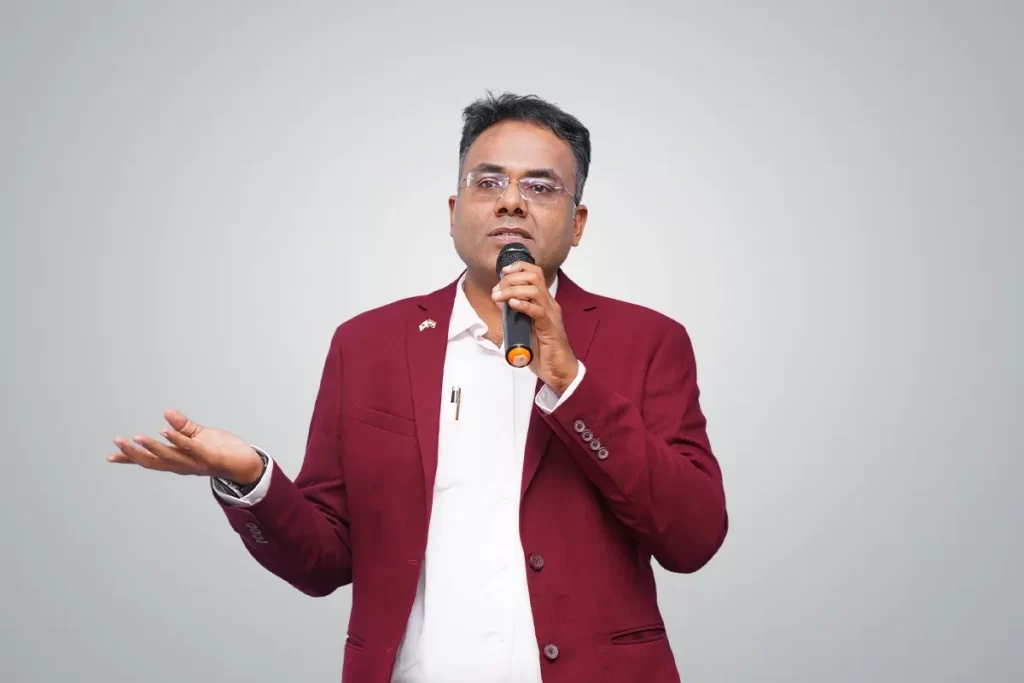
Building India’s Most Powerful Bridge to Japan’s Skilled Workforce
Ashok Shankar P
Chief Mentor & Founder
Sri Sankara Japanese Language Training and Consultancy
Karur, a modest town in Tamil Nadu rarely associated with international career pathways, is emerging as a bridge between India and Japan under the leadership of Ashok Shankar. As the Chief Mentor & Founder of Sri Sankara Japanese Language Training and Consultancy (SSJLTC), he has created a platform enabling students from rural and non-metropolitan backgrounds to access global careers in Japan’s skilled workforce ecosystem. In an exclusive TradeFlock interview, he reflects on the journey, values, and long-term vision driving this impact.
SSJLTC was never originally planned as a business venture. Ashok began his professional journey as a software engineer with Wipro Technologies, where an opportunity to learn Japanese led him to work in Japan for nearly three years across delivery and sales functions. The experience shaped his appreciation for Japan’s discipline, punctuality, teamwork, and professional culture.
Today, through SSJLTC, Ashok has helped nearly 350 students secure careers in Japan while pursuing a larger ambition of transforming Karur into a hub for Japanese language learning, mentorship, and global employability.
What inspired you to establish SSJLTC, and what became the defining turning point in your journey?
Through my interactions with Japanese companies and professionals, I noticed a gap in the India–Japan ecosystem. Japan faced a shortage of skilled talent across engineering, manufacturing, automotive, and IT, while many Indian students lacked access to Japanese-language education, cultural training, and structured pathways.
Around 2016–17, most institutes focused only on JLPT exams. I felt that was not enough. Japanese employers needed candidates who understood workplace culture, communication style, discipline, and expectations. This led me to build SSJLTC, focused on mentorship, cultural readiness, and career development alongside language training.
The defining turning point came when we moved from a language institute to recruitment and placement. We realised students needed real career outcomes, not just certifications. That shift reinforced a key lesson: growth comes from identifying gaps, adapting to industry needs, and building trust through consistent results.
What makes your training model different, and how are you integrating AI and digital tools into it?
The biggest differentiator in our model is that we focus on transformation, not just teaching. Along with Japanese language proficiency, we prepare students in workplace culture, communication style, confidence, and professional discipline. We also integrate AI-driven tools for personalised language practice, pronunciation support, resume building, and interview preparation. However, technology is only a support system. Personalised mentoring and cultural training remain central to our approach. I still remember our students outperforming candidates from the Indian Institute of Technology Madras during an interview process. That success came from preparation, cultural readiness, and confidence rather than academic pedigree alone.
What is your long-term vision for SSJLTC, and how do you plan to scale its impact?
My long-term vision is to build one of the strongest Indo–Japan talent bridges and help 10,000 Indian engineers build careers in Japan. Going forward, we aim to strengthen placements and industry partnerships while collaborating with more institutions across India. At the same time, we want to scale responsibly, because our model depends heavily on personalised mentoring, cultural guidance, and individual attention. Sustainable growth with consistent quality and long-term impact remains our core focus.
What were the biggest challenges in building credibility and trust, and were there moments that tested your resilience?
One of the biggest challenges was overcoming the trust gap between Japanese companies and Indian candidates. Japanese organisations value consistency, sincerity, communication, and long-term commitment, so credibility had to be built through years of relationship-building and consistent delivery. Another challenge was shifting the perception that Japanese language training is only about clearing exams. We also had to convince students and parents, especially from smaller towns, that Japan could offer global careers.
A key test of resilience came in 2019–2020, when we lost a major client, recruiting 20–30 students annually due to internal restructuring. That pushed us to reduce dependency on limited partners,
expand outreach, strengthen training, explore lateral hiring, and build new connections through alumni referrals.
What aspects of Japanese culture have influenced your leadership philosophy the most?
Two aspects of Japanese culture have strongly influenced my leadership philosophy: teamwork and punctuality. I admire how Japanese teams collectively discuss, align, and commit to a plan with complete discipline. Equally inspiring is their respect for time. In Japan, punctuality is seen not just as professionalism but as respect for people. Both principles continue to shape the way I lead and mentor students today.
Why do you see yourself more as a mentor than a businessman or CEO?
Mentorship means everything to me because transformation happens when you focus on people, not just outcomes. I assess students beyond academics and language skills, including confidence, communication, attitude, and emotional strength. I have seen students initially rejected succeed through continuous guidance. One such student later secured an opportunity with Mynavi after multiple failed interviews.
What legacy would you like to leave behind?
I want to be remembered as someone who transformed lives through education and meaningful opportunities. More than business success, my focus has always been on creating genuine human impact. If thousands of students are able to build better futures because of our work, that would be the legacy I value most.
Featured Magazine -

All Magazines-





Other Interviews-
- Chakrapani Kodavati-10 Best Tech Leaders in India 2026
- Ashok Shankar P-Best Education Leaders in India 2026
- Simmone L Bowe-Most Inspiring Global HR Leaders 2026
- Dato’ Sri Dr. Haji Irmohizam Ibrahim-Asia’s Best Business Leaders 2026
- Manal Hassoun-Most Impactful Women Leaders from Asia 2026
- Shilpi Yadav-Most Impactful Women Leaders from Asia 2026
- Tasnuva Shelley-Most Impactful Women Leaders from Asia 2026
- Dr. Gurdaman L Sharma-Best Education Leaders in India 2026
- Tarun Ramesh Agarwal-Best Education Leaders in India 2026
- Naseer Ali-Best Education Leaders in India 2026
