
Leading Beyond Technology, Building Through People
Vikas C. Sajjan
Engineering Leader (India Region) - Enterprise AI/ML Solutions
AMD
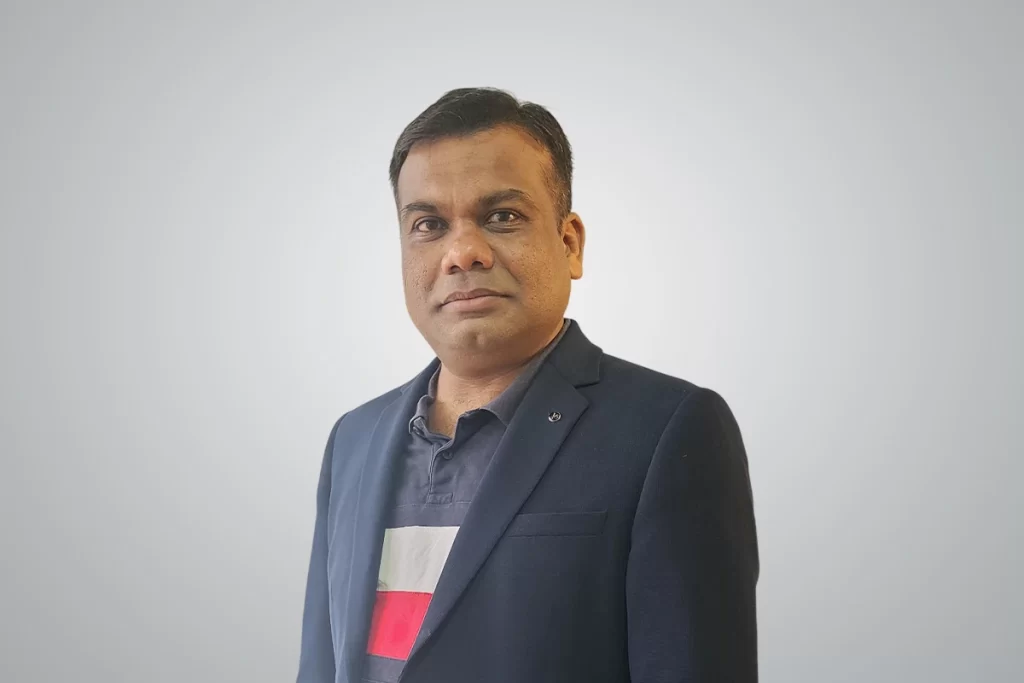
Leading Beyond Technology, Building Through People
Vikas C. Sajjan
Engineering Leader (India Region) - Enterprise AI/ML Solutions
AMD
The technology sector rewards those who can adapt, but lasting leadership is often built on the ability to stay grounded while everything around you changes. Over a career spanning 24 years, Vikas C Sajjan has witnessed the industry evolve through multiple cycles of transformation, each bringing new opportunities, new challenges, and new expectations from engineering leaders.
Today, he serves as engineering leader (India region), Enterprise AI/ML Solutions at AMD, where his work focuses on enabling the next generation of enterprise technologies. Along the way, he has developed a reputation for combining technical depth with a practical understanding of how organisations create value through technology.
His perspective has been shaped by years spent working with diverse teams, navigating complex business environments, and contributing to communities where collaboration drives progress. In conversation with TradeFlock, Vikas discusses leadership, innovation, open-source culture, and the technology shifts that are redefining the future of engineering.
Looking back, which phase of your career shaped you most as a leader?
The most defining phase of my career was the transition from being a technical contributor and problem solver to becoming a leader responsible for building teams, shaping strategy, and driving outcomes through others. While a strong technical foundation remains important, I learned that creating lasting impact requires enabling people and aligning technology with broader business goals.
A significant influence on this journey was the opportunity to work across countries such as South Korea, Ireland, Denmark, Hong Kong, and Australia. Exposure to different cultures, work styles, and talent pools strengthened my ability to lead diverse teams, adapt to changing environments, and appreciate the value of collaboration.
The real turning point came during my time as engineering head at Seeing Machines in Australia, where I led an AI-enabled driver monitoring system through a period of growth and transformation. Building teams, developing future leaders, and navigating complex technical and business challenges taught me that leadership is less about authority and more about vision, trust, and empowerment.
That experience shaped my belief that sustainable success comes from fostering collaboration, creating opportunities for others to grow, and building cultures that outlast any individual achievement. Ultimately, a leader’s most enduring legacy is not the systems they build, but the people they develop.
What has open source taught you about innovation and leadership?
Open source taught me that innovation thrives when ideas are shared, challenged, and improved by a diverse community rather than developed in isolation. The most successful projects are built on transparency, collaboration, meritocracy, and a shared sense of purpose rather than hierarchy alone. It reinforced my belief that leadership is about enabling others, building trust, and creating environments where great ideas can come from anywhere.
Today, I apply those lessons by encouraging collaboration, experimentation, and knowledge sharing while empowering teams to take ownership and align around common goals and meaningful outcomes.
Starting fresh in 2026, what would be your biggest learning priorities as an engineer?
If I were starting my engineering career in 2026, I would focus first on AI, software fundamentals, and systems thinking. Understanding how AI systems are built right from data pipelines and model training to deployment and governance will be essential as AI becomes a foundational layer across industries.
What I would avoid is spending excessive time mastering technologies that are rapidly being automated or abstracted away. Instead, I would prioritise problem-solving, architecture, domain expertise, and the ability to understand complex systems. The engineers who will thrive are those who can bridge business needs, AI, and technology while combining human judgement with emerging capabilities.
Where do you see organisations succeeding with AI, and where are they overestimating its potential?
Organisations getting AI right are treating it as a business transformation initiative rather than a technology project. The most successful leaders focus on outcomes first, using AI to augment human capabilities, improve productivity, and solve specific business challenges while investing in strong data, governance, and infrastructure foundations.
Where many organisations get carried away is in assuming AI can replace domain expertise, deliver value without meaningful process changes, or operate autonomously without oversight. Technology alone is rarely the answer. Sustainable impact comes from combining AI with human judgement, business context, and operational discipline.
My approach is to balance innovation with pragmatism. I encourage experimentation and exploration, but scaling should happen only when there is a clear business case, measurable value, and appropriate governance in place. AI delivers its greatest value when it enhances decision-making and empowers people to perform better, rather than attempting to replace them altogether.
What’s the next big technology inflection point, and how are you staying ahead of it?
I believe the biggest technology shift over the next five years will be the convergence of agentic AI, foundation models, and accelerated computing. We are moving beyond AI that generates content to systems capable of reasoning, planning, and executing complex tasks autonomously.
To stay ahead, I am focused on building expertise in AI-native architectures, GPUs, distributed systems, and data platforms while fostering a culture of continuous learning. For my team, that means investing in AI literacy, hands-on experimentation, and practical use cases that improve productivity and innovation. The goal is to integrate AI thoughtfully into products, decisions, and business outcomes.
Featured Magazine -

All Magazines-




Other Interviews-
- Dr Aarti Mishra Tripathi-Most Impactful Women Leaders from Asia 2026
- Deema Anani-Most Impactful Women Leaders from Asia 2026
- Dr Samah Abu Assab-Most Impactful Women Leaders from Asia 2026
- Vikas C Sajjan-10 Best Tech Leaders in India 2026
- Kadhirvel-10 Best Tech Leaders in India 2026
- Pullak Gupta-10 Best Tech Leaders in India 2026
- Nilanjan Mitra-10 Best Tech Leaders in India 2026
- Aman Sharma-10 Best Tech Leaders in India 2026
- Chakrapani Kodavati-10 Best Tech Leaders in India 2026
- Ashok Shankar P-Best Education Leaders in India 2026
