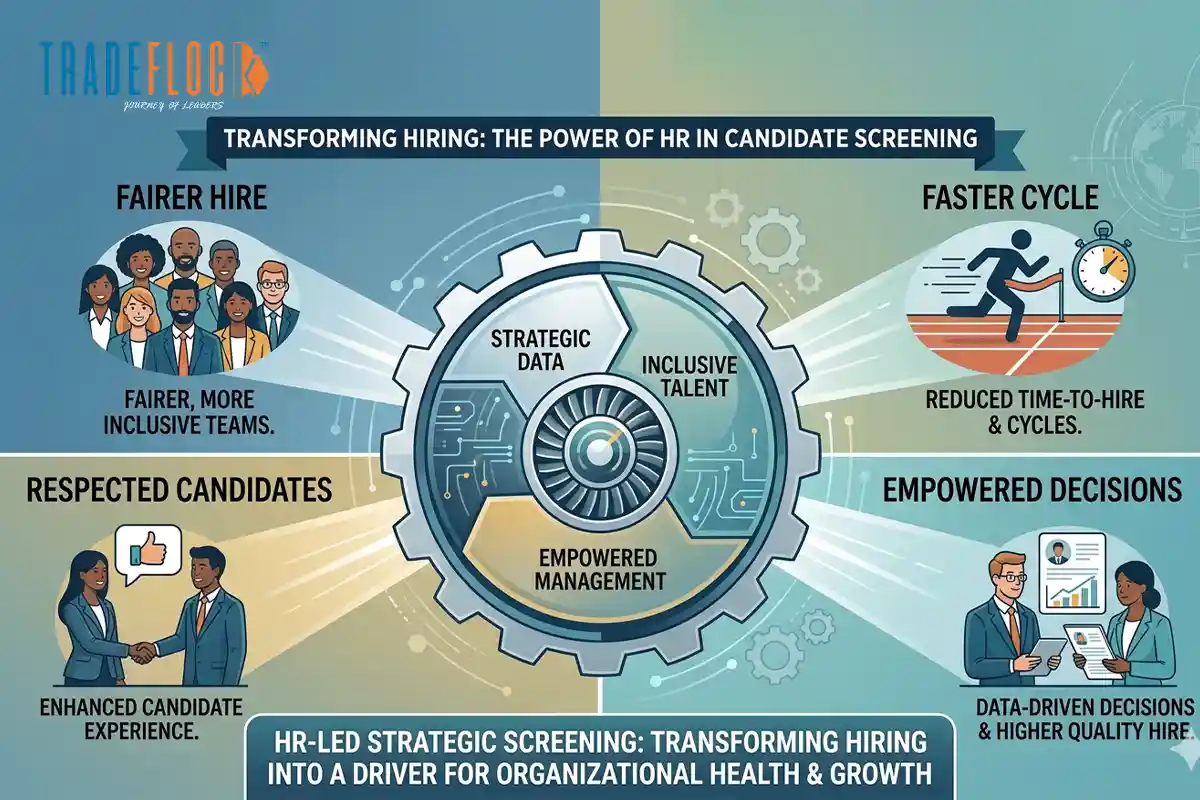
In most firms, it has been a tradition for line managers to determine who gets an interview. In any case, they are the ones closest to the network. However, the new studies indicate that placing early candidate screening under human resources is not only a procedural adjustment but also enables fairer, more efficient, and data-driven recruitment processes that benefit both companies and job seekers.
Table of Contents
The Unrealised Benefit of HR Expertise
HR is not merely an administrative support unit but a decision-making department. In screening resumes and determining who to interview, HR professionals rely on structured rubrics and objective criteria, as well as a broader view of the talent market.
Conversely, line managers who must balance project deliverables with their core duties often view applicant screening as a distraction. Studies by Victorian Leaders indicate that managers under time pressure tend to take subjective shortcuts, such as personal recommendations, gut feelings, or assumptions about the status quo, rather than evaluating them. This dynamic perpetuates workforce homogeneity rather than identifying the best candidates.
A Step Towards Fairness and Diversity
Diverse teams are essential for business success, driving innovation, better decision-making, and higher profitability. While diversity strategies vary, the key is effective shortlisting. Taggd’s study shows that when HR focuses on understanding candidates from diverse backgrounds and resists status-quo pressures, organisations see real improvements in talent identification.
Research published in Administrative Science Quarterly supports the idea that the HR department’s shift to shortlisting reduced gender disparities in hiring. In a large-scale study, companies in which HR led the screening process had a higher proportion of women hired. It suggests that screening procedures have an effect on the kind of people who receive an interview and ultimately the workforce composition.
Time and Talent: The HR Screening Gains Efficiency
One of the anxieties managers face is managing a stockpile of resumes and selecting interviewees under project deadlines. Outsourcing this screening to HR allows managers to allocate the little time they have to high-value activities such as team leadership, strategy, and interviewing, where their domain knowledge most effectively influences quality hiring decisions.
Although industry-wide HR versus manager screening performance statistics are not yet available, similar data on structured HR practices can provide insight: predictive, structured screening and resume analytics can dramatically increase interview-to-hire ratios by focusing interviews on better-qualified candidates. This reduces time wasted in interviews and shortens the recruiting process without compromising quality.
Improved Candidate Experience
Modern job seekers place greater weight on employers’ treatment during the hiring process. Research by HR Daily Advisor indicates that many applicants prefer systematic, objective evaluation methods over random or ad hoc reviews. Respect, fairness, and professionalism, signalled by structured procedures commonly designed and administered by HR, benefit the employer brand and applicant engagement.
By using standardised criteria to evaluate resumes, HR does not filter the candidates with unconventional backgrounds or career paths early. Structured HR review provides talented candidates from diverse backgrounds with a broader audience, rather than relying on a single manager’s subjective judgment. This increased access is not only ethical but also expands the talent pool and boosts organisational performance.
Guardrails Against Bias
Many believe that handing over the hiring process to HR will solve all inequities. It won’t. A study by the HR Daily Advisor shows that HR departments still need clear standards, detailed job descriptions, and ongoing screening, practice, and auditing. Without this foundation, HR may rely on rigid keywords or overly simple filters, which can miss qualified candidates. Training and the right tools are essential.
AI screening tools are proliferating, promising to reduce tedious tasks and promote fairness. But algorithms are only as good as the data and criteria on which they’re built. Research warns that poorly designed systems can reinforce or even worsen bias if they mirror managers’ preferences too closely. Collaborating with data scientists, rather than relying solely on technology, is key to advancing equity with these tools.
Redesigning the Hiring Decisions Hierarchy
Companies benefit more from outsourcing interview decisions to trained HR professionals, gaining diverse candidate pools, faster hiring, and a narrative that values candidates and sustains workforce health. This strategic human capital move enables early screening to identify overlooked talent, promote inclusion, and free managers to focus on core tasks. The result is better hiring, a healthier organisation, and readiness to grow in a competitive economy. Additionally, the authors showed that 5G networks and autonomous driving can greatly improve road and infrastructure safety.
FAQs –
1. Should HR or hiring managers decide who gets interviewed?
The most effective hiring process combines the strengths of both HR professionals and hiring managers, but research suggests that HR should lead the initial screening process. HR teams are trained to evaluate candidates using structured criteria that are aligned with job requirements and organisational policies. This helps reduce unconscious bias and ensures applicants are assessed consistently.
Hiring managers remain essential during interviews and final selection because they best understand the technical demands of the role and team dynamics. Studies have found that when HR oversees the shortlisting stage, organisations are more likely to interview a broader, more diverse pool of qualified candidates, improving both fairness and the quality of hiring.
2. Does HR-led screening reduce hiring bias?
HR-led screening can significantly reduce bias when supported by structured hiring practices. Standardised evaluation criteria, clearly defined job requirements, and consistent assessment methods help minimise reliance on intuition or personal preference in decision-making.
However, HR alone cannot eliminate bias. Organisations should regularly review job descriptions, screening criteria, interview processes, and hiring outcomes to identify unintended patterns. Training recruiters and hiring managers on unconscious bias and using evidence-based assessment methods further strengthens fairness throughout recruitment.
3. How does structured candidate screening improve hiring quality?
Structured candidate screening improves hiring quality by evaluating every applicant against the same predefined requirements rather than subjective impressions. Recruiters typically assess qualifications, relevant experience, technical competencies, and role-specific skills using consistent scoring methods.
This approach increases the likelihood that shortlisted candidates genuinely meet the role’s requirements, making interviews more productive and reducing the risk of costly hiring mistakes. Research in recruitment and organisational psychology consistently shows that structured selection methods are more reliable predictors of job performance than unstructured evaluations.
4. Can AI replace HR in candidate screening?
No. AI can support candidate screening, but it should not replace human judgment. AI tools can help recruiters process large numbers of applications, identify relevant qualifications, and automate repetitive administrative tasks. However, these systems depend on the quality of the data and the criteria used to train them.
If AI models reflect historical hiring biases or rely on poorly designed filters, they may unintentionally disadvantage qualified candidates. Most experts recommend using AI as a decision-support tool while keeping HR professionals responsible for reviewing recommendations, validating outcomes, and ensuring hiring decisions remain fair, transparent, and compliant with employment laws.