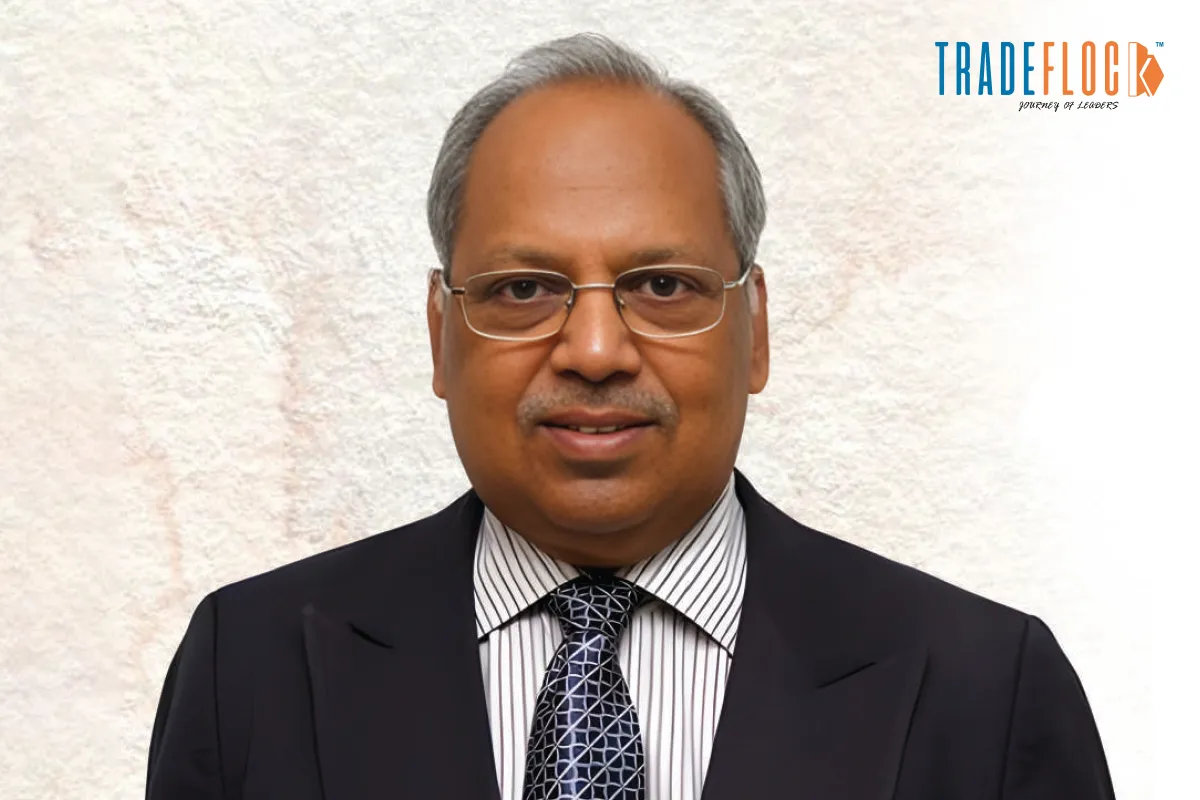
In the mid-1970s, when personnel departments in India were often viewed merely as administrative back offices, a pioneering professor at the Indian Institute of Management, Ahmedabad, was quietly redefining organisational perspectives on people. This was none other than Dr T.V Rao.
Over the following 50 years, Dr Rao would develop India’s first Human Resource Development (HRD) function, establish the National HRD Network, and influence thousands of CEOs, HR practitioners, and organisations. Widely regarded as the Father of HRD in India, his impact goes far beyond a title. Dr Rao transformed the country’s approach to leadership, talent, and growth.
His extensive experience offers a powerful lesson for leaders facing change, uncertainty, and the intricate human dynamics of business.
Table of Contents
From Professor to Pioneer
Dr Rao did not initially set out to create a national movement. As a faculty member at IIM Ahmedabad, he was deeply interested in organisational behaviour and people development. In 1975, he took a significant step by helping establish one of India’s first formal HRD departments at Larsen & Toubro, when HR mainly focused on recruitment, payroll, and compliance.
Dr Rao recognised a vital truth: for business growth, it was essential to invest in people. Today, this insight is widely acknowledged, as Deloitte’s 2024 report on Human Capital Trends states that 88% of business leaders see developing organisational capability as key to long-term success. Yet, many organisations struggle to implement structured development strategies. Dr Rao’s straightforward yet powerful message was clear: leadership isn’t about controlling people; it’s about developing them.
Lesson: Visionary leaders often see the future of their roles long before the rest of the world does.
Human Resource Development, Not Personal Development
When Dr Rao introduced the concept of HRD, it was revolutionary. He redirected the focus from control and administration towards developing employees’ capabilities. Instead of merely monitoring workers, he emphasised supporting their growth.
The latest State of the Global Workplace report by Gallup reveals that employees who feel they are learning and growing are nearly three times more engaged at work. Conversely, global disengagement is estimated to cost approximately 8.8 trillion dollars annually.
Lesson: When development is more important than control, better performance naturally happens without extra effort.
Building Institutions, Not Just Ideas
In 1985, Dr Rao founded the National HRD Network, a leading professional organisation for HR leaders across India. He also played a key role in establishing the Academy of HRD, which aims to raise industry standards and promote research on professionalism.
These initiatives were more than symbolic; they drive vibrant communities of practice where leaders could learn, share, and grow together. Research from the Harvard Business Review supports this, showing that companies connected through strong professional networks are up to 40 times more innovative than those operating in isolation. Dr Rao’s leadership serves as a powerful reminder that the more influence people have, the greater their capacity to multiply that impact.
Lesson: Real leaders create platforms that enable other people to develop even when they have left.
The Leadership of Transformation
The economic liberalisation in India in the 1990s was rapid. Organisations in both the public and private sectors were forced to shift from a bureaucratic to a competitive, performance-driven model.
During this transition, Dr Rao collaborated with several organisations to help them redesign appraisal systems, leadership pipelines, and competency frameworks. But changes are not usually a smooth process. McKinsey reports that nearly 70% of change initiatives fail mostly due to cultural resistance.
The people-orientated approach by Dr Rao is –
Engage employees in the process.
Clear expectations using competencies (Can be used in quotes)
Align systems with values.
Lesson: Sustainable change occurs when leaders consider the human aspect of change rather than the strategy.
Finding the Middle Ground Between Measurement and Meaning
Dr Rao firmly believed in quantifiable competency models and systems, yet he never reduced people to mere numbers. Today, the 2024 PwC CEO Survey reveals that 79% of CEOs are concerned about a skills gap, but most admit their development systems are insufficient.
Dr Rao’s philosophy offered a solution: establish measurable capabilities, align them with organisational purpose, and create performance systems that foster growth rather than instil fear. He held the conviction that business success and human dignity are not opposing forces but complementary concepts.
Lesson: Good leadership is balanced between data and empathy and between performance and purpose.
The Enduring Message
Leadership is a lesson that Dr T. V. Rao has consistently emphasised throughout his life. It is the art of creating systems that enable people to grow, contribute, and eventually take on leadership roles themselves. In today’s rapidly evolving world, driven by artificial intelligence and constant disruption, technology is advancing at an unprecedented pace. Despite these changes, human capability remains the ultimate differentiator, shaping the course of progress and innovation.
| “His legacy is clear: Grow human beings intentionally. Institutionalise learning. Normalise feedback. Align growth with values.” |