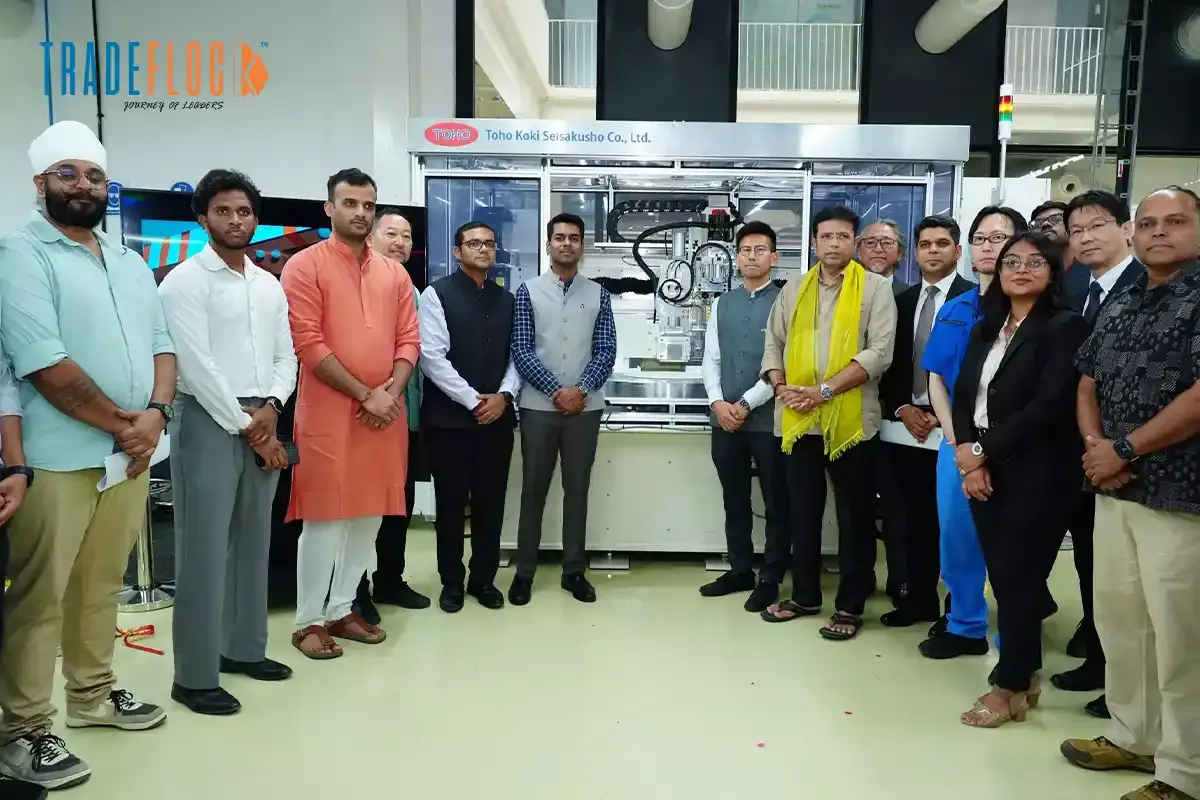
India reached a major milestone in producing computer chips domestically. On Saturday, July 11, 2026, Telangana’s IT Minister, D. Sridhar Babu, opened the country’s very first Chemical Mechanical Polishing (CMP) Pad Technology Hub. This advanced centre is located at the T-Works facility in Hyderabad.
Valued at ₹8 crore, this advanced open-access facility has been successfully developed through a strategic international manufacturing partnership with Japan-based Toho Koki Seisakusho Company Limited. Historically, India has always relied entirely on highly expensive foreign imports for specialised CMP pad technology. This unique process is a critical manufacturing requirement used to planarize and perfectly smooth silicon wafers during advanced semiconductor chip fabrication.
The newly established facility is specifically designed to accelerate domestic research, industrial innovation and technical skill development. It provides localised training and direct technical support to engineering students, academic researchers, early-stage hardware startups, and Micro, Small, and Medium Enterprises (MSMEs). Furthermore, deep joint research initiatives will be actively conducted in collaboration with leading educational institutions and industry organisations to build localised capabilities.
Crucially, the launch of this tech hub lays the necessary framework for the commercial manufacturing of domestic CMP pads. The Telangana state government officially unveiled a roadmap to begin indigenous production of these critical chipmaking components within the next 18 to 24 months, significantly lowering reliance on foreign vendor networks.
Also Read: India Plans to Launch First LPG Efficiency Policy
The high-profile inauguration event was attended by global industry leaders, including Takuya Nishimura of Toho Koki, Swastik Kulkarni from JETRO Bengaluru, and Daisuke Tanji of IndoBox. This milestone solidifies Hyderabad’s position as India’s premier semiconductor innovation capital. It directly advances national self-reliance goals under the “Make in India” initiative, structurally reshaping global electronics supply chains.