
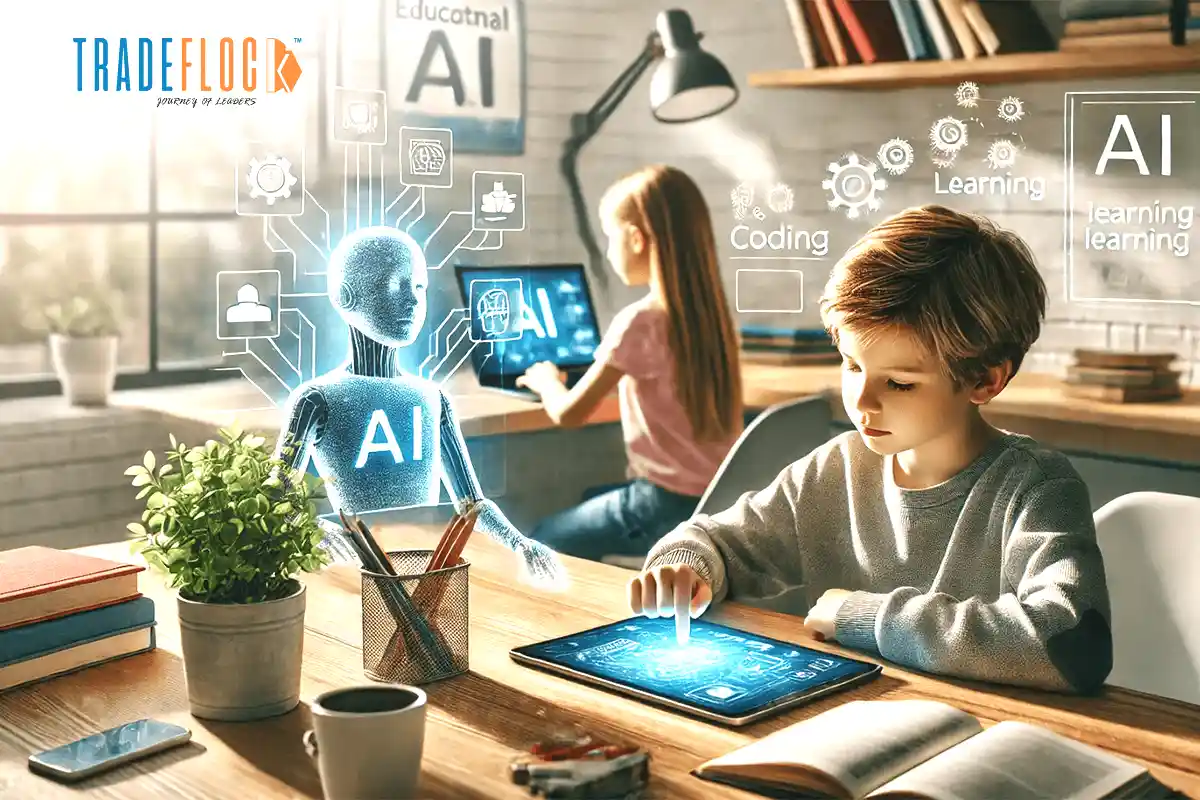
By the year 2050, schools should be noticeably smarter, much greener and much more globally-minded. Dealing with climate change, disruptive technology and gaps in education is encouraging a new kind of schooling that matches AI-powered personal learning with being conscientious to the environment.
Table of Contents
AI Works to Remove Major Educational Differences
In education systems worldwide, Artificial Intelligence will provide the main structure. As such platforms are tested in Asia (in countries including China and India), we can expect them to quickly become intelligent, adapting content for every student based on their educational level and interests.
AI technology used in mobile apps helps bridge the gap by allowing students to learn from teachers, in their own tongue, any time. UNESCO and the World Bank agree that AI will play an important role in helping more than 260 million children worldwide who are outside the school system.
Across Many Continents, University Campuses Are Adapting to Weather Changes
Extreme climate conditions will require schools in 2050 to be climate-adapted by nature. In Europe and Sub-Saharan Africa, net-zero campuses will feature solar energy, use intelligent materials, harvest rainwater and rely on cooler outdoor air. Such “living schools” will survive on their own and show students the importance of sustainability through their design.
Flood-resilient architecture is already being developed and put into practise at schools in the Netherlands and Singapore. At the same time, rural areas in Kenya and Bangladesh are trying out portable, low-emission classrooms created from local materials. With these innovations, we can create designs for infrastructure that responds to climate change on a worldwide scale.
Teaching environmental literacy will help students learn how to work with climate data, understand planetary issues and discover how to protect the environment.
Immersive classes are now accessible all over the world.
By 2050, learning will be accessible all over the world. Using augmented and virtual reality, Brazilian students will be able to check out Mars or create projects with Korean peers in real-time. Through artificial intelligence, language barriers will be eliminated and global learning networks will encourage people from different countries to discuss and solve problems together.
With the Global Learning XPRIZE and OECD Education 2030 project, it is already becoming obvious that location no longer determines access to education but that connectivity, equity and relevance do.
A Vision for the Whole World
The development of education happens everywhere because the need is worldwide. Wherever pupils may study, schools of 2050 will show how people have dealt with challenges together. If technology, sustainability and inclusion are supported, classrooms can ensure every learner is ready for a fairer, safer and more linked future.