
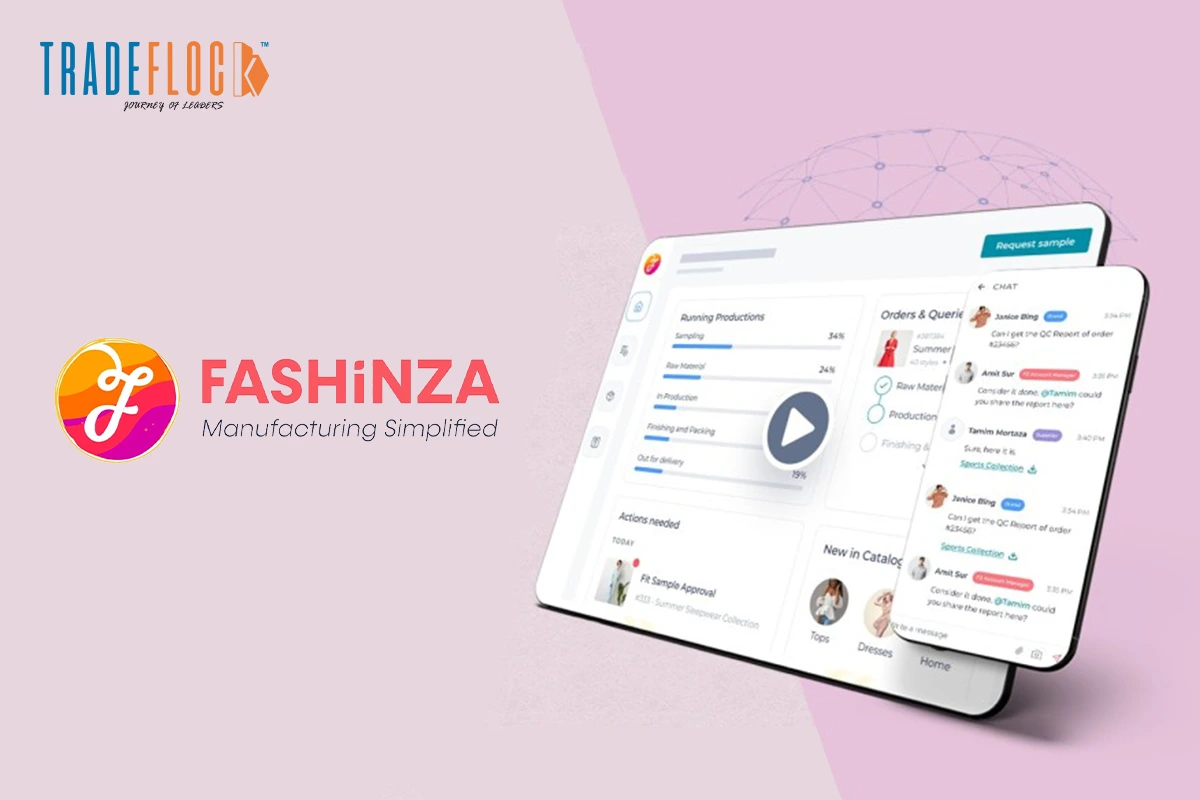
The fashion world is a fast-paced industry where fast fashion trends can shift overnight, yet supply chains are not always able to keep pace. The designers and consumers are demanding increased variety, which is a problem to manufacturers because of inefficiencies, long lead times, and decentralized sourcing. Upon realising this gap, Fashinza realised that he could be innovative and bring about solutions.
The startup was based in India and had a global outlook to make one of the most complex aspects of the fashion industry easier. Fashinza did not pursue glamour and instead he concentrated on repairing the main components of fashion production, sourcing and delivery and bringing sanity to the chaos by using technology.
Table of Contents
An Idea Sewed Up
Fashinza emerged out of a simple but strong concept, as digital-first fashion companies started to expand, they were spending more time managing factories, than working on their creativity and vision. Veterans of the industry who had a long history of manufacturing and global trade realized that these brands tended to fail to find reliable suppliers, high quality, cost control, and meet strict deadlines.
Meanwhile, manufacturers were having their own issues: low demand, reduced presence, and the inability to access global buyers. Fashinza has entered in as a reliable collaborator and provided an end-to-end, data-based solution to iron out all wrinkles in the apparel production process.
Creating a Full-Stack Fashion Backbone
Unlike the marketplaces which only connect manufacturers to consumers, Fashinza has positioned itself as an all-purpose production partner. The platform helps brands at all phases of the design-to-delivery cycle, including sourcing of fabrics and sampling, mass production and delivery.
This translates to fewer suppliers to deal with, increased predictability and enhanced cost control by brands. To manufacturers, it provides predictability in demand, technology, and planning, and an opportunity to partner with global brands without incurring significant sales overheads. This two-fold attention has played a vital role in making Fashinza stand out, as it has been able to create both trust and efficiency.
Technology: The Virtual Cloth
Technology is not a buzzword at Fashinza, it is the bloodline of all we do. Our data intelligence helps us to understand demand better, streamline production and reduce waste. We can make smarter decisions by looking at market trends, order patterns and factory capacity, and can also empower factories to plan better. This approach tackles one of fashion’s biggest challenges: unpredictability. Our technological planning offers a much-needed discipline to an industry that is usually marred by overproduction and too much inventory.
Indian Roots to World Runways
Although Fashinza was originally focused on enhancing the manufacturing ecosystem in India, it did not have any local ambitions. The company was able to grow into the global market soon, partnering with brands in the US, Europe, and the Middle East. Such international orientation led Indian producers to enter global supply chains, and foreign brands were able to tap into the great potential of Indian production.
By so doing, Fashinza has rebranded India as a low-cost manufacturing destination and a technology-focused, dependable partner to contemporary fashion firms.
Investor Support and Investment Justification
Strong investor confidence was soon restored after the execution. Fashinza has already raised more than 150 million dollars in capital, including a 100 million Series B round with international investors like Accel and Prosus Ventures, as well as previous investments from Accel, Elevation Capital, and others. This funding indicated strong confidence in Fashinza’s business concept and long-term objectives to change the way apparel is manufactured.
The capital helped it to grow quickly, integrate more technology and even recruit international talent. More to the point, it confirmed an increasing demand in the industry to have a smarter more transparent fashion supply chain. Fashinza emerged in an industry characterized by slim margins and expensive inefficiencies, and that operational excellence itself could be a significant competitive advantage.
The solution: Sustainability without selling Sustainability
Interestingly, Fashinza does not position itself as a brand with a sustainability-first vision, but its impact is strongly sustainable. The site automatically minimises waste through enhanced demand forecasting, reduced overproduction, and lead-time minimisation. There is also better utilisation of the factories, brands do not fail, and the system as a whole is more efficient. In an industry where everyone has a role to play in cleaning up, Fashinza demonstrates that sustainability is not merely a marketing spin-off, but also an issue of efficiency.
The Future Spun With Brain
As fashion brands move to smaller batches, shorter cycles and data-driven design, Fashinza will be increasingly relevant. Technology, trust, and execution platforms will define the future of the apparel manufacturing industry, and Fashinza is well-positioned at the crossroads of the three. Its story reflects a broader change in startups today: an unglamorous yet crucial challenge at scale.
Fashinza is not altering the look of fashion but the way it is made, in an industry that is all about reinvention. And that can be the most disruptive of all.