Unlocking Opportunities Through Technology
Girish Nair
Vice President IT
MF Utilities India Pvt Ltd.
Unlocking Opportunities Through Technology
Girish Nair
Vice President IT
MF Utilities India Pvt Ltd.
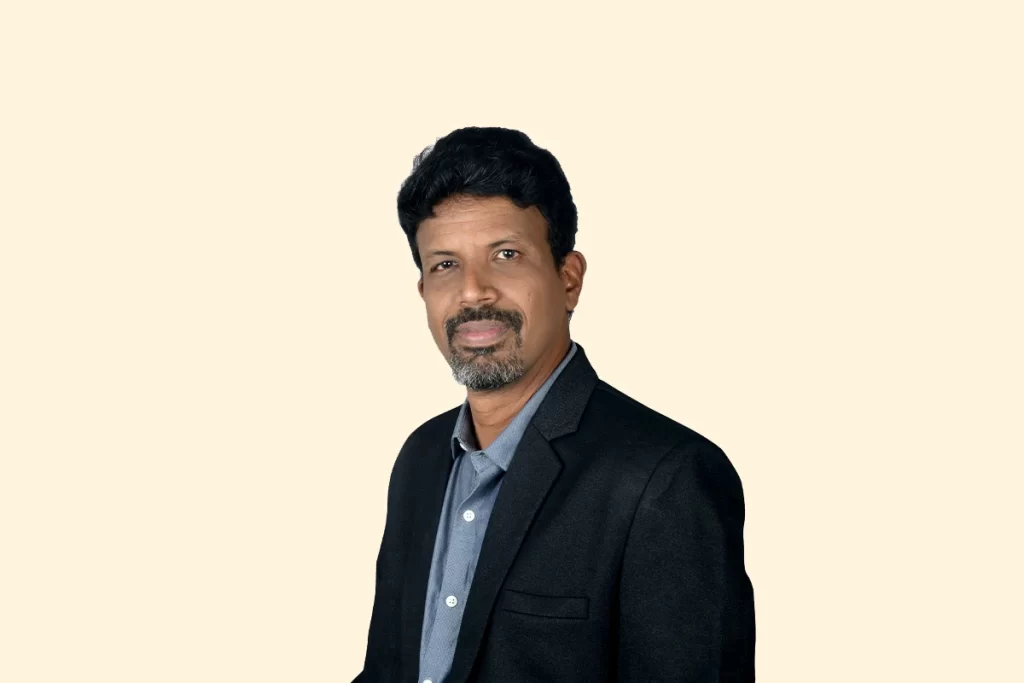
For years, IT in many organisations has operated in the shadows, often seen as a help desk, a problem-solver, or a cost to be managed. When Girish Nair took over as Vice President – IT at MF Utilities India Pvt. Ltd., he set out to rewrite that narrative. For him, technology was never just about fixing what broke; it was about unlocking opportunities, driving collaboration, and powering business growth. He introduced a transformative model: IT Business Partnering. Rather than functioning reactively, IT representatives were embedded within key departments like marketing, operations, and finance. Their role shifted from simply providing tools to co-creating solutions. For example, when marketing needed to track campaign effectiveness, Girish’s team didn’t just deploy software, they designed a system that collected the right data and translated it into actionable insights. The results were immediate. Productivity increased as automation replaced repetitive work, leaders made faster, data-driven decisions, and IT became a bridge across departments, breaking down silos and fostering collaboration. What makes this shift remarkable isn’t a flashy tool but a mindset change. Girish reframed IT from a cost centre into a strategic asset that shapes outcomes, aligns technology with people and processes, and drives long-term growth. At MF Utilities, he has transformed IT into a growth enabler, collaborator, and value driver, setting new benchmarks in leadership and innovation. Sharing with TradeFlock, he discloses more about his strengths and strategies that make him a leader in his field.
What early professional experience most influenced your leadership approach?
My early professional journey was less about one defining moment and more about a continuous process of learning, adapting, and refining. I was exposed to diverse work experiences that required me to constantly absorb new information,
"Cybersecurity often remains reactive, with organisations prioritising compliance over a culture of security, leaving them exposed to breaches and ransomware. Closing this gap requires scalable, cost-effective solutions, implementing governance frameworks like SEBI CSCRF, NIST, or ISO 27001, with regular audits and enforcement."
identify patterns, and integrate fresh insights with existing knowledge. This instilled in me the importance of a growth mindset— leadership, I realised, isn’t about having all the answers but about staying committed to learning and adapting. A key practice I developed was building a feedback loop. Every interaction became an opportunity to evaluate outcomes, measure effectiveness, and refine responses. Over time, this taught me that iteration is central to improvement. I don’t believe in perfection from the outset; instead, I value progress through constant refinement. This principle has shaped my leadership style, creating a culture of openness, feedback, and continuous improvement within the teams I lead.
What gaps exist in India’s IT infrastructure, and what’s your approach to bridging them?
India’s IT infrastructure is evolving rapidly, yet gaps remain in cybersecurity, talent development, and strategic alignment, particularly in SMEs, where limited budgets and legacy systems constrain innovation. Cybersecurity often remains reactive, with organisations prioritising compliance over a culture of security, leaving them exposed to breaches and ransomware. Closing this gap requires scalable, cost-effective solutions, implementing governance frameworks like SEBI CSCRF, NIST, or ISO 27001, with regular audits and enforcement. Talent is another challenge. While India produces a large IT workforce, technological advancements outpace traditional education and training. Bridging this requires continuous learning programmes, stronger industryacademia collaboration, and a focus on soft skills like critical thinking and problem-solving to prepare future leaders. Finally, many organisations still view IT as a support function. Modernising legacy systems through hybrid cloud, containerisation, and data-driven approaches, and embedding IT within business units, can transform technology into a strategic partner. By addressing these gaps, India can build resilient, agile, and future-ready IT ecosystems that drive sustainable growth.
Can you share your career breakthrough and a key IT transformation at MF Utilities?
A pivotal breakthrough in my career was my work in Software Asset Management (SAM). I was tasked with designing and implementing a comprehensive software usage policy, balancing technical, legal, and organisational requirements. The project involved draughting the policy, aligning departments, auditing compliance, and addressing gaps. What made it defining was that it went beyond rules; it built alignment across the organisation through communication, training, and collaboration, blending technical expertise with interpersonal skills. At MF Utilities, I experienced another breakthrough in a different context. MF Utilities being a Mutual fund industry initiative a startup with no to profit, you’re often operating with limited budgets and a small team. This forces you to be innovative and find creative solutions. Empowering the team to innovate and take ownership allowed us to build efficient, sustainable systems aligned with MFU’s mission, reinforcing that true leadership lies in creating an environment where people feel trusted to contribute meaningfully
What’s the most valuable advice you’ve received, and how do you pass it on?
The best advice I received was to commit to continuous learning, because in IT, static knowledge becomes obsolete quickly. Staying curious, adaptable, and open to new ideas strengthens not just expertise but also problem-solving and critical thinking. I pass this forward by encouraging young leaders to embed business context early, understanding the “why” behind the “what”. I mentor them to develop mindset as much as skillset—cultivating curiosity, empathy, and ownership. I stress outcome-based thinking, focusing on problems solved rather than tools used, and I remind them that failures are valuable lessons that fuel resilience and long-term leadership growth.
Featured Magazine -