The Visionary Shaping India’s Skilling Revolution
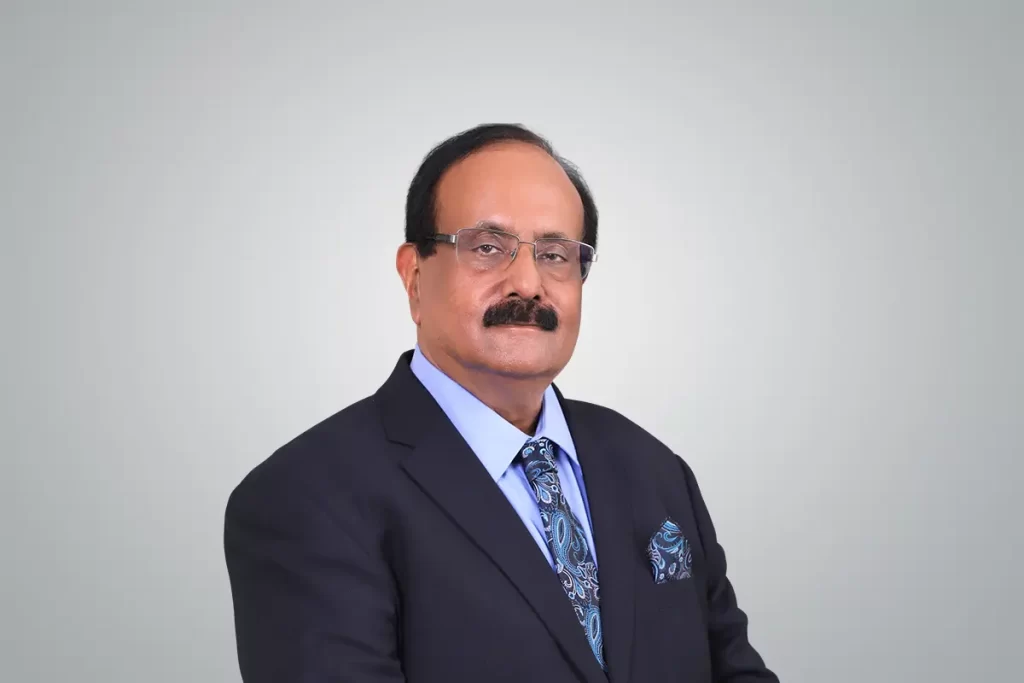
Rajiv Mathur
Chief Executive Officer
The Visionary Shaping India’s Skilling Revolution
Rajiv Mathur
Chief Executive Officer
SkillEd India powered by KEDMAN
When India needed a visionary to turn skill development into a national movement, Rajiv Mathur stepped in—combining the rigour of corporate boardrooms, the reach of public policy, and the heart of social impact in one mission. His career moves have never been resets; they are extensions of the same mission, taking proven systems to a larger canvas across corporate, public, and social roles. Today, as CEO of SkillEd India powered by KEDMAN, he continues to build capacity for a global workforce. Starting with NIIT, CMC Ltd, Tata Infotech, and Microsoft, Rajiv honed programme design and operational discipline. At NSDC, he extended this foundation to architect the national skilling ecosystem—creating 38 Sector Skill Councils, developing 2,200+ National Occupational Standards, and launching the STAR scheme, certifying one million in year one. He led vocationalisation across 9,000+ schools and MHA’s UDAAN in J&K. Internationally, he represented India in Australia, New Zealand, the UK, Canada, the US, China, the UAE, Saudi Arabia, and Qatar—experience, particularly in the Gulf, that now informs collaborations. At SkillEd India, Rajiv advances an EdTech ecosystem focused on healthcare, green mobility, and higher-education integration. The KEDMAN ecosystem spans advanced multi-skill centres, national hospital systems, major universities, and technical training labs, reinforced by the Skill India Digital Hub (SIDH), Reliance Academy Future Skills Portal, and SIDH-enabled certifications. A governance model anchored by a central PMU ensuring curriculum integrity and quality assurance, supported by specialised vertical leads and unified monitoring systems, keeps scale disciplined and outcomes measurable. Aligned with Viksit Bharat @ 2047, these are, as Rajiv says, platform plays by design, built to endure across cycles, where innovation meets lasting impact. Rajiv shares more about himself in this exclusive interview with TradeFlock.
"As we expand vocational education domestically and prepare our youth for global mobility, a greater focus on localised adaptation, multilingual delivery, and culturally sensitive pedagogy is essential."
From Sweden to the UAE, what insights can India adopt in education and skilling?
The first lesson is that culture shapes pedagogy. In Sweden, the Kunskapsskolan model prioritizes self-directed learning and trusts the learner’s agency, while in the UAE and Saudi Arabia, skilling initiatives are closely aligned with rapid national transformation agendas like Vision 2030. These experiences highlight a simple truth: one-size-fits-all approaches rarely work. Success comes from adapting core educational and vocational frameworks to local cultural expectations and societal goals.
The second lesson is the value of co-creation. International collaboration isn’t about exporting an Indian model as is; it’s about designing solutions with local stakeholders, respecting language, regulatory frameworks, and labour market priorities.
For India, the implications are clear. As we expand vocational education domestically and prepare our youth for global mobility, a greater focus on localised adaptation, multilingual delivery, and culturally sensitive pedagogy is essential. By embedding these practices, we can make our skilling ecosystem not just nationally relevant but globally agile, equipping learners to thrive across borders while strengthening India’s international collaborations in education and workforce development.
Which of your initiatives has delivered the biggest social impact, and how?
Our most transformative work has been platform-led, multi-sector interventions, especially through the creation and operation of multi-skill centres across multiple locations with partners such as Honda, Sony India, Mercedes-Benz, and AMP Motors. Each centre is customised to local needs, delivering training in high-demand sectors and bringing industrygrade skills directly to the communities that need them most.
The impact is visible across four key areas. In healthcare, programmes like Honda Project Pragati and Sony-Amrita centres train and place over 10,000 youth annually, while initiatives such as Getinge’s critical neonatal nurse upskilling strengthen existing hospital staff. In automotive, technician programmes and EV labs embedded in centres and universities prepare India’s workforce for both ICE vehicles and the emerging electric mobility sector.
In higher education, future-skills programmes have been integrated into 78 universities and over 1,600 affiliated colleges, reaching over 15 lakh students, with more than 2.5 lakh enrolled via digital portals, earning certifications and academic credits.
In B2B EdTech, industry-aligned content powers corporate and CSR programmes for Bajaj Auto, Adobe, GIZ Germany, Honda, Sony, and Mercedes-Benz, ensuring quality, scale, and measurable outcomes.
These initiatives are ecosystem enablers, designed for sustainability and aligned with Viksit Bharat @ 2047, creating a skilled, competitive, and globally mobile workforce.
What leadership challenge tested you the most, and how did you tackle it?
The most complex leadership challenge at SkillEd India was scaling multiple high-priority verticals simultaneously while integrating them into a cohesive institutional framework.
In CSR Excellence, we launched skill programmes across healthcare, automotive, retail, beauty & wellness, logistics, apparel, renewable energy, industrial safety, and future skills, delivered via multi-skill centres, 80+ hospitals as training hubs, and partnerships with 78+ higher education institutions.
On the international front, we designed large-scale skilling initiatives in Saudi Arabia and Thailand, navigating regulatory, linguistic, and sectoral complexities.
We also built B2B EdTech capabilities, creating a SCORM-compliant digital content engine and a boutique consultancy advising skill universities, sector councils, and multilateral organisations like GIZ Germany.
This was achieved through a layered governance model, combining central oversight, vertical leads, and decentralised teams, balancing discipline with local agility to ensure quality and scalability across diverse operations.
What setback taught you the most about leadership at the intersection of policy, technology, and society?
One of my most instructive setbacks was during the STAR scheme rollout at NSDC. The programme scaled extremely fast—one million certifications in the first year, but our operational machinery for tracking outcomes, preventing duplication, and linking learners to industry was still catching up. Ambition raced ahead of infrastructure, creating friction and risk.
The lesson was profound: speed without structure is fragile. I realised early that processes, governance, and system design must be prioritised even if it slows initial momentum. Today, every initiative I lead, spanning CSR, higher education, and international skilling, places operational rigour at its core. It also shaped how I think about impact. True leadership balances ambition with durability. Scaling responsibly requires patient systembuilding, robust processes, and a commitment to creating outcomes that endure. That mindset now informs not just the programmes I manage but also the teams I build and the technologies I integrate, ensuring growth is both meaningful and sustainable.
What leadership legacy matters most to you?
I hope to be remembered as a builder of enduring capacity, someone who created frameworks, partnerships, and delivery ecosystems that continue to advance the nation’s skilling agenda long after their launch. At NSDC, for example, the 38 Sector Skill Councils and 2,200+ National Occupational Standards I helped establish still shape curriculum, assessment, and certification across India.
What key advice do you give aspiring leaders seeking to drive meaningful change in education?
My advice to aspiring leaders is to move beyond visibility and focus on building resilience into the systems they create. Education and skilling are long-term endeavours, not short sprints; they require structures that can adapt, scale, and sustain impact well beyond any single project or leader. True leadership is measured by the platforms you leave behind, not the initiatives you complete. The goal is to develop scalable, replicable, and self-sustaining systems that combine strong curricula, effective delivery, industry engagement, adaptive technology, and robust governance.
This means designing learning frameworks that meet today’s needs while preparing learners for tomorrow’s opportunities, alongside delivery systems that can expand reach without compromising quality. Strong industry linkages ensure that skills translate into meaningful employment, while technology personalises learning and widens access for diverse learners.
Underpinning all of this is sound governance. Credibility, transparency, and trust are essential to ensure programmes endure and grow responsibly. Leaders who embed these principles are not merely running initiatives; they are creating ecosystems that provide lasting value to learners, communities, and industries. To me, the truest measure of leadership in education is the ability to design systems that outlive individual projects or personalities, generating sustainable, meaningful change across generations.
"Education and skilling are long-term endeavours, not short sprints; they require structures that can adapt, scale, and sustain impact well beyond any single project or leader."
What is your strongest leadership trait, and which one required the greatest growth?
I value systemic thinking most — the ability to integrate technology, partnerships, and delivery into one cohesive model. It allows a single platform to serve a rural healthcare trainee, power an EV lab in a city, and embed future skills into higher education, while supporting B2B and CSR programmes.
The trait I worked hardest to develop is patience in building lasting institutional capacity, uniting SMEs, designers, tech specialists, and project leads into high-performing teams. This effort created a bilingual, SCORM-compliant digital content pipeline, ensuring scalable, sustainable impact across corporate, CSR, and international skilling initiatives.
Featured Magazine -