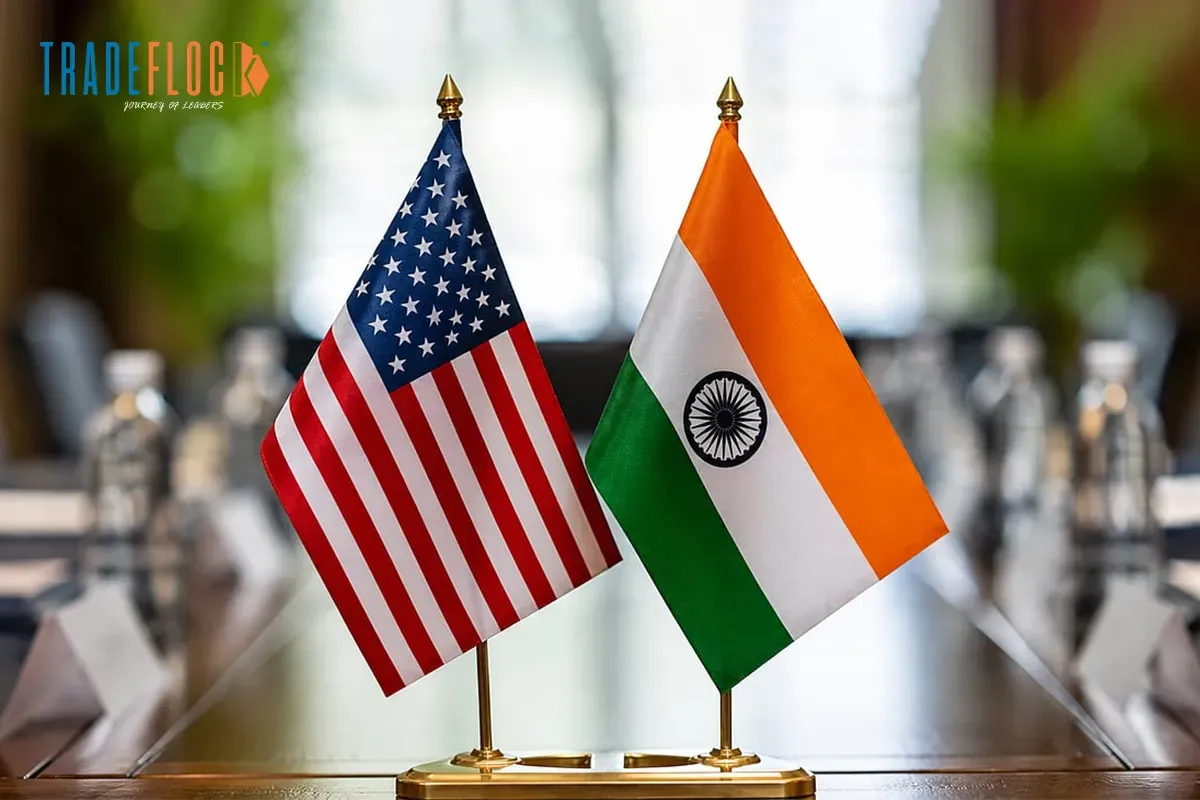
India and the United States have initiated a very important four-day session of trade negotiations in the capital, New Delhi, to finalise details of an interim trade agreement between the two nations. These negotiations are being conducted from June 1 onwards, with India’s chief negotiator, Darpan Jain, heading one end while the US chief negotiator, Brendan Lynch, leads the other. As per the reports issued by the Ministry of Commerce, both sides will work on concluding the interim agreement as well as holding further talks regarding issues such as market access, non-tariff barriers, customs facilitation, investments, and economic security cooperation, among others.
In the American tariff system, discussions have led to several adjustments, prompting both nations to review certain aspects of the deal. In the past, both nations have agreed to the terms, which include lowering of tariffs on some Indian exports and greater market access for specific American products. However, the recent policy change within the US has led to a review of the terms of the deal. Within the proposed deal framework, India plans to lower tariffs on various American industrial and agricultural products and to buy more American energy products, aeroplanes, and technology equipment in the years to come.
Read More: India’s Engineering Goods Exports Grow Despite Crisis
The recent negotiation session comes after the earlier sessions that were conducted in April in Washington and marks another step towards closer economic relations between the two nations. It is expected by trade analysts that the result of these negotiations will impact bilateral trade, investments, and cooperation among various industries. During the 2025-26 financial year, the United States continued to hold its position as the second-largest trading partner of India. Bilateral trade still holds great significance for both nations. The current negotiations are expected to facilitate a fruitful deal amidst changing global trade scenarios.