Designing Healthcare’s Future
Jared Zimmerman
SVP, Global Head of Product Design, Research & Innovation
Innovaccer
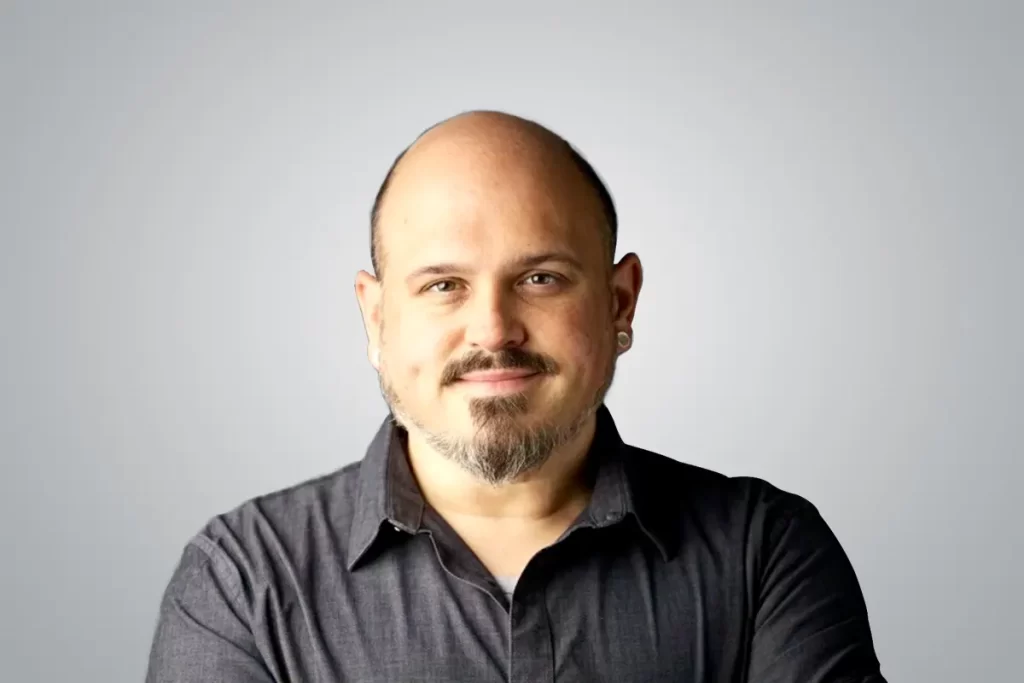
Designing Healthcare’s Future
Jared Zimmerman
SVP, Global Head of Product Design, Research & Innovation
Innovaccer
Hospitals and healthcare systems generate vast amounts of data, yet every delay, misread, or gap can have a profound impact on lives. In environments this complex, clarity is rare and desperately needed. Turning fragmented information into actionable insight is a challenge most avoid, but Jared Zimmerman thrives on it. Over his career, Jared has led transformative design and research initiatives at some of the world’s most influential organizations. At Google, he directed global UX teams for Search and Google Assistant, creating systems that scaled to millions of users. He focused on embedding clarity, consistency, and human-centered design into every interaction. At Meta, he shaped AI and AR product strategy across Meta’s family of products – including Facebook, Instagram, Oculus, Portal, and WhatsApp – building frameworks for responsible AI that balanced trust and automation. At Wikimedia, he established the foundation for design and research in one of the world’s largest information ecosystems, scaling teams, processes, and research programs that support billions of users. Today, as SVP, Global Head of Product Design, Research, and Innovation at Innovaccer, Jared leads global teams designing AI-powered tools that unify healthcare data, improve outcomes, reduce inefficiencies, and enable real-time clinical decisionmaking. Predictive risk stratification, identifying who is most at risk, and population health management, which improves care across groups, are key components of his work in transforming how care is delivered at scale. During an exclusive interview with Tradeflock, Jared discusses how curiosity, trust, and human-centered design continue to drive innovation across the healthcare and technology sectors.
Why did you transition from Google and Meta to Innovaccer, and what factors guide your career?
I joined Innovaccer because they work towards fixing real problems in healthcare. At Google, Meta, and Wikimedia, I learned to build at scale, guide communities, and think in systems—but those lessons were only preparation. There, design could make you stand out; here, it can prevent missed care, reduce clinician burnout, or improve patient outcomes. That responsibility drives me every day. I am drawn to the space where people, systems, and rules intersect—where thoughtful design can create real change. Along the way, my path has been defined by tackling meaningful problems and growing the right people to solve them, because impact comes from both ideas and the people who bring them to life.
What’s your biggest challenge leading design at Innovaccer?
Healthcare is one of the hardest systems to design for. The challenge is not just serving users but aligning doctors, payers, patients, rule makers, and technical staff, each with their own goals and language. Even when we agree on the goal, the path is rarely clear. My experience in large, complex organizations taught me to navigate confusion, piece together perspectives, and build trust. At Innovaccer, I slow down when others rush, ask simple questions to uncover hidden assumptions, and create space for difficult conversations. Every decision is guided by one thought: design that shapes lives.
How do global healthcare trends shape your product design?
Even though Innovaccer focuses on U.S. healthcare, we learn from systems worldwide. Value-based care, which rewards better outcomes instead of more services, guides everything we build. Rules and policy set the edges of what is possible—data sharing, government programs, and value-based models act as guardrails, not roadblocks. We design tools that help people deliver the right care effectively and use AI to support the work, because insight matters only if it improves outcomes and drives growth. Broader trends toward coordinated, wholeperson care are reshaping expectations. That is why we design not just features, but connections and continuity.
How are you using AI and new technologies in your role?
We embrace new technologies only when they truly add value. AI can surface insights, reduce mental load, and take on repetitive tasks—but only if people trust it. In healthcare, clarity and explainability matter as much as speed, because every choice can touch a life. My role is about more than the tech itself; it’s about placing it where it helps most, protecting human judgment, and anticipating the cost of mistakes. I define guardrails, prevent bias, and simplify complexity. Partnering with AI toolmakers lets our teams focus on higher-level challenges, shifting from builders to architects. I lead with one thought: design that empowers people and shapes lives.
"When you give attention and trust to people and their craft, remarkable things happen."
What inspires your leadership outside work?
I love watching how things fit together and where they stumble, whether it’s a recipe in my kitchen or a team at work. This curiosity shapes everything I do. Outside of work, I engage in hands-on activities through ceramics, woodworking, ikebana, and fermenting foods like kimchi. Focusing on one tangible thing clears my mind and helps me maintain a balanced pace at work. As a leader, I care more about people than output. I trust first and give space to act. I lead with trust and create with purpose.
Featured Magazine -