Purpose Over Process
Jennifer Loh Drysdale-Banks
Global Human Resources Director
Having started her career in sales and marketing, Jennifer Loh Drysdale-Banks’ journey to becoming the Global Human Resources Director at Gulf Oil Marine Ltd is anything but conventional. Her transition from the fast-paced world of sales to HR may seem like an unexpected shift, but for Jennifer, it was the natural progression of a desire to make a deeper impact on people and organisational culture. While sales and marketing provided her with the thrill of immediate business results, she found herself drawn to shaping the long-term development of individuals and teams, a passion that led her to HR. What sets Jennifer apart in her HR leadership is her ability to merge her background in sales and marketing with HR strategies. She approaches HR through a business lens, understanding stakeholder mindsets and effectively communicating across functions. This perspective has allowed her to view HR as more than just an administrative function; it’s a strategic enabler of organisational growth and transformation. Jennifer’s defining moment came during a project in which she worked closely with the HR team on change management. It was there that she realised the power of culture, leadership, and communication in driving successful transformation, sparking her full commitment to HR. Since then, she has equipped herself with further education, certifications, and hands-on experience to evolve Gulf Oil Marine’s HR function into a strategic partner within the company. Among her proudest achievements at Gulf Oil Marine, Jennifer led an organisational change where she transformed a compliance-driven culture into a people-powered engine, where employees were not just managed, they were activated, by bringing them all together through various and regular open communications with HR and leaders, investing in employees’ professional development & holistic wellbeing, and implementing scholarships for high performers. As such, employees were unleashed and empowered. The result? Engagement soared, performance escalated, all of which led to the business skyrocketing to a level which the company has never accomplished before ever. All these were accomplished not by pushing harder but by creating a culture where people could bring their boldest, most capable selves to work. More than anything, Jennifer is committed to building a culture where every employee feels valued, enabled, and heard, regardless of their culture, background or location. Through her leadership, Gulf Oil Marine continues to thrive, guided by the vision of a people-first strategy. In this candid interview with TradeFlock, Jennifer speaks more about her work.
HR needs to be highly agile and versatile in today’s VUCA environment, as well as culturally astute, for us to be effective partners with various departments to be truly successful
How do you balance business goals with people priorities?
That’s the essence of strategic HR. It’s not eitheror — it’s about alignment. I always start with the business strategy: Where are we going? What capabilities do we need? Then, I work backwards to design people strategies that enable that growth — whether it’s workforce planning, talent development, or cultural alignment.At the same time, people are not just “resources”. They are humans with aspirations, fears, and potential. So, we ensure that policies and programmes reflect purpose, flexibility, and empathy. The key is to build trust — when people trust leadership, they go the extra mile.
Gulf Oil Marine operates globally. How do you ensure consistency in people practices across cultures?
That’s a great question. We operate across numerous countries, so cultural sensitivity is critical. As such, the ’one size fits all” approach logically does not work for us. Rather, we focus on shared principles — transparency, inclusion, and accountability. We localise the practices where needed. For example, career development might look different in China versus Europe, and benefits in India may differ from those in the UK. We encourage our leaders and managers to bring in cultural context while staying true to the company’s core values. What unites us is a shared purpose and aligned leadership behaviour.
As younger generations like Gen Z enter the workforce, how are you managing shifting workplace expectations across growth markets?
Managing a multigenerational workforce is about aligning diverse expectations while valuing what each group brings to the table. At Gulf Oil Marine and in my previous roles, I’ve led teams with up to four generations working together. While Gen Z is often labelled as wanting quick wins or constant praise, I’ve found these assumptions limiting. What they truly seek is mentorship, growth, and purposeful work. Being from Gen X, I’ve learnt that a top-down “just follow” style no longer works. So, we engaged with younger talent early through campus recruitment and open conversations. We also equipped our managers with coaching skills and encouraged hybrid work models that trust employees to deliver results with discipline. In my previous life, one Gen Z employee told me, “This company invests in my growth, and that gives me purpose”—and that’s the impact we aim for. We’ve fostered cross-generational dialogues and built a culture of trust, empowerment, and continuous learning. That’s how we’ve turned generational differences into a strength rather than a challenge.
Was there a particular book, mentor, or experience that significantly shaped your leadership journey?
Not just one, but several leaders have influenced me over time. I’ve drawn inspiration from visionaries like Dave Ulrich, whose HR models continue to shape global practices, and Simon Sinek for his insights on purposeful leadership. Jack Welch’s bold approach to performance management also left an impression—it taught me the importance of maintaining high standards in a sustainable business. And of course, Steve Jobs, for his clarity of vision and innovation. Rather than follow any one model, I draw the traits that resonate with me and adapt them to my own values. That’s helped me become a leader who can both drive business results and inspire people.
What are your professional aspirations for the next five years?
In the next five years, I aim to step into a Chief Human Resources Officer or Chief People Officer role. It’s not about the title—it’s about expanding my ability to influence how people and business strategies intersect. At Gulf Oil Marine, I’m already steering a performance-driven and purpose-led culture through diverse strategies across all levels, which have resulted in our currently thriving business. But my goal is to evolve from initiatives to a more significant measurable impact—where HR plays a critical role in business outcomes and has a permanent seat at the decision-making table. I want to enable organisations to see that HR is not just a mere support function; HR is an imperative strategic driver of the success of every business.
What’s your approach to building an effective HR team and function?
It begins with a mindset. I look for HR professionals who are not just process-orientated but also business-savvy and people-centric. The best HR teams are those that ask, “How does this help the business succeed?” and “How does this impact our people experience?” I’ve also focused on upskilling and reskilling. HR is evolving fast — data analytics, digital tools, and hybrid work models that require new competencies. We’ve invested in training, cross-functional projects, and mentoring to facilitate our HR team to be progressive. The same is also implemented with other departments, enabling Gulf Oil Marine to be future-ready in its continuous evolution. Finally, I believe in collaboration over silos. HR doesn’t exist in isolation. HR needs to be highly agile and versatile in today’s VUCA environment, as well as culturally astute, for us to be effective partners with various departments to be truly successful.
What’s your view on the evolving role of HR, especially post-pandemic?
The pandemic elevated HR to the C-suite like never before. We became central to business continuity, employee wellbeing, remote work, and culture building. And that spotlight hasn’t dimmed. Today, HR is expected to be a strategist, a mentor, a data analyst, and a storyteller — all at once. The future of HR is dynamic, techenabled, and yet deeply human. I also think there’s a stronger emphasis now on purpose and mental wellbeing. People want more than a pay cheque — they want meaning, tractability, and connection. Organisations that understand this will thrive.
How do you empower your team to drive the initiatives globally?
With a lean HR team of just five people, including myself, overseeing more than 12 countries, my role is to focus on the big picture—aligning HR strategy with business goals for tangible results. That starts with building a capable team who understand what strategic HR truly means. Once that foundation is in place, I provide the vision and direction—but I don’t micromanage. I tell my managers, “Here’s where we need to go—now show me how you’ll get us there.” They come back with their own concepts, frameworks, and business cases. It empowers them to lead, think critically, and build solutions tailored to regional needs. In doing so, they learn to manage across cultures, own their strategies, and drive impact independently. I provide the roadmap—they fill in the journey. And that’s what makes it scalable and sustainable.
Being a global HR director comes with immense responsibility. How do you find balance or unwind in such a dynamic industry?
For me, balance isn’t about fixed hours, it’s about fulfilment. My schedule is intense, but I genuinely enjoy investing in myself. I don’t have children and lead a fairly independent life, which gives me the space to focus on continuous growth. Last year, I pursued accreditations like SHRMSCP, IHRP-SP, and Harrison Assessment Profiler, as well as Luma Human-Centred Design Thinking Practitioner — often studying late into the night. It’s not just about adding credentials; it’s about becoming a more profound HR leader and coach who can influence others on their respective paths towards success, translating to constantly evolving and sustainable business performance. This kind of personal development energises me. Of course, I do make time for coffee with friends and a social life, but self-improvement is what truly fuels me. That’s how I stay balanced—by doing what brings me purpose and joy.
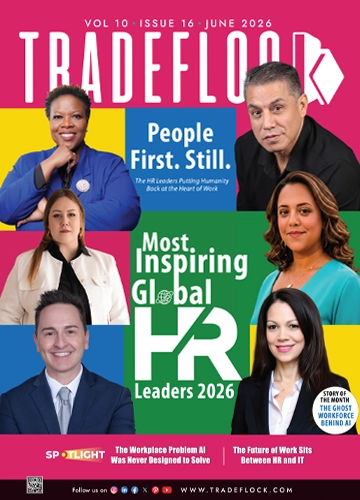
Featured Magazine -