

Reimagining What Legacy Education Can Achieve
Rajesh Pasari
Managing Director
Macmillan Education India
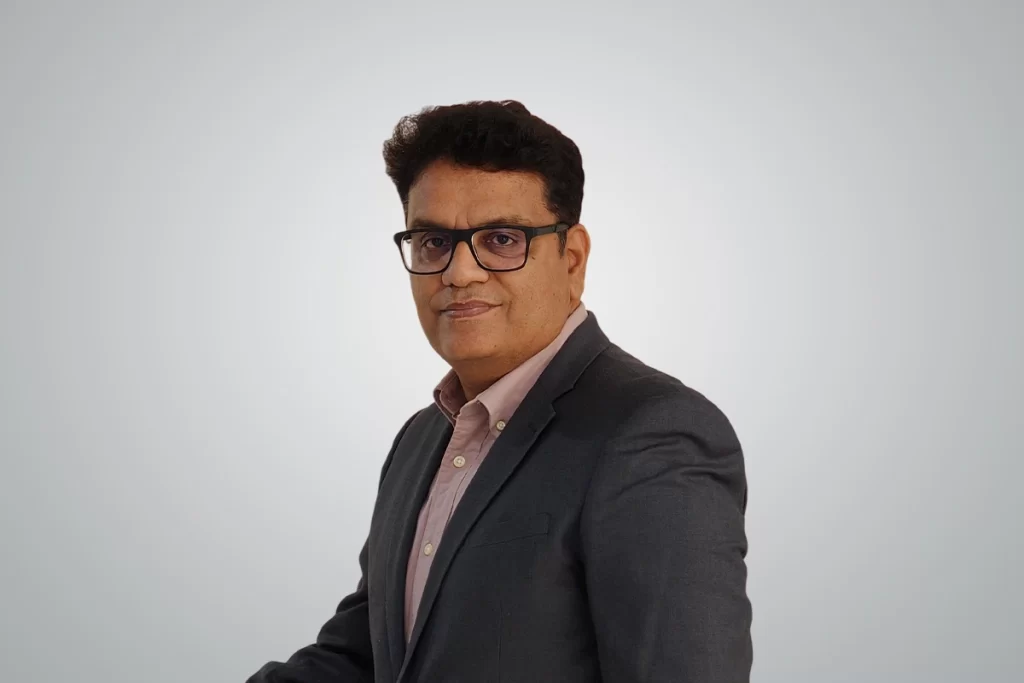
Reimagining What Legacy Education Can Achieve
Rajesh Pasari
Managing Director
Macmillan Education India
India’s education ecosystem has long been anchored in trust built through credible content, strong publisher relationships, and established classroom practices. That foundation is now evolving into a more demanding phase where learning must be measurable, adaptable, and aligned with modern classroom realities. At Macmillan Education India, this shift is being driven with clarity, intent, and long-term impact in focus.
At the centre of this evolution is Rajesh Pasari, Managing Director, Macmillan Education India, who leads operations across the South Asian region, spanning schools, professional education, and language learning. With nearly three decades of experience across finance, operations, and strategy, including leadership roles at Pernod Ricard India, Spencer’s Retail, and NetAmbit after beginning his professional journey with Marico, Rajesh brings a cross-industry perspective to education transformation, ensuring Macmillan’s legacy translates into real-world impact.
His leadership reframes legacy as a platform for scale, structure, and reinvention. “With a distinguished career spanning strategic finance, enterprise leadership, and business transformation, Rajesh has guided the transformation of a 130+-year-old institution into a future-ready learning partner, closely aligned with classroom engagement, teacher enablement, and learning outcomes.
Rajesh blends financial discipline with educational purpose. Under his stewardship, Macmillan has evolved into a learning organisation defined not only by financial performance but also by teacher empowerment, student engagement, and long-term societal impact. Rajesh’s ability to translate structured thinking into educational outcomes has strengthened the organisation’s capacity to scale meaningful change.
Rajesh shares further insights into his leadership approach in this exclusive interview.
What prompted your shift from finance to leading an education company?
My transition from finance to education was driven by a desire to create impact beyond numbers and quarterly performance. India’s evolving education ecosystem offered an opportunity to contribute at scale, shaping how learning is delivered and experienced. At Macmillan Education India, we redefined success beyond revenue to include teacher adoption, classroom engagement, and alignment with priorities such as National Education Policy 2020 and foundational learning frameworks.
Drawing on my finance background, my team and I introduced structured scenario planning, phased innovation pilots, and ROI-led decision-making to ensure both impact and sustainability. Leading a 130+ year-old institution also meant balancing legacy with forward momentum. My finance experience further helped bring commercial discipline and balanced decision-making into leadership, ensuring innovation and growth remain aligned with long-term sustainability.
What are your next digital priorities and key challenges?
At Macmillan Education India, we have shaped our digital strategy around one clear principle: technology must solve real classroom challenges, not add complexity to them. Supported by a purpose-driven leadership team, we have focused on building practical, scalable solutions for India’s diverse education landscape.
Our priorities include expanding blended learning platforms that integrate print, digital, and hands-on tools; strengthening teacher capability through NIPUN Bharat-aligned certifications and micro-learning modules; and advancing adaptive learning systems that personalise student journeys while helping educators identify learning gaps early.
Equally important is ensuring inclusivity at scale. We address infrastructure gaps through offline-enabled solutions, making digital learning accessible even in low-connectivity environments. Concerns around screen time are balanced with play-based and experiential learning, while modular, flexible content ensures relevance across India’s diverse boards and classroom contexts.
What key initiative modernised Macmillan while preserving its legacy?
Modernising a legacy institution requires both conviction and sensitivity. At Macmillan Education India, we have followed a deeply customer-centric approach, staying closely connected to schools, educators, and classroom realities. This has guided the evolution of our K–12 offerings into integrated, blended learning solutions that combine strong pedagogy with digital tools.
A key initiative in this journey is ALTURA (Advancing Learning and Teaching using Resources and Assessments), developed with IIT Delhi FITT. Now adopted across 600+ schools, it marks a shift from print-led models to outcome-driven learning ecosystems. Alongside this, our foray into robotics and coding reflects alignment with emerging learning needs. What remains constant is the trust built over generations, enabling educators to embrace new formats with confidence. Ultimately, education is about trust, and that trust is built over time through quality, consistency, and meaningful classroom impact.
What key achievement from your finance career still shapes your leadership today?
One defining achievement was leading a complex business restructuring that protected core talent while unlocking new growth avenues. It required a careful balance of analytical rigour and human sensitivity. This approach continues to shape my leadership. I rely on data-led decision-making, using real-time metrics to guide innovation and strategy. I also believe in phased risk management, where initiatives are piloted and scaled thoughtfully. Most importantly, a people-first approach remains central, with strong culture and engagement driving sustained performance at Macmillan Education India.
What does “sustainable education” mean to you in today’s environment?
Sustainable education, to me, is about building systems that endure academically, socially, and economically. It goes beyond products to create inclusive, equitable, and affordable learning experiences rooted in strong pedagogy. This means addressing foundational literacy, emotional development, and accessibility across geographies. Technology, including AI, plays an enabling role, always in service of learning outcomes.
At Macmillan Education India, this translates into inclusive solutions, responsible production practices, continuous investment in teacher training, and scalable models that work across both urban and emerging markets—ensuring long-term, meaningful impact.
Featured Magazine -

All Magazines-






Other Interviews-
- Gutti Malleswara Reddy-10 Best Tech Leaders in India 2026
- Rajesh Pasari-Best Education Leaders in India 2026
- Sinan Safaa Aboeless-Asia’s Best Business Leaders 2026
- Dr. Sandeep Chatterjee-Best Education Leaders in India 2026
- Dr Priya Madhavan-Most Impactful Women Leaders from Asia 2026
- Venkatesh R-10 Best Tech Leaders in India 2026
- Elaine Tan-Most Impactful Women Leaders from Asia 2026
- Kishan Dumpeta-10 Best CEOs in India 2026
- C S Jadhav-10 Best CEOs in India 2026
- T. Hariraj-10 Best CEOs in India 2026
