

Creating Real-World Impact Through Healthcare Research
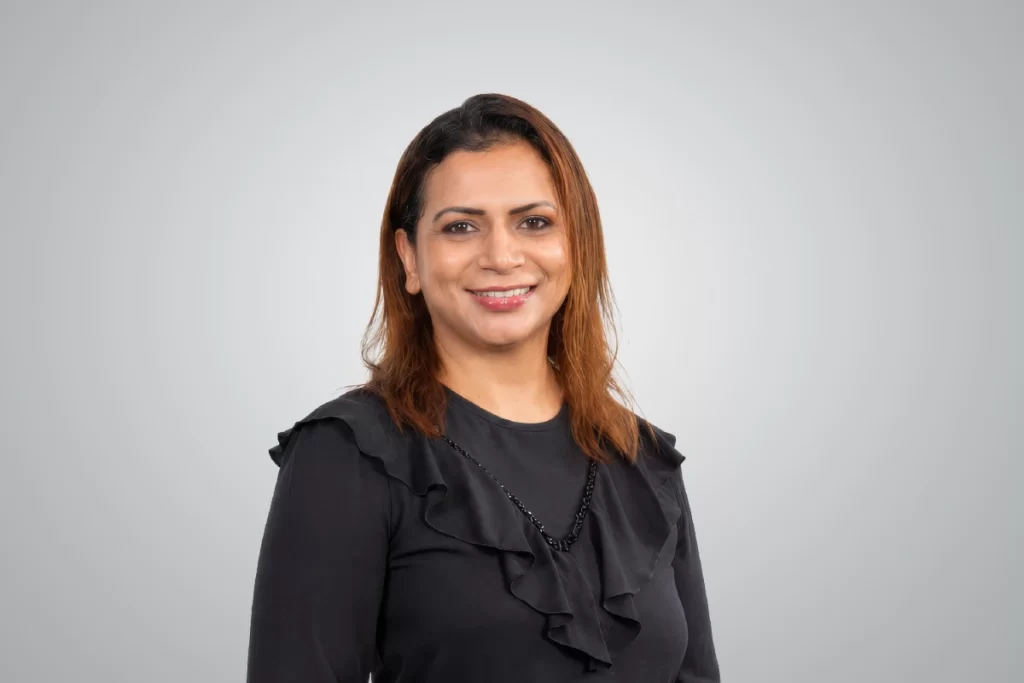
Dr Priya Madhavan
Associate Professor
Taylor’s University, Malaysia
Creating Real-World Impact Through Healthcare Research
Dr Priya Madhavan
Associate Professor
Taylor’s University, Malaysia
Driven by the convergence of Artificial Intelligence (AI), nanotechnology, digital health and precision medicine, the global healthcare ecosystem is undergoing a powerful transformation. As healthcare systems address rising antimicrobial resistance, ageing populations, and increasingly complex diseases, the focus is rapidly shifting toward translational research capable of delivering faster, smarter, and more accessible healthcare solutions.
For more than two decades, Dr Priya Madhavan has remained deeply engaged with this changing landscape, building a body of work that connects scientific research with real-world healthcare impact. From microbiology and infectious diseases to nanomedicine, advanced therapeutics, and digital learning ecosystems, her work reflects the growing integration of science and technology in modern medicine. As an associate professor at the School of Medicine, Faculty of Health and Sciences and Director of Digital Health and Medical Advancement Impact Lab at Taylor’s University, she leads interdisciplinary initiatives focused on developing precision-driven healthcare solutions with strong clinical relevance and long-term societal impact.
Having secured nearly RM 2.2 million in research grants from various governmental, institutional, industry, and external funding bodies throughout her tenure at Taylor’s University and a patent granted for an innovation recently, Dr Priya continues to shape the next generation of healthcare leadership across the region. In this exclusive interview with TradeFlock, she shares insights on AI-driven healthcare, women in STEM, translational science, and Asia’s growing influence in the future of global healthcare innovation.
How has technology transformed your approach to teaching and research over the past two decades?
Over the past two decades, my approach to teaching and research has evolved into a far more integrative, data-driven, and translational model. Technology has transformed how scientific questions are explored and answered. In teaching, I emphasise clinical reasoning, pattern recognition, and interpreting complex datasets to align learning with modern diagnostics.
In research, the integration of nanotechnology, bioinformatics, and advanced imaging has expanded my work toward understanding host-pathogen interactions at a systems level. Today, my focus lies at the intersection of microbiology, nanomedicine, and therapeutic innovation, where precision, scientific insight, and impactful problem-solving continue to shape healthcare research and discovery.
How are you integrating AI and digital platforms into healthcare research and education? What impact have you seen so far?
I integrate digital platforms and AI across education, research, and clinical translation. In teaching, digital tools create case-based learning environments that strengthen analytical thinking and clinical understanding. In research, AI supports formulation optimisation, pattern recognition, experimental analysis, and hypothesis generation, particularly in nanoparticle design and antimicrobial targeting.
Computational tools have accelerated the journey from concept to validation while uncovering deeper scientific insights. The most significant impact has been the combination of speed, precision, and improved scientific understanding. I view AI as a tool that enhances scientific intuition, critical thinking, and more informed decision-making in healthcare research.
What leadership approach do you follow that more people should adopt?
I lead with scientific curiosity rather than hierarchy, encouraging teams to question data, assumptions, and direction openly. This creates an environment where ideas can evolve freely and innovation becomes more meaningful. I also prioritise translational impact from the beginning, ensuring research remains closely connected to real-world healthcare applications.
Another important aspect of my leadership style is being comfortable with uncertainty. In scientific research, clarity often emerges through exploration, and creating space for intellectual risk-taking allows teams to think creatively, challenge boundaries, and pursue breakthrough solutions with confidence.
What has been the most defining challenge in your journey? What did it teach you about leadership?
One of the most defining challenges in my journey has been translating promising scientific findings into real-world healthcare applications. Moving innovations such as nanoparticle-based therapeutics from laboratory success to clinically viable solutions involves navigating regulatory complexities, funding limitations, interdisciplinary collaboration, and scientific scepticism. That experience reshaped my understanding of leadership.
I learned that leadership is grounded in resilience, clarity of vision, and long-term commitment to impact. It also reinforced the importance of building teams that combine technical excellence with shared purpose and belief in the mission. In science, leadership creates an environment where persistence and innovation thrive together.
How do you mentor women in STEM to become future leaders?
I focus on three important areas while mentoring women in STEM research: confidence, visibility, and ownership. I actively create opportunities for women researchers to lead projects, present their work, contribute to decision-making, and build professional visibility through conferences, authorship, and networking.
Over the years, I have mentored several postgraduate researchers who have progressed into leadership roles across academia, healthcare, and industry, which has been deeply fulfilling. I also encourage them to take ownership of their ideas with confidence and clarity.
Alongside professional development, I have open conversations about navigating structural challenges strategically. In my view, leadership development requires intentional mentorship, encouragement, and continuous opportunities for growth.
What opportunities in Asia’s healthcare future excite you most, and how is your work contributing to them?
Asia is entering a pivotal phase where healthcare challenges such as antimicrobial resistance, ageing populations, and chronic diseases are converging with rapid technological advancement. This creates exciting opportunities for innovative and accessible healthcare solutions.
What excites me most is the growing momentum around translational research, where academia, industry, and policy are increasingly aligning to address region-specific healthcare needs. My work focuses on nanomedicine and targeted therapeutics for infectious and neurodegenerative diseases, alongside commercialisation pathways and regional collaborations aimed at translating scientific innovation into meaningful healthcare impact across Asia.
Featured Magazine -

All Magazines-




Other Interviews-
- Sinan Safaa Aboeless-Asia’s Best Business Leaders 2026
- Dr. Sandeep Chatterjee-Best Education Leaders in India 2026
- Dr Priya Madhavan-Most Impactful Women Leaders from Asia 2026
- Venkatesh R-10 Best Tech Leaders in India 2026
- Elaine Tan-Most Impactful Women Leaders from Asia 2026
- Kishan Dumpeta-10 Best CEOs in India 2026
- C S Jadhav-10 Best CEOs in India 2026
- T. Hariraj-10 Best CEOs in India 2026
- Dr Lakshmipathy Ramesh Nagarajan-India’s 10 Most Influential Healthcare Leaders 2026
- Chetan Bipinchandra Shah-India’s 10 Most Influential Healthcare Leaders 2026
