

Scaling Operations Through Systems, Speed, And People
Chetan Bipinchandra Shah
COO & Director
Scaling Operations Through Systems, Speed, And People
Chetan Bipinchandra Shah
COO & Director
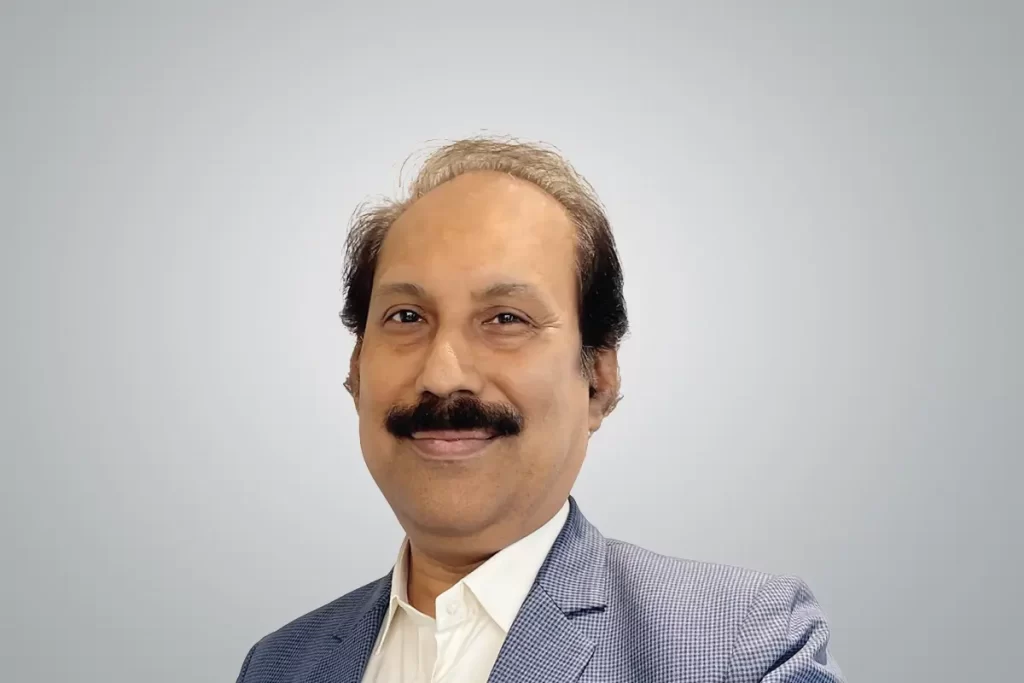
Few operations leaders spend their careers helping businesses scale precisely at the moments when systems are still being built from the ground up. Chetan Shah has done that repeatedly across the pharmaceutical and retail sectors for more than three decades. From working through the post-split rebuilding phase at Cadila Pharmaceuticals to establishing large-scale supply chain infrastructure at Reliance Retail during the early years of organised retail in India, and later leading global supply chain operations and integrations at Torrent Pharmaceuticals, his career has largely evolved around operational complexity, execution pressure, and organisational scale. Today, as COO & Director of Senores Pharmaceuticals Ltd., he oversees manufacturing, supply chain, technology, risk management, and strategic operations while helping shape the company’s next phase of growth. In an exclusive conversation with TradeFlock, Shah reflects on leadership, operational resilience, and the future of pharmaceutical manufacturing.
What experiences built your understanding of leadership across pharmaceuticals and retail?
The companies I worked with early in my career, GMM Pfaudler, Ingersoll Rand, and CADMACH, all exposed me to different manufacturing systems at a time when each of those businesses was finding its own operational footing. The real formation happened when I joined Cadila Pharmaceuticals after the business split, at a moment when the organisation was rebuilding itself almost entirely from the ground up. Over the following decade, I handled supply chain, manufacturing coordination, HR, international business, and cross-functional operations simultaneously rather than sequentially. That simultaneity was the education. Leadership, I came to understand, is less about authority and more about building systems and teams that remain dependable when everything is under pressure at once.
Tell us about the moment that most changed how you think about leadership under pressure.
One experience from the early phase of my pharmaceutical career still shaped how I think about leadership under pressure. We received notice of an FDA inspection of a plant that was operationally weak, visually unprepared, and working with almost no resources. We had less than two days. The easy response would have been to focus on what we lacked. Instead, I brought the entire team together and made everyone part of the solution. Employees across functions reorganised documentation, prepared systems, restored operational readiness, and repainted sections of the facility almost overnight. The audit was cleared. But the larger lesson outlasted that moment considerably. Organisations rarely fail first because of limited money or infrastructure. They begin to fail when people stop feeling a genuine sense of ownership over outcomes. The moment a team believes it is trusted rather than managed, performance changes completely.
“Once people believe they are trusted contributors rather than employees following instructions, they are capable of delivering changes entirely.”
How do you see AI and automation reshaping pharmaceutical manufacturing over the next decade, and what does that demand from future leaders?
The current phase of automation has already transformed pharmaceutical environments significantly through ERP systems, digitised monitoring, and automated packaging lines. What comes next will be more fundamental. Oral solid dosage manufacturing, which still relies largely on fragmented operational stages with multiple manual interventions between granulation, compression, coating, inspection, and packaging, will shift toward continuous, increasingly touchless operations over the next decade. Products will flow from dispensing to final packaging with minimal interruption. That is the technological shift. The leadership shift, however, is where the real challenge sits. Future leaders in this industry will need to combine deep operational expertise with genuine adaptability, technology literacy, and change management capability to guide people through transformation rather than simply deploying systems for them. Technology does not transform organisations. People do, and that will remain true regardless of how sophisticated the automation becomes.
You left Cadila for Reliance Retail at the peak of your pharmaceutical career. What made that risk worth taking?
I had reached a point where continuing inside the same operational model would have stopped my own learning entirely. Reliance was building organised retail at a national scale, and the infrastructure required to manage nearly 300,000 SKUs across thousands of stores and multiple warehouse networks in India was a level of complexity I had not encountered before. Retail operates at a fundamentally different speed from pharmaceuticals. Decision cycles are shorter, execution gaps surface immediately, and operational discipline cannot be maintained in quarterly reviews. It has to be held every single day. That environment pushed me beyond traditional supply chain thinking and taught me something pharmaceuticals never had to: how scalable systems are built under continuous, unforgiving pressure.
Pharmaceutical supply chains are under more pressure than most industries understand. Where is the real operational complexity hiding?
Most people outside the industry do not fully appreciate how complex production planning and supply chain management are in the pharmaceutical industry. A single product may require R&D batches, pilot batches, engineering exhibit batches, validation batches, and commercial batches, each carrying different compliance standards, testing protocols, and inventory structures. Even the same raw material may exist in multiple regulatory grades depending on the market it is meant for. Software systems improve visibility, but they still cannot fully synchronise R&D, manufacturing, procurement, quality control, inventory planning, and supply chain execution on their own. Daily operational reviews remain essential because demand fluctuations rarely wait for weekly reporting cycles.
Pharmaceutical products also operate under limited shelf-life conditions. Non-saleable or expired inventory often returns to manufacturers, making reverse logistics and destruction management major operational and financial challenges. At the same time, fluctuations in raw material and packaging costs continuously pressure manufacturers to maintain pricing within market expectations while protecting margins. The companies managing these pressures successfully are usually not the ones relying only on sophisticated technology, but those with strong cross-functional coordination and disciplined execution running consistently underneath the system.
Featured Magazine -

All Magazines-






Other Interviews-
- Dr Lakshmipathy Ramesh Nagarajan-India’s 10 Most Influential Healthcare Leaders 2026
- Chetan Bipinchandra Shah-India’s 10 Most Influential Healthcare Leaders 2026
- Dr Priyanka Bahl-India’s 10 Most Influential Healthcare Leaders 2026
- Prahalad Singh Patel-10 Best CEOs in India 2026
- Rakesh Gaur-10 Best CEOs in India 2026
- Dr Vijay Viswanathan-India’s 10 Most Influential Healthcare Leaders 2026
- Dr Atantra Das Gupta-India’s 10 Most Influential Healthcare Leaders 2026
- Subhashis Chakraborty-Best Corporate Leaders in India 2026
- Vipul Jambucha-Best Corporate Leaders in India 2026
- Jyotsna Kumar-Best Corporate Leaders in India 2026
