Building Customer-leads Operations
Bina Belani
Chief People Officer
Ascend Telecom Infrastructure
Building Experiences That Outlast Change
Bina Belani
Chief People Officer
Ascend Telecom Infrastructure
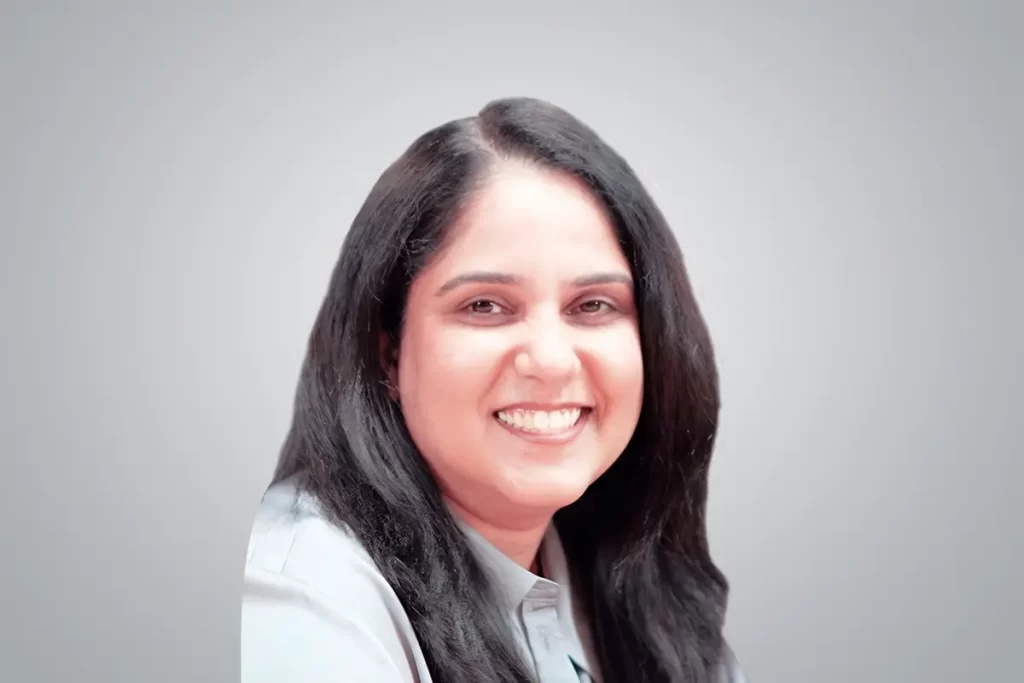
In every organisation, it is rarely the big perks that shape how people feel; it is the everyday experience — the conversations, the culture, the sense of being understood. As newer generations enter the workforce and discussions around wellbeing, balance and meaningful work grow louder, companies are realising that strong businesses are built on strong human experiences. In this evolving landscape, Bina Belani, Chief People Officer at Ascend Telecom Infrastructure, stands out as an architect of a people-first transformation. Her journey across Vedanta, Wipro, SLK and Jio Platforms shaped her belief that context and empathy matter as much as strategy, leading her to drive culture-building, change management, wellness programmes and leadership development at scale. Widely recognised for her impact, she shared her experiences and vision with TradeFlock in an exclusive conversation.
Your career has spanned large, diverse organisations. How would you describe your professional journey and the milestones that shaped you along the way?
When I think of my journey, it doesn’t feel like a straight path; it feels like a series of chapters that shaped me in different ways. Vedanta was the longest, most intense first chapter, in which HR wasn’t a department; it was a lived experience across compensation, talent, change management, leadership hiring, and even navigating the emotions of a mining shutdown. Implementing SAP across the group in six months and managing change after an acquisition taught me what scale and responsibility feel like. Wipro and SLK added another dimension, in which HRBPs’ work became more strategic, culture became more intentional, and wellness became a priority—especially during COVID. Jio added pace of tech, hackathons, engagement calendars, employee pulse and innovation-focused people practices. Each transition didn’t just add experience; it changed the way I understood people and the unseen forces that hold organisations together.
In nearly two decades of HR experience, what shifts have you observed, and what must HR focus on to stay relevant today?
HR hasn’t changed uniformly across sectors, but what has definitely shifted is the expectation from the function. Earlier, some parts of HR could survive as routine work, but technology has eliminated that comfort zone. Today, you cannot stay relevant if you don’t understand how industries are evolving, how talent behaves, what compensation trends look like, and how AI is reshaping work. Our role is to simplify an employee’s life, not make them fill out more forms or chase paperwork. At the same time, leadership depends on HR to translate business goals into clear outcomes, build capability and identify future successors. HR is no longer only about people; it is also about data, competitiveness, cultural intelligence and fast, informed decisionmaking. Continuous learning is the only sustainable way to stay relevant.
Work–life balance has become increasingly important in recent years. What does balance mean to you, and how do you try to maintain it?
Balance is not a constant state; it shifts with workload, personal priorities and health. There are times when work demands more, and times when the body and mind remind you to slow down. Over the years, I’ve realised balance requires self-awareness rather than a rigid schedule. Each person’s rhythm is different. Some thrive in long, intense days, while others work best with structured hours and focused bursts. For me, discipline plays a big role. I try to manage distractions consciously, return to focus quickly after interruptions and create small habits that keep me centred. Breaks, routines, exercise and mindful pauses help. Ultimately, balance is about becoming a better version of yourself—mentally, physically and professionally—so you can deliver with clarity rather than exhaustion.
You’ve moved across mining, tech and telecom industries with very different cultures. What challenges did you face during your transition, and how do you approach new roles today?
Moving between mining, tech and telecom teaches you humility very quickly. No two organisations behave alike, and nothing you’ve done before can simply be pasted again. So whenever I step into a new role, I consciously leave behind the idea that I “know” what works. I begin by understanding the business rhythm, the unwritten rules, how decisions have been shaped over time, and what people silently expect from HR. I speak to teams across locations because real context comes from them. Speed matters too — today you can’t take a year to understand ten offices. But speed should come from clarity, not assumptions. So I listen first, absorb quickly and only then decide. That balance of open-mindedness and experience helps me transition smoothly across very different industries.
Across your career, you’ve led wellness programmes, talent reviews and culture-building initiatives. Which initiatives created a meaningful difference for employees?
The initiatives closest to my heart are the ones that quietly changed how employees felt about work. At Wipro, the talent review process helped identify future leaders much before they realised it themselves, and we invested in them through coaching and development. At SLK, our “Heal” programme became a genuine support system with yoga, aerobics, counselling and financial wellness — it mattered even more because COVID had changed everyone’s emotional baseline. At Jio, hackathons, tech quizzes and expert-led sessions gave tech teams space to innovate and feel recognised. Many of these initiatives don’t produce perfect one-to-one metrics; humans don’t behave that linearly. But they create a workplace where people feel seen, supported and guided, and that emotional shift often becomes the strongest driver of performance.
Alongside your HR journey, you are also an author. What inspired you to write, and what direction do you see your creative pursuits taking next?
Writing has always been a private space for me, something I turned to long before I thought of publishing. Most of my earlier pieces lived on scraps of paper or scribbled notebooks that I never intended to show anyone. One day, I simply wanted to see if I could take those emotions and shape them into something complete, which led to Lighthouse Chronicles. Publishing it was not about scale; it was about courage. Sharing your inner world is never easy. My family and friends were my first readers, and their encouragement made the experience meaningful. Now I want to write more, including about HR, because the function deserves honest storytelling. I’m also working on a self-help book, Power 100, built around simple daily practices that help people slow down and centre themselves in a very demanding world.
Featured Magazine -
All Magazines-